
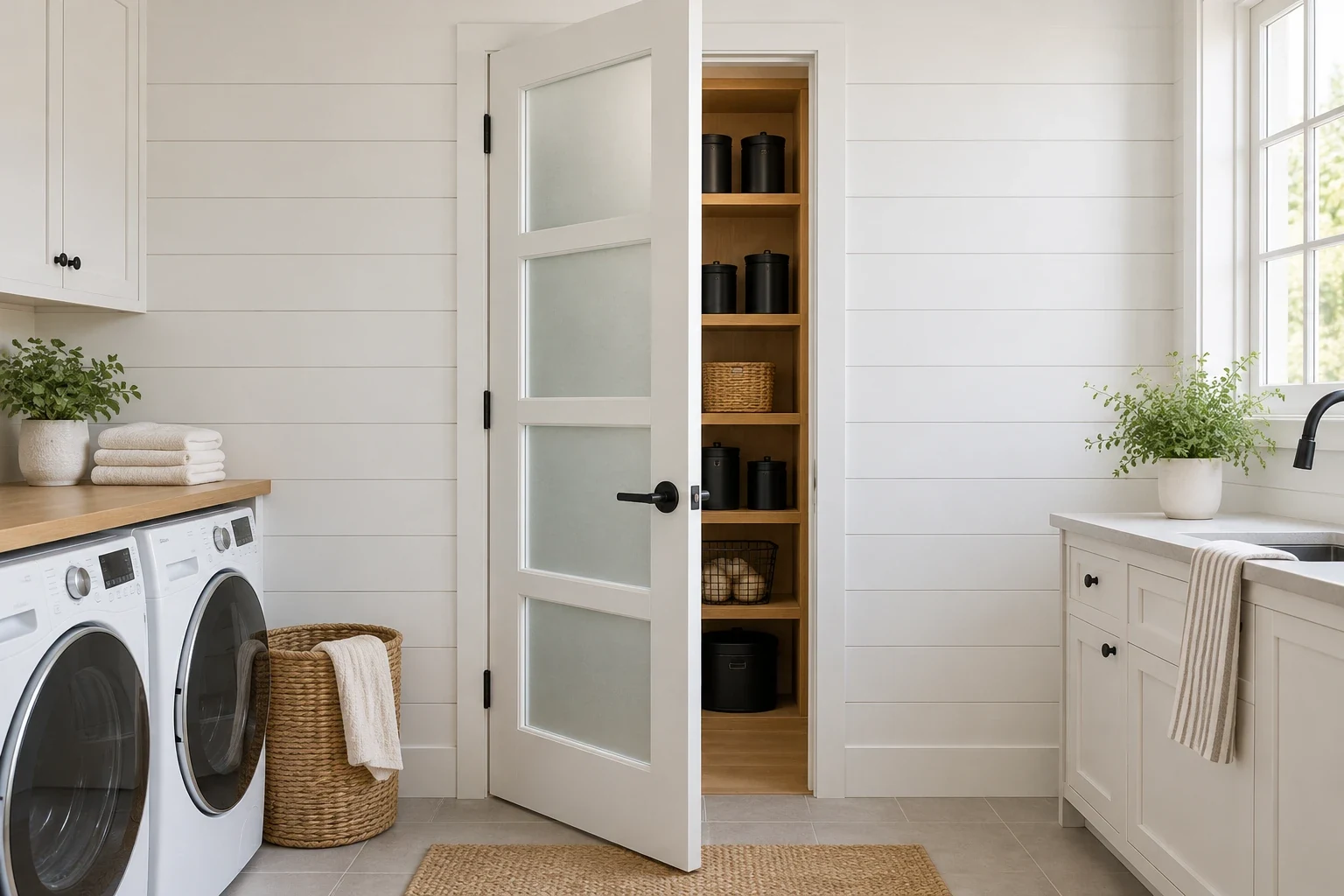
Grabbing breakfast supplies or laundry detergent happens in a rush during busy weekday mornings, requiring a setup that handles constant traffic. A well-placed entryway to your storage keeps these daily routines smooth while filtering early daylight into the surrounding room. The hardware and materials need to hold up to frequent pulling and sliding without showing wear.
Use Frosted Glass

Install a glass-panel door with a frosted finish to hide the visual clutter of cans and boxes. The opaque surface obscures the exact shapes of your groceries while still allowing ambient morning light to pass through into the room. Measure the width of your current frame and order a pre-hung interior unit with tempered glass, which usually costs around $300. This upgrade maintains a bright atmosphere without requiring you to keep your shelves strictly organized at all times.
Add a Black Handle

Swap out standard knobs for a matte black lever handle to give the entrance a sharp, defined focal point. A dark lever stands out clearly against a soft white background, making it quick to grab when your hands are full of laundry or groceries. Most standard interior door handles fit into a standard two-and-one-eighth-inch bore hole, requiring just a Phillips screwdriver and ten minutes to replace. The lever mechanism also requires less grip strength than a round knob.
Clad in Shiplap

Attach soft white horizontal shiplap boards to the wall adjacent to the entrance to build subtle texture. The horizontal lines draw the eye sideways, making a narrow utility space feel a bit wider than it actually is. Nail five-and-a-half-inch wide primed pine boards directly into the wall studs using a brad nailer, leaving a nickel-sized gap between each plank. Paint the wood the exact same shade of soft white as your door casing to keep the overall look cohesive.
Leave Door Ajar

Keep the panel partly open during active cooking or cleaning times to reduce the number of steps in your routine. Leaving the barrier ajar creates a continuous flow between your main workspace and your stored supplies, cutting down on constant opening and closing. Install a heavy-duty magnetic door stop at the baseboard, positioning it about three inches from the wall to hold the panel securely in place. This small hardware addition prevents the wood from drifting shut on its own.
Build Oak Shelving

Construct internal storage using warm oak boards to introduce a natural element that contrasts with crisp painted walls. Solid hardwood holds heavy metal tins and bulk dry goods without sagging over time under the weight. Purchase one-inch thick oak stair treads from a local lumberyard and cut them to your closet depth, resting them on heavy-duty metal brackets secured into the studs. Finish the wood with a clear matte polyurethane coat to protect it from minor spills and scratches.
Hang a Barn Door

Mount a sliding barn-style door on a top track if your floor plan lacks the clearance for a traditional swinging hinge. This layout keeps the pathway completely clear, which is especially useful in tight laundry rooms or narrow kitchen corridors. Buy a steel track kit online for about $80 and bolt the rail directly into a solid wood header board above the opening. Make sure the slab overlaps the doorway by at least two inches on each side for full coverage.
Paint the Trim Black

Brush a coat of matte black paint onto the casing around the opening to frame your storage like a picture. A dark outline creates depth and draws attention to the warm oak shelves inside, separating the utility zone from the rest of the room. Use a one-inch angled brush and a durable urethane acrylic enamel, applying two thin coats over a high-adhesion bonding primer. Tape off the adjoining white walls carefully to ensure crisp, straight lines along the edges.
Mount a Wire Organizer

Maximize your vertical footprint by adding door-mounted storage to the interior side of the panel. A matte black wire rack catches small items and holds little oak boxes that would otherwise get lost on deep shelves. Secure the wire organizer using hollow-core door anchors, placing the top screw at least five feet high so it remains easy to reach during busy weekday mornings. Test the door swing afterward to ensure the added oak boxes and wire frame clear the inner jamb without scraping the soft white paint.
Apply a Window Film

Cover existing clear panes with a textured frosted window film to upgrade a plain surface on a tight budget. The static-cling vinyl mimics the look of etched glass, offering privacy for your messy shelves while taking less than an hour to apply. Cut the film half an inch wider than your glass, spray the pane generously with soapy water, and press the material into place. Use a plastic squeegee to push out any trapped air bubbles toward the edges.
Fit a Metal Mesh Panel

Replace the center glass insert with a matte black metal mesh screen for a slightly industrial, breathable barrier. The woven wire allows air to circulate freely into the closet, which helps keep root vegetables and dry goods fresh longer. Order a custom-cut sheet of decorative woven wire grille for roughly $50 and secure it to the back of the wooden frame using a staple gun. Finish the rough edges by tacking thin wood trim strips over the staples.
Add a Transom Window

Frame a rectangular transom window above the main doorway to capture additional light near the ceiling. This architectural detail brightens dark storage corners without sacrificing valuable wall space needed for shelving below. Cut an opening in the drywall directly above the header and install a fixed frosted glass unit measuring twelve by thirty inches. Paint the surrounding trim to match the soft white casing below, tying the upper and lower sections together into one cohesive unit.
Choose a Solid Slab

Selecting a natural wood pantry door made of solid oak brings heavy-duty sound dampening to a busy utility corner. The dense material blocks the noise of washing machines or clanking pots, keeping the adjacent living areas much quieter. Measure your rough opening and order a custom-sized slab, which typically weighs over sixty pounds and requires three heavy-duty black hinges to hang properly. Sand the surface lightly and rub in a natural oil finish to highlight the wood grain.
Install a Pocket Door

Sliding a soft white pocket door into the wall cavity reclaims the floor space normally required for a standard swing. This hidden mechanism is ideal for narrow passages where an open panel would block foot traffic entirely. Purchase a heavy-duty pocket door frame kit for a standard two-by-four wall, which requires removing the drywall on one side to install the internal tracks. Make sure to reroute any electrical wires or plumbing lines before sealing the cavity back up.
Replacing your basic knob with a matte black handle is the quickest update to tackle today. It requires only a screwdriver and gives your storage entrance a fresh, defined look in minutes.
