
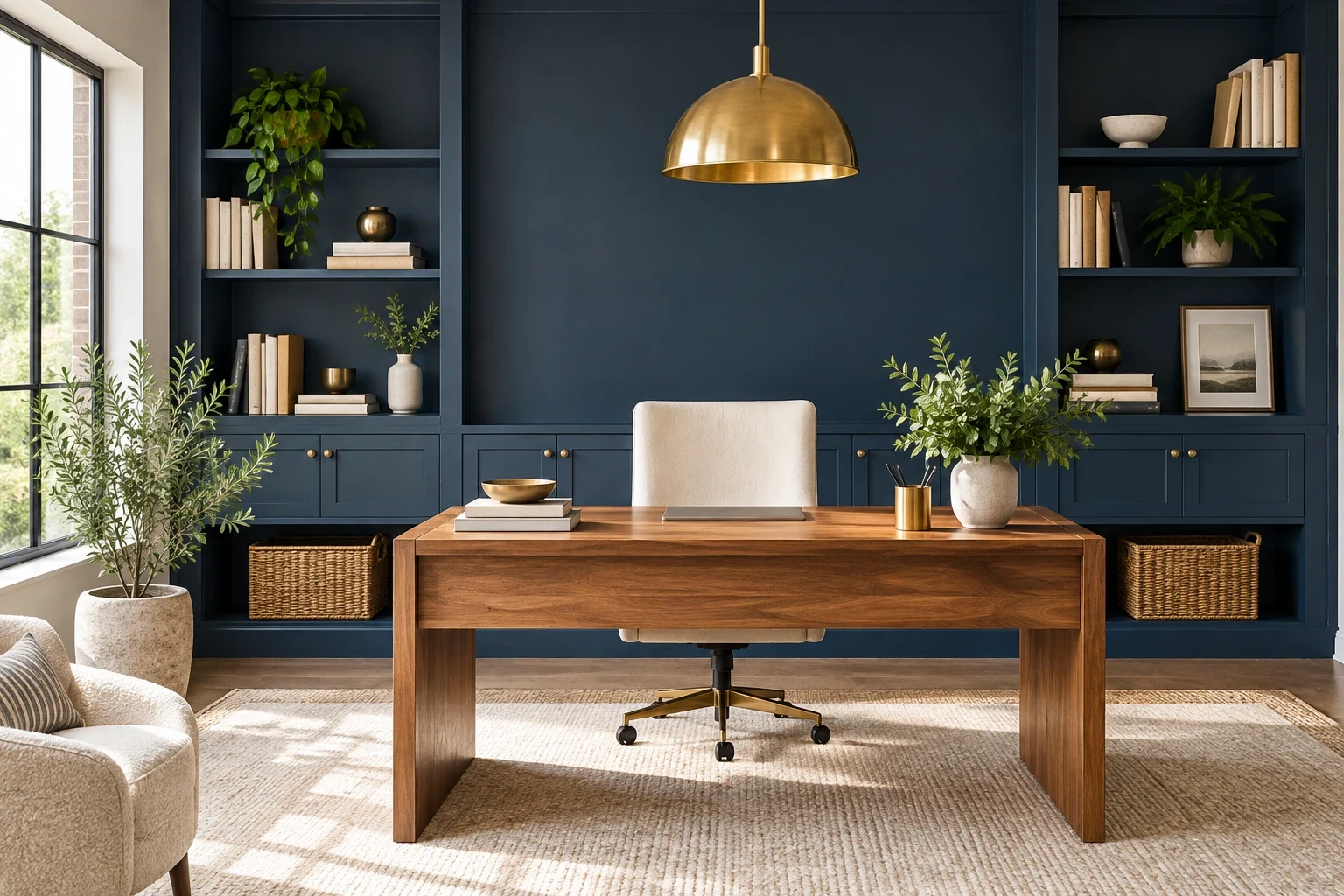
Deep matte wall colors absorb harsh daylight and keep the focus squarely on your computer screen. Pairing that dark background with a warm wood desk top adds necessary visual balance to the room. This approach softens the sharp edges of monitors and filing cabinets.
Paint Navy Shelves

Cover your built-in cabinetry with a dark navy blue paint to ground the room and create a distraction-free work zone. This dark matte finish minimizes reflections behind your monitor, similar to the painted shelves in the photo. Buy a gallon of high-quality cabinet enamel for around $60 to ensure a hard, chip-resistant surface. Apply two thin coats with a high-density foam roller to avoid visible brush strokes on the flat panels and wait twenty-four hours before loading the shelves.
Hang a Brass Light

Install a brushed brass pendant light directly above your main seating area. The metallic finish adds a necessary warm reflection that breaks up the heavy, dark tones of the surrounding cabinetry. Choose a fixture measuring at least twelve inches across to cast an even pool of light over your paperwork. Mount the base to the ceiling junction box and let the pendant hang roughly thirty-six inches above the desk surface to keep the bulb out of your direct eye line.
Add a Teak Desk

Place a solid teak wood desk in the center of the room to serve as your primary workstation. The dense grain of the wood resists dents from dropped pens and heavy coffee mugs during long shifts. Look for a desk measuring at least sixty inches wide to hold multiple monitors and a notepad comfortably. Position the desk so you face the door, leaving three feet of clearance behind the edge for your chair to roll back without hitting the wall.
Use a Cream Chair

Select a cream upholstered fabric chair to brighten the dark desk area. The light textile provides a sharp contrast against the deep navy background, drawing the eye toward the center of the room. Pick a chair with a seat height adjustable between eighteen and twenty-two inches to match your desk height properly. Spray the fabric with a protective stain repellent before the first use, which costs about $15 a can and prevents coffee spills from ruining the light material.
Tuck Woven Baskets

Slide matching woven rattan baskets into the lowest open compartments of your built-in unit. These textured bins hide tangled computer cables and spare printer paper while adding a relaxed, organic element to the rigid wooden shelves. Measure the interior height of your shelf openings and buy baskets that sit one inch below the top edge for easy sliding. Line the bottom of each basket with a piece of heavy cardboard so small items do not slip through the rattan weave.
Display Framed Photography

Mount a large black-and-white architectural photograph above a secondary console table. The monochromatic image introduces visual depth without competing with the bold navy paint or adding chaotic colors to your quiet focus zone. Frame the print in a simple black metal border measuring twenty-four by thirty-six inches to fill the empty wall space effectively. Hang the piece using two heavy-duty drywall anchors spaced sixteen inches apart to keep the large frame perfectly level above the wooden surface.
Roll Out a Wool Rug

Lay a textured cream wool area rug over the hard oak floor near the doorway. The thick wool pile muffles the sound of footsteps and echoing phone calls, making the room much quieter for virtual meetings. Buy an eight-by-ten-foot rug to anchor the space and ensure the edges extend past your main walking paths. Add a quarter-inch felt pad underneath the rug to prevent it from slipping and to protect the light wood floor from abrasive friction.
Bring in a Ficus Tree

Set a tall leafy ficus tree in the corner nearest your brightest window. The live greenery filters the harsh incoming sunlight and breaks up the rigid ninety-degree angles of the walls and cabinetry. Plant the tree in a brushed brass pot that matches your overhead lighting to tie the metallic accents together. Water the soil only when the top two inches feel completely dry to the touch, which prevents root rot in an indoor environment.
Set Up a Laptop Stand

Position your laptop on an ergonomic teak wood stand beside a ceramic coffee mug at the edge of your desk. Lifting the computer off the desk surface guards against neck strain during long work sessions while freeing up valuable space for small desk accessories. Choose a wooden model with a five inch lift and a rear cable cutout to keep charging cords organized. Wipe the base down weekly with a dry cloth to remove dust without damaging the smooth natural finish.
Position Desk by Window

Push a secondary writing desk directly in front of a tall window for analog tasks. Facing the glass gives your eyes a distant focal point, which reduces eye fatigue when you look away from close-up paperwork. Leave a six-inch gap between the desk edge and the window sill to allow room for opening the glass and adjusting the blinds. Check the sun path in the morning to ensure the direct light hits the desk surface rather than shining directly into your eyes.
Organize Desk Supplies

Group your daily teak pens and brass paperclips together inside a small ceramic tray. Corralling loose stationery into a single defined boundary stops items from migrating across the desk and creating a cluttered work surface. Buy a shallow rectangular container measuring at least six inches long to fit writing tools alongside a small cream notepad. Place the dish near your main hand so you grab tools smoothly without disturbing surrounding desk items. Wipe the ceramic surface monthly with a damp cloth to remove graphite smudges and stray dust.
Add a Boucle Armchair

Create a separate reading corner by placing a cream boucle armchair next to a brass floor lamp. The highly textured fabric offers a soft, tactile contrast to the smooth wooden desk and hard metal fixtures in the room. Pair it with a dark navy throw pillow to connect the seating area to the painted built-in shelves. Allow at least thirty inches of walking space between the armchair and the main desk to keep the traffic flow completely open.
Hang Wooden Blinds

Fit warm teak wooden blinds to control the natural light entering the room. The thick wooden slats block harsh midday glare on your monitor much more effectively than sheer fabric curtains. Order custom-cut blinds that fit tightly inside the window frame, which usually costs around $150 per window for real wood. Tilt the slats upward at a forty-five-degree angle during the afternoon to bounce the incoming sunlight off the ceiling instead of letting it hit your desk directly.
Style Brass Bookends

Support your heavy design books with a pair of brushed brass geometric bookends on top of the cabinet. The heavy metal wedges prevent tall volumes from tipping over and damaging the painted surface below. Pick solid brass pieces weighing at least two pounds each to ensure they can hold thick hardcovers firmly in place. Slide the flat base of each bookend completely under the outer books so the weight of the pages helps anchor the metal.
Lay a Leather Desk Mat

Unroll a dark brown leather desk mat across the center of your teak workstation. While many offices use leather seating, a large leather mat provides a similar smooth, slightly cushioned surface that makes writing with a ballpoint pen much more comfortable. Buy a mat measuring at least thirty-six inches wide to accommodate your keyboard, mouse, and a ceramic tray simultaneously. Wipe the surface monthly with a dedicated leather conditioner to prevent the edges from drying out and curling upward over time.
Test the outlet locations in the room before buying a heavy desk. You need to ensure your computer cables can reach the wall without stretching across the floor.
