
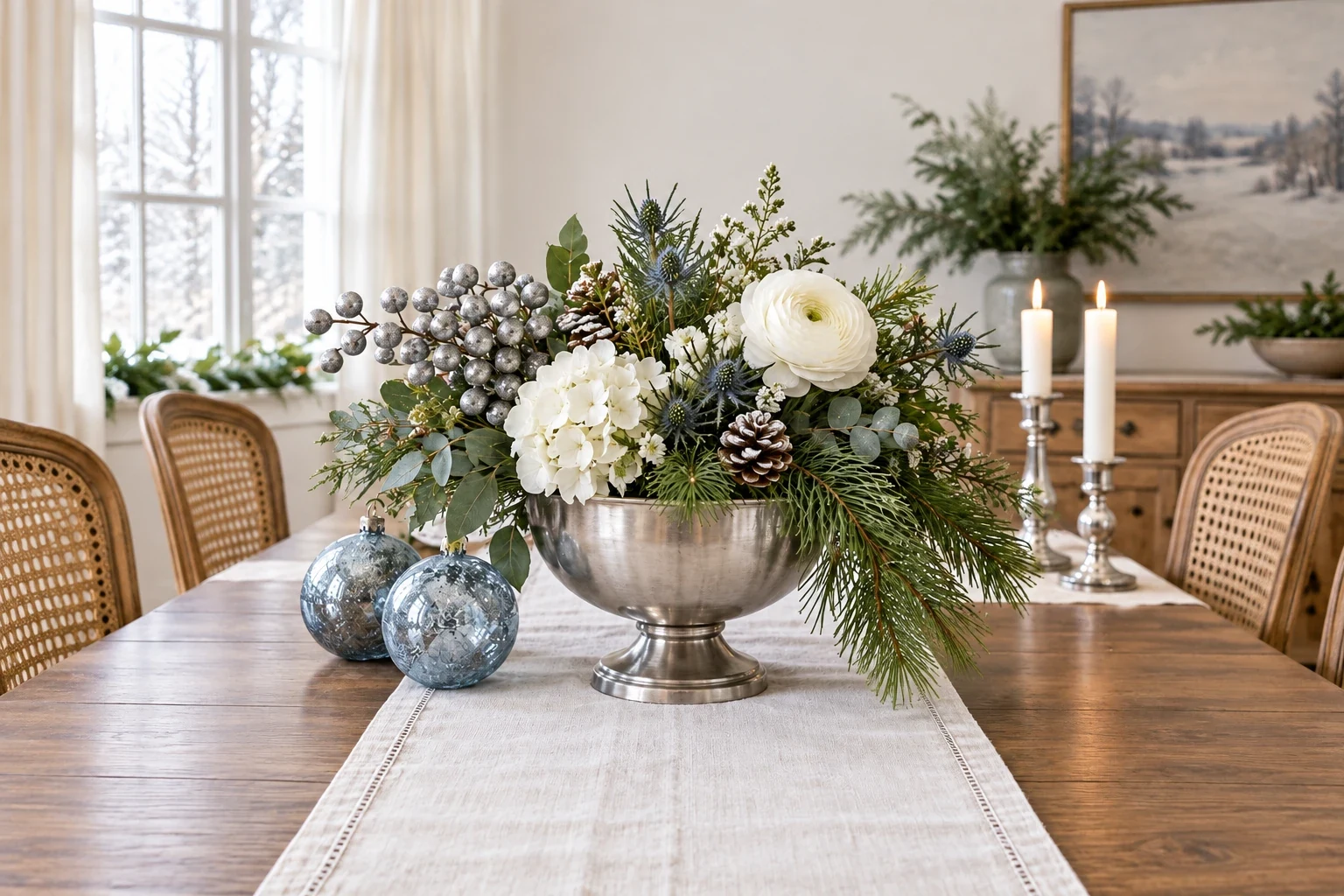
Building a centerpiece after the holidays usually leaves you with heavy, dark greens that absorb all the light in the dining room. You can fix this by introducing pale blooms, metallic accents, and lighter foliage to break up the dense pine. These methods cover everything from styling a silver bowl to adding bare willow twigs for height.
Use a Footed Bowl

Anchor your centerpiece in a brushed silver footed bowl instead of a tall glass vase. Raising the foliage off the tabletop allows light to pass underneath, which prevents dark pine needles from forming a heavy shadow across the wood surface. Place a small block of wet floral foam into the bottom of the basin, trimming it with a knife so it sits one inch below the metallic rim. Insert pale evergreen clippings and light sprigs into the foam at wide angles to build a balanced horizontal shape.
Add a White Bloom

Insert soft white ranunculus blooms into the dark greenery to create sharp visual contrast. The pale petals catch the morning daylight and prevent the display from feeling too gloomy during the darker months. Buy stems that are at least ten inches long and push them deeply into your foam base so only the flower head peeks out. Grouping two or three blooms closely together makes a stronger impact than scattering them evenly.
Layer Green Pine

Drape deep green pine sprigs directly over the edge of your container to soften the hard metal rim. This natural spill breaks up the rigid lines of the bowl and connects the centerpiece to the table runner below. Cut your pine stems at a sharp forty-five-degree angle with bypass pruners before inserting them into the base. Make sure the longest branches extend about four inches past the metal edge for a relaxed drape.
Use Blue Ornaments

Set a couple of icy blue glass ornaments right on the table beside your main arrangement. The smooth glass reflects the room’s light and adds a subtle hint of color without requiring expensive exotic flowers. Pick ornaments that measure about three inches across, and remove the metal hanging caps so they look like decorative glass spheres. Nestle them slightly into the folds of your linen runner so they stay in place.
Tuck in Berries

Push a cluster of silver faux berries into the side of your arrangement so the stems extend outward past the pine foliage. Metallic berry clusters reflect ambient room light and introduce a distinct round shape that breaks up dense, dark needles. Purchase three flexible faux stems at a local craft shop for under five dollars each to get enough bulk. Bend the internal wire branches slightly downward with your fingers so they mimic the natural curve of real drooping winter sprigs.
Arrange White Amaryllis

Combine tall white amaryllis stems with dark cedar sprigs inside a heavy stoneware jug on your mantel ledge. The thick, bright white flower stalks provide crisp vertical lines that balance the visual weight of a dark wood fireplace surround while brightening the room. Fill the stoneware jug halfway with cool tap water to anchor the vessel and keep large blossoms upright. Trim two inches off the bottom of each stem using a sharp knife rather than shears to avoid crushing delicate stem tissue.
Add Dusty Miller Leaves

Tucking velvety silver dusty miller leaves between soft white roses and deep green fern fronds builds a frosted winter aesthetic. The fuzzy texture of the silver leaves contrasts sharply against the smooth rose petals and waxy ferns. Buy a bunch of dusty miller or eucalyptus foliage at the grocery store for about six dollars and strip the bottom three inches of leaves from each stem. Insert them near the base of the arrangement to fill in any gaps over the console table.
Incorporate Bare Twigs

Drop tall bare willow twigs into a simple glass cylinder vase filled with icy blue hydrangea. The leafless branches add dramatic height to a low sideboard without blocking the view across the room. Look for twigs that measure at least two feet tall and trim the bottoms so they rest flat against the base of the glass. Wedge the thick hydrangea stems around the twigs to hold them upright in the center.
Scatter Green Pears

Spread fresh green pears and small silver ornaments loosely along a white linen runner beside your main floral bowl. The fruit introduces a fresh organic element that bridges the gap between the formal silver bowl and the casual table setting. Pick firm, unripe pears from the produce aisle so they last up to two weeks at room temperature. Space them roughly six inches apart down the center of the table.
Tuck Cotton Bolls

Nestle fluffy white cotton bolls among dark green pine fronds inside a matte white ceramic vase. The dry cotton adds a soft, matte texture that warms up the cold, smooth surfaces of a typical kitchen island. Purchase dried cotton stems online for around ten dollars and cut them into smaller six-inch sections. Wedge these shorter pieces into the dense pine so the white tufts sit just above the green needles.
Tie an Icy Blue Ribbon

Wrapping a soft icy blue velvet ribbon around the stem of a glass compote finishes the display with a tailored detail. The velvet fabric brings physical warmth to the cold glass and ties into the frosty color palette of the room. Cut a piece of one-inch wide ribbon to about twenty inches in length. Tie it in a simple shoelace bow right below the bowl, trimming the tails at an angle so they do not fray.
Float Blooms in Water

Fill a low wide glass bowl with water to float white anemones and small deep green pine sprigs. This low-profile setup works well on a silver accent table because it leaves plenty of room for lamps or books. Pour tap water into the bowl until it reaches two inches below the rim. Snip the flower stems down to half an inch so the blooms rest completely flat on the water surface.
Gather your heavy greenery and structural branches first to build a solid base. Add the delicate white blooms and silver accents last so you do not crush them while working.
