
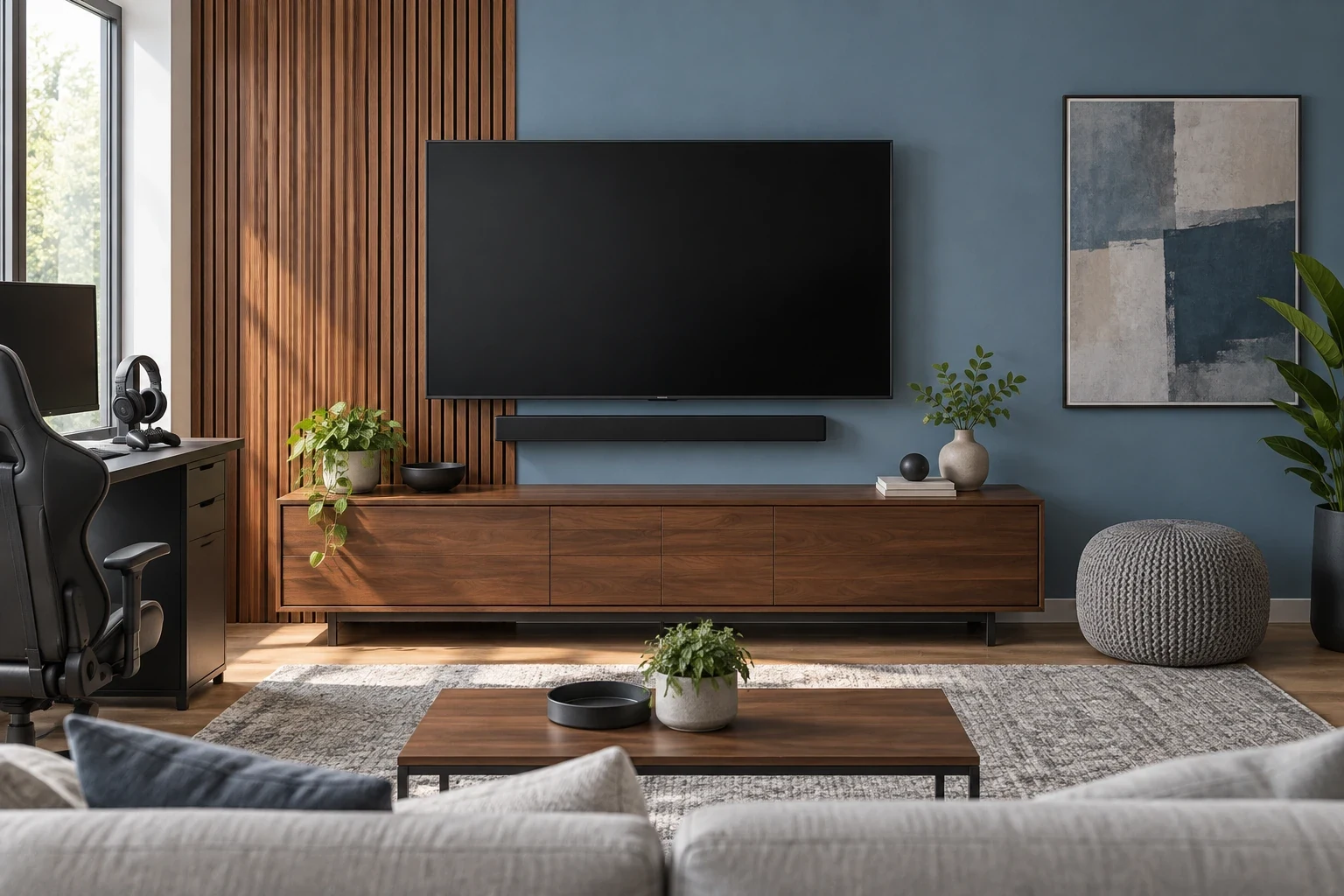
Mounting a screen in a gaming room often leaves a cold, electronic focal point surrounded by exposed cords and empty drywall. Framing the setup with architectural wood slats, low storage consoles, and ambient lighting softens the tech-heavy look. Adding soft poufs, potted greenery, and recessed wall niches integrates the display into a balanced layout.
Add Walnut Slats

Attach vertical warm walnut wood slats directly to the drywall behind your screen. This natural texture warms up the cold plastic of the television and absorbs harsh sound reflections in a gaming room. Buy pre-made acoustic wood panels that come in 94-inch heights to reach a standard ceiling without horizontal seams. Apply construction adhesive to the felt backing and press the panels firmly against the painted surface. Secure them with black drywall screws driven between the slats to keep the fasteners completely out of sight.
Frame Canvas Art

Hang a framed abstract canvas in muted blue and gray on the wall next to your screen. A substantial piece of art balances the heavy visual weight of a large black rectangle. Look for a canvas that measures at least 24 by 36 inches to hold its own beside a 55-inch or larger television. Choose a thin matte black frame to echo the borders of the monitor without stealing attention. Position the center of the canvas roughly 57 inches from the floor to match a comfortable standing eye level.
Mount a Soundbar

Install a sleek matte black soundbar directly beneath the blank flat-screen TV. Getting the speaker off the furniture frees up valuable surface area and directs the audio straight toward your seating. Leave exactly two inches of clearance between the bottom edge of the television and the top of the soundbar. This specific gap provides enough room to reach the manual control buttons while keeping the two devices looking like a single unit. Use hollow-wall anchors rated for at least 30 pounds to ensure the bracket stays firmly attached.
Add a Low Console

Slide a long warm walnut media console onto the floor under the floating television. A low cabinet anchors the viewing area and provides essential enclosed storage for gaming controllers and streaming boxes. Pick a unit that measures roughly 20 inches high to maintain a clear gap below the mounted electronics. Ensure the console is at least 10 inches wider on each side of the screen so the setup does not look top-heavy. Drill a two-inch hole in the back panel to route all the power cables out of sight.
Toss a Grey Pouf

Place a soft gray woven pouf on the floor just to the right of the console. This small textile addition introduces a casual, tactile element that breaks up the rigid straight lines of the media cabinet and the screen. Select a pouf stuffed with dense polystyrene beads so it holds its round shape over time. A standard 18-inch diameter size works well as an impromptu footrest during long gaming sessions. Keep it tucked near the corner to maintain a clear walking path across the room.
Paint a Muted Blue Wall

Coating the wall behind your matte black gaming monitor in a muted blue creates a calm backdrop. Darker, desaturated colors reduce eye strain when you stare at a bright screen for hours. Buy a gallon of high-quality acrylic latex paint in a flat or matte finish to prevent any glare from nearby windows. Use a 3/8-inch nap roller to apply two even coats over the drywall, waiting four hours between applications. The flat finish absorbs light, making the screen pop while the background fades away.
Add a Cable Raceway

Stick a matte black cable raceway down the wall beneath your mounted screen to guide cords toward the walnut media cabinet. Hiding the dangling wires eliminates visual clutter and protects the connections from getting snagged. Purchase a paintable PVC cord cover kit that includes straight channels and corner elbows. Measure the distance from the bottom of the television to the top of the console, then cut the plastic channel using a fine-tooth hacksaw. Peel off the adhesive backing and press the track firmly against the drywall for a clean finish.
Flank with Black Sconces

Mount two matte black wall sconces on either side of the blank screen to illuminate the warm walnut paneling. Adding ambient side lighting reduces the harsh contrast between a bright monitor and a dark room. Space the fixtures roughly 12 to 18 inches away from the left and right edges of the television. Hardwire them into standard electrical junction boxes, or choose plug-in versions if you want to skip the electrical work. Equip them with 2700K LED bulbs to cast a warm, relaxing glow across the wood grain.
Pot a Snake Plant

Position a tall green snake plant in a matte black ceramic pot next to your walnut media cabinet. Bringing a live plant into the corner adds an organic shape that contrasts with all the flat electronic surfaces. Find a pot that is at least 10 inches in diameter with a drainage hole at the base. Snake plants thrive in low light and only require watering every two to three weeks. Set the heavy ceramic container directly on the soft gray rug to protect your hard floors from scratches.
Hang a Black Pendant

Suspend a minimalist matte black metal pendant light from the ceiling over a soft gray armchair in the reading corner. Dedicated overhead lighting defines a separate activity zone within the same room as the media setup. Drop the fixture so the bottom rim sits about 60 inches above the floor to prevent anyone from bumping their head. Use a simple black cord kit that plugs into a nearby wall outlet if ceiling wiring is unavailable. Screw in a low-wattage Edison bulb to provide just enough illumination for reading.
Build Recessed Niches

Cut into the drywall to create square recessed wall niches painted muted blue for your gaming accessories. Building storage directly into the wall saves floor space in tight rooms and keeps matte black controllers organized. Locate the wooden studs using an electronic finder, as you must frame the boxes between these structural supports. Build the interior boxes out of half-inch MDF, measuring roughly 14 inches square. Secure them to the studs with wood screws, then caulk the seams before applying the blue paint for a built-in look.
Set a Round Side Table

Introducing a small round matte black side table next to a walnut lounge chair provides a convenient drop zone. Having a dedicated spot for a soft gray ceramic mug or a remote control keeps the main coffee table clear. Look for a pedestal-style table that measures about 18 inches across the top. The compact footprint allows it to slide easily between tight furniture arrangements without blocking walkways. Wipe the metal surface weekly with a damp microfiber cloth to remove dust and fingerprints.
Install a Linear Fireplace

Embed a long, narrow electric fireplace flush into a warm walnut paneled wall to balance your wall setup. Secondary feature walls distribute visual weight throughout the room and soften the technical look of bare drywall. Purchase a 50-inch wide electric insert that plugs into a standard 120-volt outlet to avoid complex electrical wiring. Frame a stud cavity using standard two-by-four lumber matching the insert dimensions before mounting the walnut panels. Slide the heating unit directly into the finished opening and fasten the built-in side brackets to the wall framing.
Hiding cords with a matte black cable raceway is the fastest project to tackle today. It removes the visual mess without requiring any power tools or heavy lifting.
