
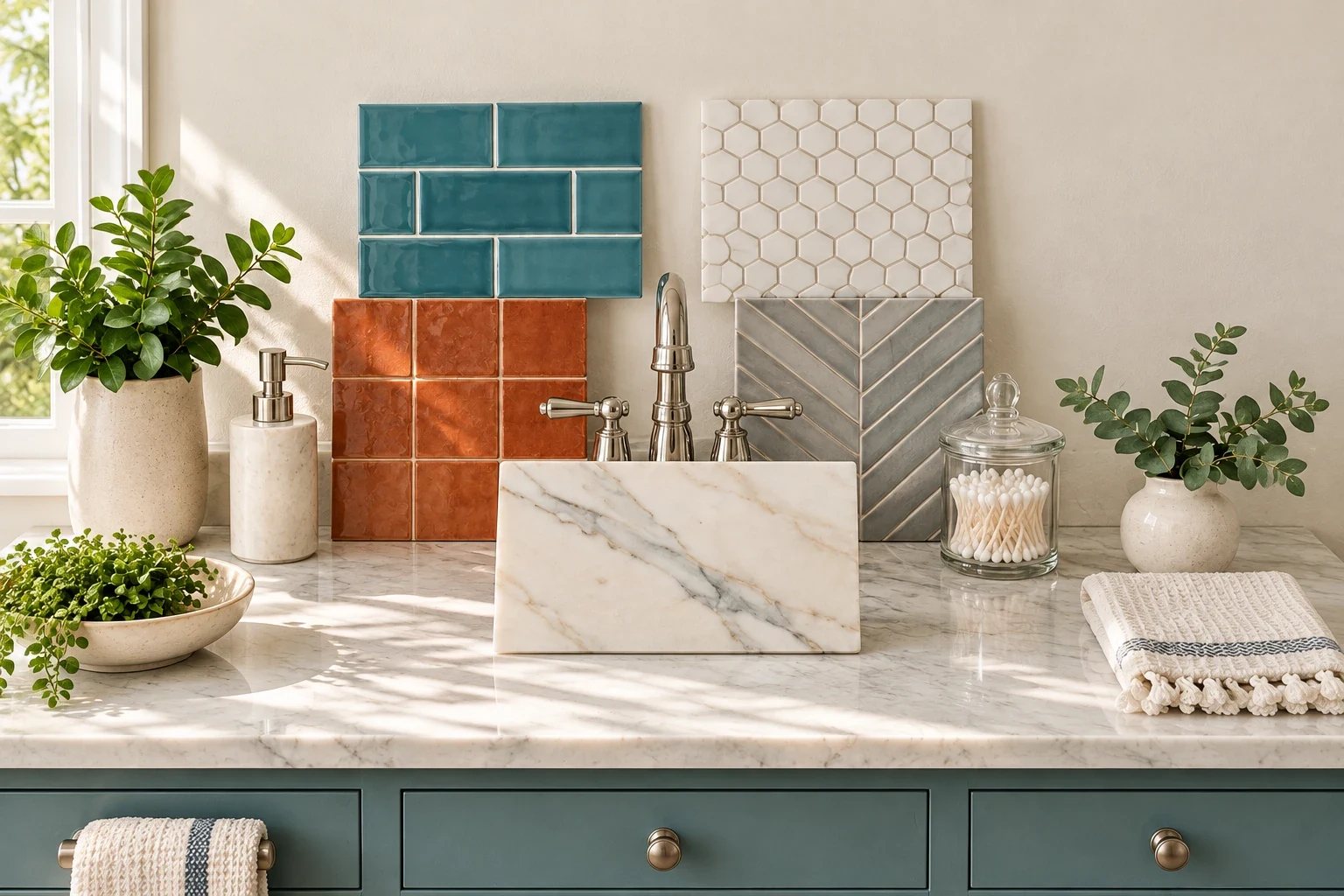
Morning routines at the sink involve splashing water and wiping up makeup spills, demanding a surface that cleans up without fuss. Choosing the right material behind the faucet protects the drywall while adding a quiet layer of texture to the room.
Teal Subway

Mount glossy teal subway tile on the wall directly behind the sink with white grout. A glazed ceramic surface wipes clean from water splashes and toothpaste spots, keeping moisture away from vulnerable drywall. Saturated teal tones bring distinct color to the vanity area, while contrasting white grout keeps the traditional brick layout sharp. Set standard three by six inch tiles using one sixteenth inch spacers to maintain thin, even lines throughout the installation. Fill the gaps with unsanded white grout and run a clear bead of waterproof silicone caulk along the bottom seam for under ten dollars.
White Hexagon

Apply small white hexagon mosaic tiles directly above the counter. The dense network of grout lines creates subtle geometric texture on the wall without darkening the room’s overall palette. Buy these mosaics on 12-inch by 12-inch mesh-backed sheets to speed up the installation process and ensure even spacing between every tiny piece. Use a bright white unsanded grout to prevent scratching the delicate ceramic glaze during application and keep the finish smooth.
Clay Zellige

Mount square terracotta zellige tiles to form an earthy backdrop behind the faucet. The uneven surface and baked clay tones hide minor water spots while warming up a cool white bathroom. Skip the traditional grout spacers and butt the tiles right against each other, allowing the natural variations in the handmade edges to dictate the layout. Seal the unglazed terracotta with a penetrating stone sealer before exposing the wall to daily moisture.
Grey Chevron

Lay gray rectangular tiles in a continuous chevron pattern across the wall. The angled lines create a sense of movement that breaks up the rigid horizontal edges of a standard vanity cabinet. Cut the ends of each tile at a precise 45-degree angle using a wet saw to ensure the zigzag joints meet flush. Match the grout color closely to the gray tile to keep the busy pattern from overwhelming the small space.
Cream Marble

Run a solid cream marble slab with soft gray veining up the wall. A continuous piece of stone eliminates grout lines entirely, leaving a flat surface to wipe down after brushing your teeth. Ask the fabricator to cut a 6-inch tall strip from the same slab used for the countertop for an exact color match. Secure the heavy stone to the drywall using construction adhesive and seal the bottom seam with clear silicone caulk.
Vertical Painted Shiplap

Attach soft cream vertical shiplap boards behind a matte black wall-mounted faucet. The vertical grooves add traditional farmhouse character while contrasting sharply with the modern dark plumbing fixtures. Use moisture-resistant MDF boards instead of standard pine to prevent warping near the sink basin. Paint the wood with a high-gloss enamel finish so water droplets bead up and roll off rather than soaking into the material. This pairs well with a floating vanity to keep the floor clear.
Glass Mosaic Strip

Add a narrow band of shimmering teal glass mosaic tiles above a cream marble counter. A short strip provides necessary water protection at the lowest part of the wall while keeping material costs under fifty dollars. Cut a standard mesh mosaic sheet down to a 3-inch height using a utility knife before pressing it into the thinset. Finish the exposed top edge with a metal Schluter strip in a coordinating silver tone to hide the rough cut glass.
Painted Teal Wall

Paint a smooth wall in deep teal blue behind a white ceramic vessel sink. High-quality paint offers a flat, budget-friendly alternative to tile that you can change out in a single afternoon. Select a bathroom-specific paint formula with built-in mildew resistance and a satin finish to handle routine splashing. Hang a framed mirror above vanity height to break up the dark color block and reflect light back onto the sink basin.
Scallop Fish Scale Tile

Set cream ceramic scallop tiles with soft gray grout against a smooth marble countertop. The curved fish scale shape softens the hard right angles of the mirror and vanity cabinet. Start the installation from the bottom center of the wall and work outward to ensure the overlapping pattern remains symmetrical around the faucet. Incorporate subtle gold accents through nearby towel rings or soap dispensers to complement the warm cream tones of the ceramic glaze.
Reseal natural stone and unglazed clay tiles every six months to block moisture. A quick wipe with a microfiber cloth after washing your face stops hard water spots from forming.
