
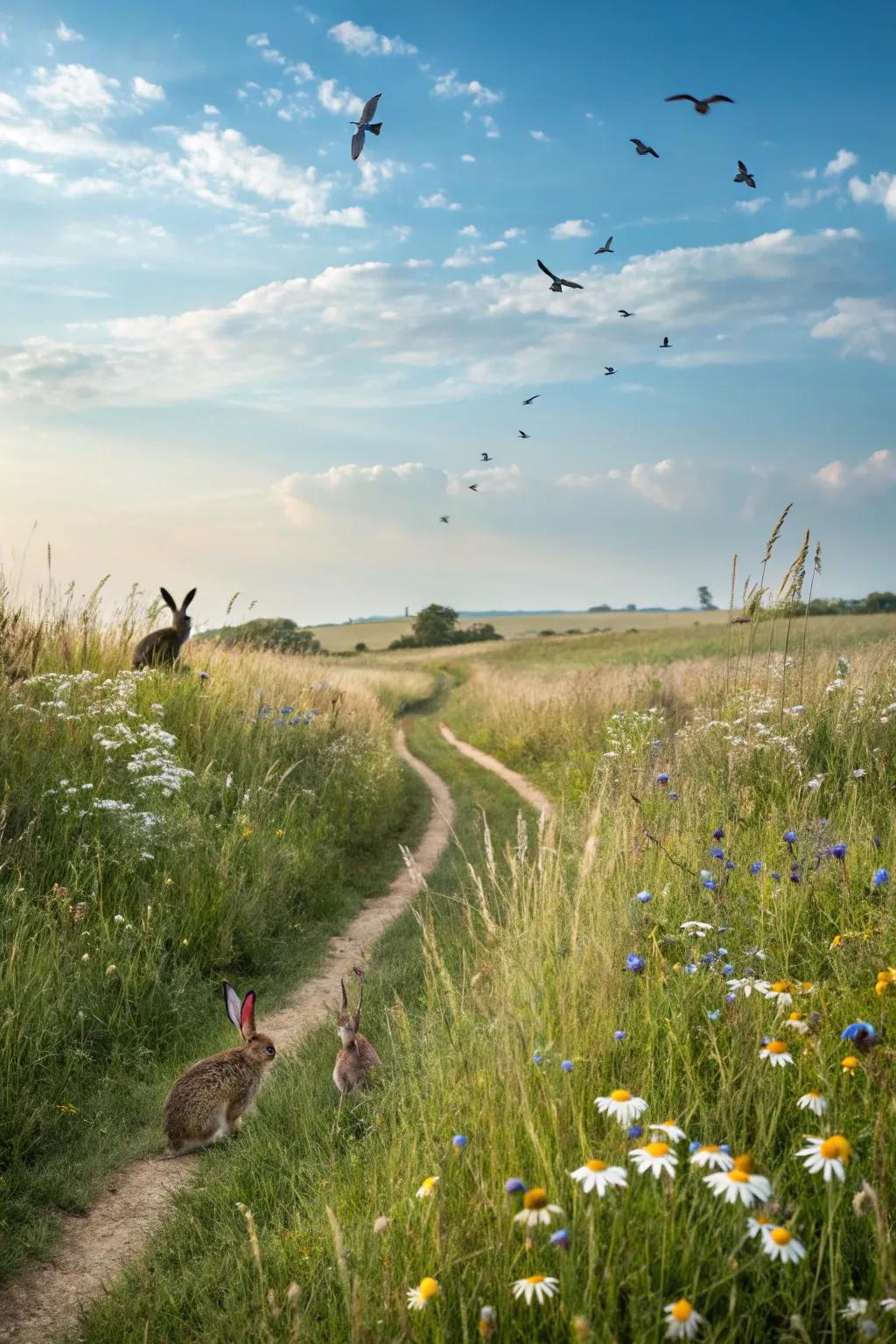
Welcome to my creative studio in Austin, where today we’re diving into the world of grass painting. Whether you’re a seasoned artist or just looking to add a splash of nature to your home decor, these grass painting ideas are sure to spark your imagination.
1. Mixing Custom Greens

When painting grass, I love mixing my own greens using blue and yellow rather than relying on pre-mixed options. This approach gives a more natural and harmonious look to your artwork, and you can explore more nature painting ideas to see it in action. Don’t be afraid to experiment a bit; sometimes adding a touch of red or brown can bring surprising depth.
2. Using Directional Brushwork

Capturing the movement of grass is all about the brushwork. Try using strokes that mimic the direction the grass grows, whether it’s straight up or swaying in the breeze. Similar to other creative painting ideas, I find this technique adds a dynamic quality to the painting and brings the scene to life.
3. Experimenting with Texture

Playing with the texture of your paint can add a tactile dimension to your grass scenes. I often use a thick application for the foreground and thinner layers for the background. This contrast can make the grass feel lush and vibrant.
4. Incorporating Broken Color

Broken color is a fantastic technique to suggest detail without painting every blade. By using small dabs of various greens and yellows, your grass can look lively and full of dimension. Monet was a master of this, and it’s a great approach to try alongside other painting ideas for beginners.
5. Playing with Light and Shadow

The interplay of light and shadow can dramatically change the mood of your grass paintings. By highlighting the tips of the grass blades and darkening the base, you can create a sense of sunlight filtering through. This technique is particularly effective in forest painting ideas and is one of my favorites for adding realism.
6. Using a Fan Brush for Detail

A fan brush can be your best friend for adding fine details and texture to grass. Its shape allows for easy creation of thin lines that mimic blades of grass, making it a perfect tool for many easy painting ideas. I love how it can add a touch of finesse to an otherwise broad-stroked painting.
7. Layering Colors for Depth

Layering different shades of green can give your grass painting a rich, multi-dimensional look. Start with darker shades as a base and build up to lighter, more vibrant greens. This method is fundamental to many nature acrylic painting ideas and adds depth and realism, making the grass appear lush and full.
8. Using a Dry Brush Technique

For a more ethereal look, try using a dry brush technique. It adds a soft, wispy effect to the grass, perfect for capturing the essence of a breezy day. This method is one of my favorite fun and easy painting ideas for creating subtle highlights and textures.
9. Capturing Seasonal Changes

Reflect the changing seasons in your grass paintings by adjusting the color palette. Autumn can bring in warm browns and yellows, while spring is all about bright greens and fresh hues. This is a technique you’ll often see in easy watercolor painting ideas to keep your artwork evolving throughout the year.
10. Exploring Monochrome Palettes

A monochrome palette can create a striking and elegant grass painting. Using just shades of one color, like green, can highlight texture and form. This minimalist approach can be refreshingly different and works especially well for small canvas painting ideas.
11. Crafting a Story with Grass

Think about the story you want to tell with your grass painting. Is it a calm, serene meadow or a wild, untamed field? By considering the narrative, you can make artistic choices that enhance the emotional impact of your work. For inspiration, explore these creative painting ideas.