
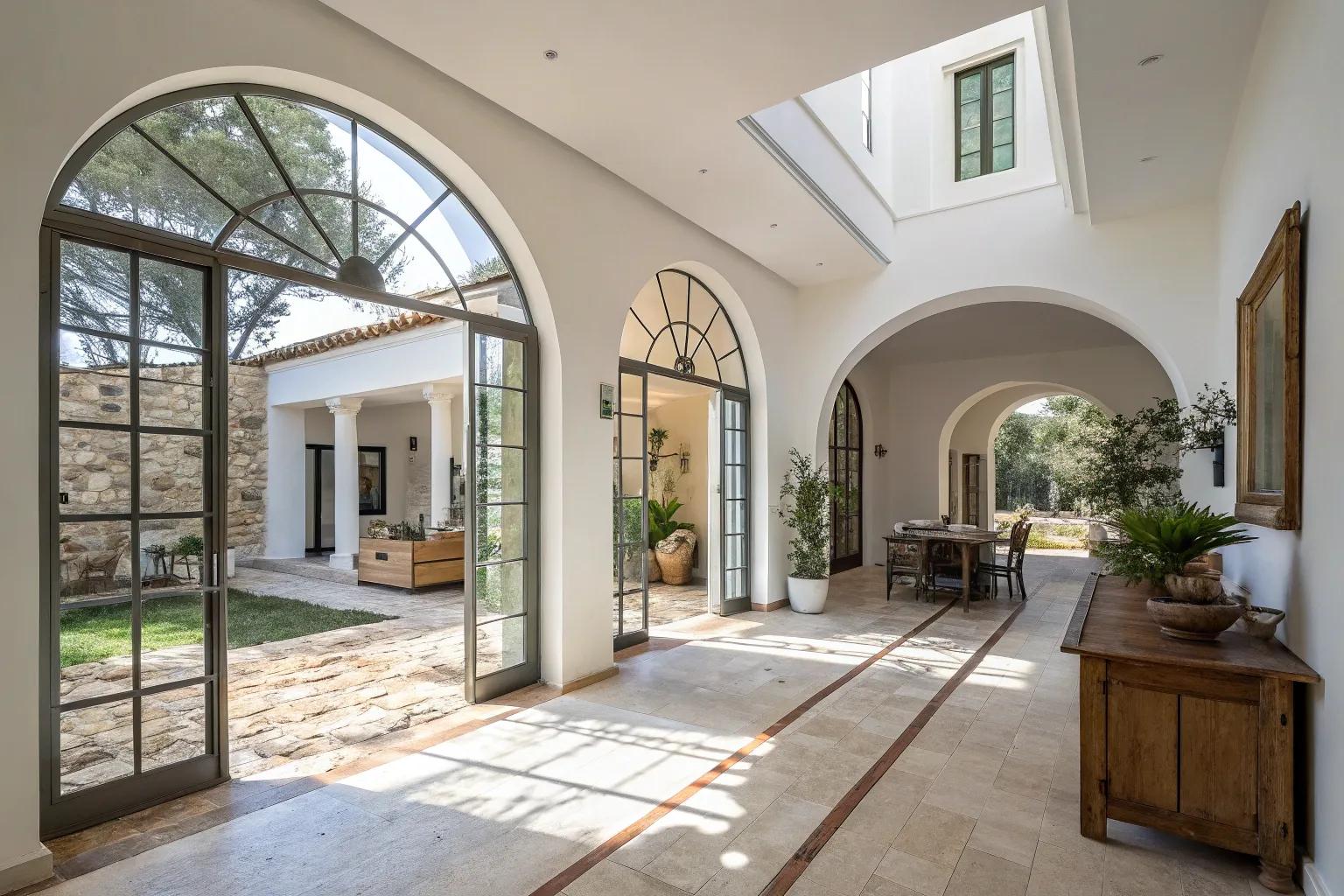
When it comes to making your home feel more open and inviting, interior wall openings are a fantastic solution. They not only enhance the flow of light and air but also add a touch of architectural interest that can elevate your entire decor.
1. Embrace Archways for Elegant Transitions

Archways offer a graceful transition between rooms, infusing your home with a sense of classic charm. I love how they maintain a connection between spaces without the need for doors. Whether modern or traditional, archways add an elegant touch that’s hard to beat.
2. Brighten Up with Interior Glass Windows

Installing interior glass windows can brighten up dim spaces by allowing light to flow between rooms. In my Boston apartment, I used clear glass to connect my kitchen and living area, which instantly made both rooms feel more spacious. Depending on your privacy needs, frosted glass is also a fantastic option. If you are looking for more ways to enhance your home layout, check out these stylish indoor basement door ideas.
3. Define Spaces with Cased Openings

Cased openings provide a clean, structured look while still connecting two rooms. I find this especially useful for maintaining a bit of architectural definition between my kitchen and dining room. It’s a simple yet effective way to open up spaces without losing structural integrity. You can further enhance this transition by exploring stylish dining room paint ideas with chair rail.
4. Create Functionality with Pass-Throughs

A pass-through is perfect for those who love to entertain, offering easy interaction between kitchen and dining areas. I’ve added a pass-through in my own home, and it’s been a game-changer for hosting dinners. You can dress it up with trim or leave it simple for a modern look. Explore these pass-through laundry room ideas to see how this feature can improve your home’s flow.
5. Opt for Interior French Doors

Interior French doors are a stylish way to maintain a semi-open connection while allowing light to flow. In my studio, they’re perfect for separating the office from the living area without blocking light. They add a touch of elegance and practicality to any room and fit perfectly within our charming farmhouse style interior ideas.
6. Divide with Half Walls

Half walls are great for defining spaces while keeping them open. I utilize them to separate my kitchen from the living area, which helps maintain visual connection and easy communication. They can be topped with decorative features like plants or shelving for added style.
7. Add Open Shelving for Storage and Style

Using open shelving instead of solid walls offers a visual connection while providing storage. In my kitchen, open shelves display beautiful dishes and keep essentials within reach. It’s a functional and stylish way to separate spaces without closing them off. For more inspiration, explore these clever small kitchen storage ideas.
8. Incorporate Exposed Beams or Columns

Exposed beams or columns can add rustic or industrial flair while breaking up large wall openings. I love the dramatic effect they bring to a space, maintaining separation without closing it off. They’re perfect for defining areas within an open floor plan, and you can see how they look in our rustic industrial bathroom ideas.
9. Use Sliding Panels for Flexibility

Sliding panels offer the flexibility to open up or close off spaces as needed. In my studio, they allow me to create privacy or openness depending on the occasion. They’re a versatile solution for dynamic living spaces and one of many stylish ideas for closing off a loft.
10. Achieve Seamlessness with Flush Beams

For a seamless look, consider hiding structural beams within the ceiling. This creates a smooth transition between rooms, which I’ve seen work beautifully in modern lodge interior design. It’s a bit more costly, but the clean finish is often worth it.
11. Highlight with Accent Beams

Accent beams can be both functional and decorative, adding a unique touch to your space. In my designs, reclaimed wood beams add warmth and character, especially in open dining areas. They serve as a beautiful focal point in any room.
12. Maintain Privacy with Decorative Screens

Decorative screens are perfect for adding privacy without sacrificing openness. I enjoy using intricately designed screens to separate areas like a reading nook from a living room. They add texture and visual interest while keeping spaces connected.
13. Incorporate Pivot Doors for Modern Appeal

Pivot doors offer a modern twist on traditional openings, allowing spaces to be opened or closed easily. They’re a favorite in my own home for their sleek design and functional versatility. Perfect for connecting or separating larger rooms with style.
14. Use Built-In Storage as Room Dividers

Built-in storage units can act as both a divider and a functional feature. I often use them in clients’ homes to separate living and dining areas while providing ample storage. It’s a practical solution that blends seamlessly with the decor. You can find more smart storage organization ideas to maximize your space.
15. Experiment with Color and Material Contrast

Using contrasting colors or materials can define spaces even without physical barriers. In my designs, a change in flooring or wall color effectively separates areas like a kitchen from a living room. It’s a subtle yet impactful way to maintain open space. You can also try blue accent wall ideas to create a bold focal point.
16. Integrate Plants to Soften Divisions

Plants can be used creatively to soften the division between spaces. In my apartment, lush greenery separates my workspace from the rest of the living area, adding life and vibrancy. It’s an organic way to maintain an open feel while providing separation.
17. Consider Partial Wall Openings

Partial wall openings offer a balance between connection and privacy. I’ve used them to keep my kitchen and living room connected while maintaining a sense of separation. They allow for communication and visual flow without fully merging spaces. You can further enhance these transitions by incorporating living room wall panel designs to define the space.