
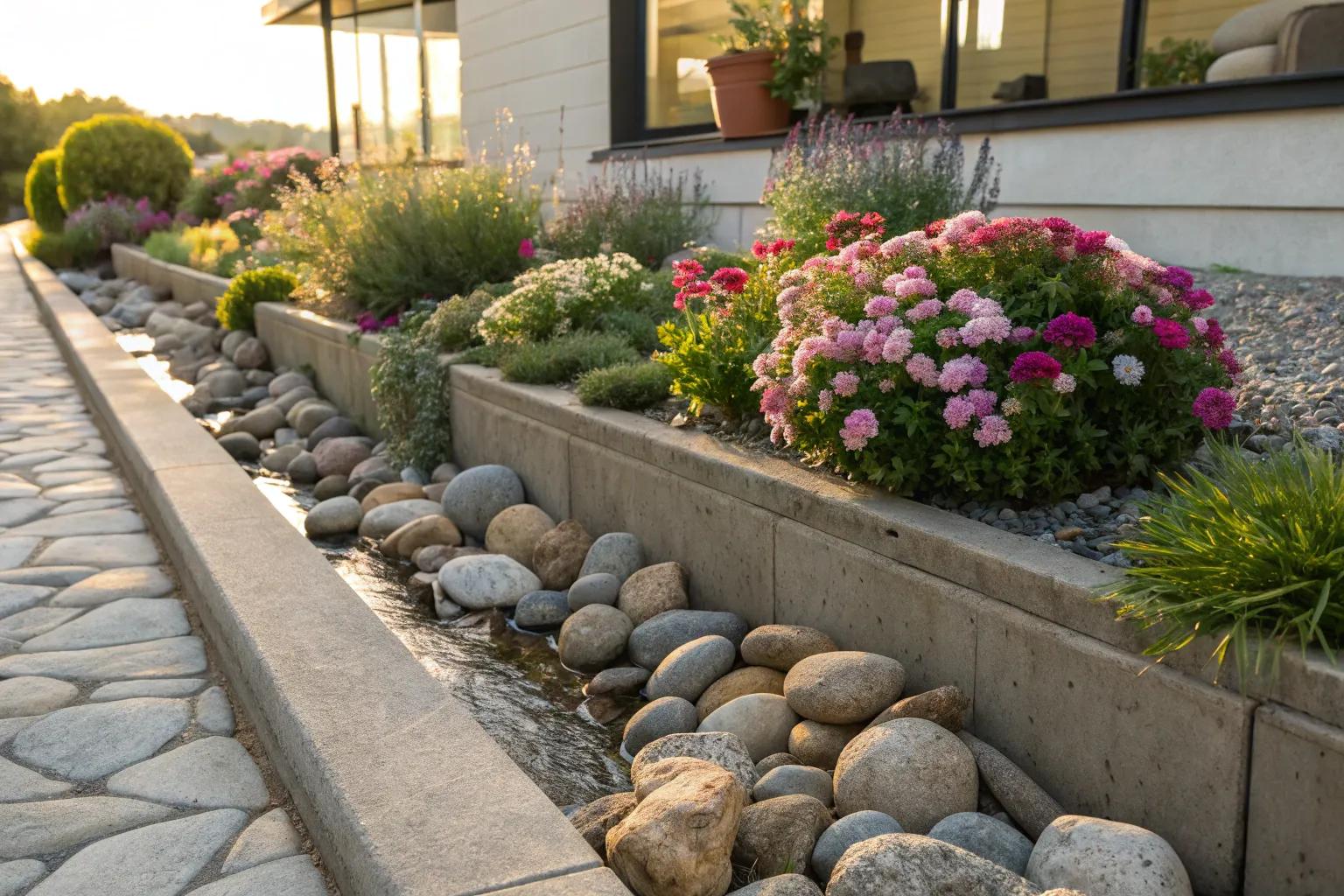
Struggling with waterlogged flower beds? Don’t worry, I’ve got some neat ideas to ensure your blooms stay happy and healthy.
1. Go for Raised Beds

Building raised flower beds can prevent waterlogging, keeping roots safe and dry. It was one of the first projects I tackled, and I’ve never looked back.
2. Create a Dry Creek

A dry creek can divert water using rocks and pebbles, turning a necessity into a beautiful landscape feature. Mine adds a rustic charm to the garden. You can explore more creative gutter drain ideas to manage runoff effectively.
3. Use Rock Features

Incorporating rocks and pebbles into your flower bed not only looks great but also aids in drainage. I’ve lined the edges of my beds with smooth stones, and it’s been a game-changer for water runoff. You can find more inspiration for these spaces in our creative narrow flower bed ideas.
4. Install Pipe Systems

Consider installing drainage pipes beneath your soil to direct excess water away. This was a lifesaver in my garden, ensuring no more puddles after heavy rain. You can also explore creative downspout extension ideas to further improve your home drainage.
5. Consider Border Edging

Using brick or stone edging can help manage water flow and define your flower bed’s boundaries. It’s a simple way to add style and function to your garden. Explore these hardscape ideas for flower beds to find the perfect look for your landscape.
6. Incorporate Water-Loving Plants

Consider planting water-loving plants in wetter areas to help soak up excess moisture. I’ve found these plants thrive where others can’t.
7. Create Gravel Beds

Using gravel in your flower beds can assist with water runoff and add texture. My gravel beds have been a practical and aesthetic addition that fits perfectly with these mobile home landscaping ideas.
8. Experiment with Layering Techniques

By sloping and layering soil, you can improve water runoff. I learned this trick while experimenting with my flower beds, and it really helps direct excess water away. You can apply these same principles to pallet raised garden beds to optimize your drainage.
9. Create a Berm

A berm is a raised mound that can redirect water flow, adding interest and functionality to your garden. I shaped one around my favorite plants, and it’s a standout feature. You can also use this technique to build raised strawberry beds for a productive harvest.
10. Redirect Downspouts

Ensure downspouts are directing water away from your flower beds. A simple adjustment saved my garden from being constantly drenched. If you are looking to maximize your home layout, check out these clever hide away bed ideas for small spaces.
11. Modify Your Mulch

Adjusting the mulch layer to 2-3 inches ensures it’s not impeding drainage. I love how it looks and keeps my plants healthy.
12. Install a Sun Trap

Letting more sunlight into shaded areas helps dry out wet soil. Pruning a few trees allowed me to give my garden the sun it needed to thrive.
13. Opt for Native Plants

Choosing native plants can naturally manage moisture better as they’re adapted to the local climate. My garden flourished once I made this switch, especially after I incorporated some of these charming flower bed ideas.
14. Create Gravel Paths

Gravel paths not only look charming but also enhance drainage in and around your flower beds. I added a small path, and it’s a delight to see how well it manages excess water. You can find more inspiration for this look in our guide to small French courtyard gardens.
15. Convert to Hardscape

Transforming wet areas into hardscapes can improve drainage and offer a new space for gatherings. I added a cozy fire pit seating area, and it’s now a favorite spot to relax.
16. Try Coarse Sand

Mixing coarse sand into clay-heavy soil can greatly improve drainage. It takes some effort, but my soil has never been better. If you enjoy working with clay, check out these unique clay flower pot ideas for your next project.