
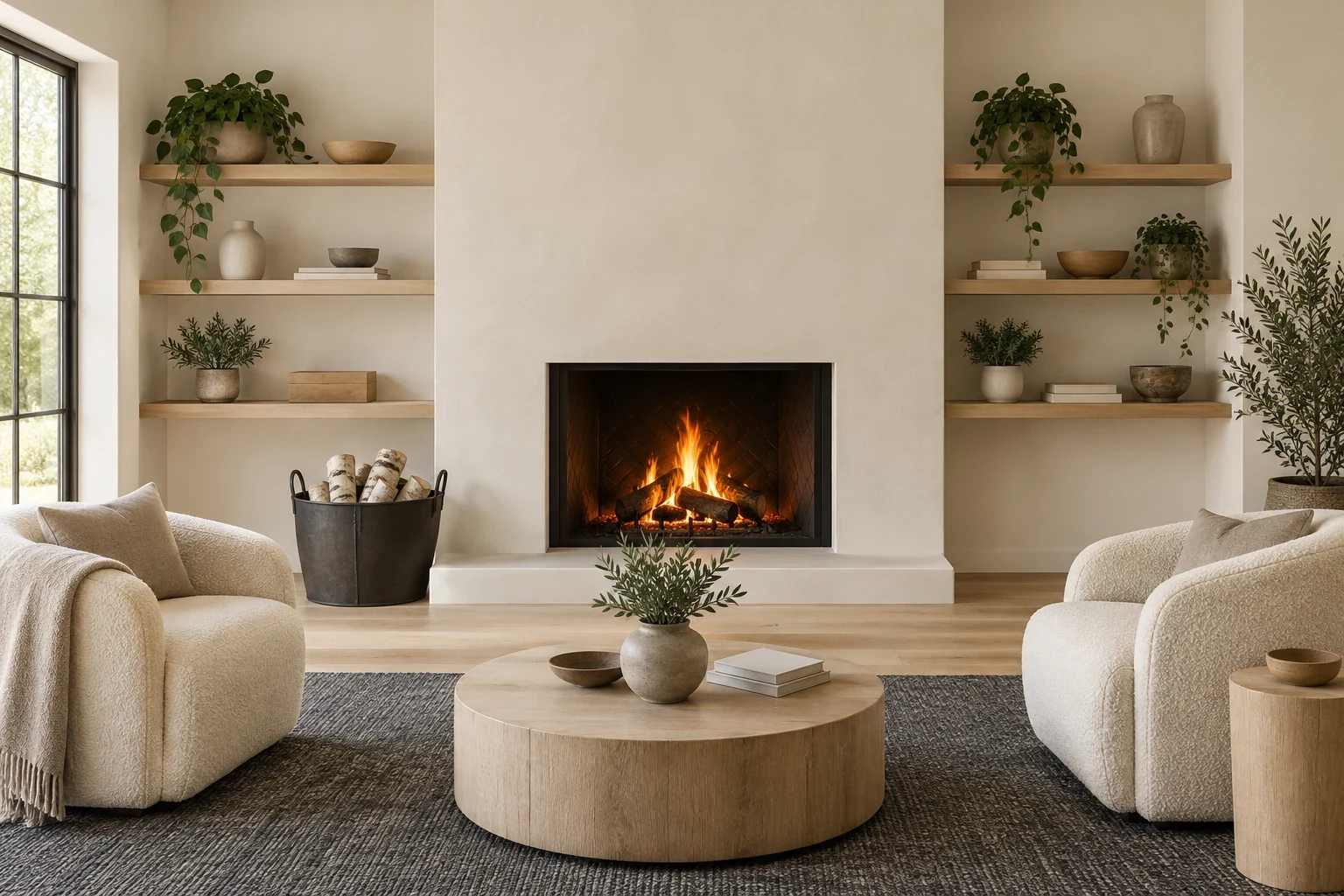
Choosing a cream and charcoal palette sets the tone for a calm, grounded living room. This high-contrast foundation lets you mix smooth surfaces with heavy textures without overwhelming the space. Focusing on these two colors keeps the fireplace wall looking cohesive and intentional.
Use Cream Plaster

Apply smooth cream plaster to finish your fireplace surround. This material replaces standard drywall or tile with a subtle, matte texture that catches morning daylight without reflecting a harsh glare. The continuous surface draws the eye upward, making the wall feel unified. Hire a local contractor to trowel on a standard lime plaster, or use a DIY Roman clay product. It takes about two coats to achieve that soft, mottled finish that defines the room.
Add Oak Shelves

Build light oak floating shelves into the wall alcove right beside the hearth. The pale wood breaks up the solid cream plaster while keeping the overall palette light and airy. Open shelving provides a dedicated spot for daily items like books or small electronics, keeping the floor clear. Install shelves made from two-inch thick solid white oak boards, spacing them about fourteen inches apart. Secure them with hidden metal brackets mounted directly into the wall studs for maximum support.
Bring in Armchairs

Angle two cream boucle armchairs directly toward the fireplace to establish a clear seating zone. The nubby boucle fabric adds heavy texture that contrasts with the smooth plaster wall, keeping the monochromatic color scheme from looking flat. This arrangement creates a natural conversation area that faces the heat source. Look for chairs with a seat height of around eighteen inches to ensure comfortable daily sitting. Leave about three feet of walking space between the chairs and the hearth.
Stack Birch Logs

Keep your charcoal metal basket filled with birch logs on the floor near the hearth. The white and gray bark introduces an organic pattern that softens the rigid lines of the wall architecture. Having wood stored right in the room saves you from making trips outside in the cold. Buy a basic wire or solid steel basket measuring at least sixteen inches wide. Fill it with kiln-dried birch, which burns cleaner and produces less smoke than standard firewood.
Light a Warm Fire

Paint the inside of your unit to create a dark black firebox interior before using it. The deep background color makes bright orange flames stand out sharply, maximizing the visual impact of a small fire. This dark void also hides soot and ash buildup between regular cleanings. Use a specialized high-heat enamel paint designed specifically for fireplaces, which usually costs around twenty dollars a can. Apply it with a stiff brush to work the pigment into any porous brick or metal seams.
Hang Abstract Art

Mount one large framed abstract canvas in charcoal and cream above the plaster mantel. Repeating the room’s main colors in a piece of art ties the whole wall together without introducing distracting new shades. The canvas breaks up the tall empty space above the firebox. Center the frame about six inches above the mantel ledge to leave room for small decorative objects. Install a hardwired brass picture sconce directly above the frame to highlight the painting during the evening.
Roll Out a Woven Rug

Roll out a thick charcoal woven area rug over your light oak floor. This dark layer anchors the seating arrangement and provides a soft surface for bare feet during colder months. The heavy woven material protects the underlying wood from scratches caused by moving furniture or dropping logs. Choose an eight-by-ten foot size so the front legs of your armchairs and sofa can rest entirely on the fabric. Add a quarter-inch felt pad underneath to prevent slipping and add extra cushioning.
Expose Ceiling Beams

Run thick light oak exposed beams across your cream living room ceiling. These wooden elements draw the warm tones from the floating shelves upward, balancing the heavy visual weight of the fireplace below. The overhead structure also gives a large room a more intimate, enclosed scale. Install hollow faux wood beams if your ceiling cannot support solid timber. Space them about four feet apart, and hang a black metal chandelier from the center beam for a striking focal point.
Center a Wood Table

Center a round light oak coffee table in the middle of your seating area. The circular shape breaks up the boxy angles of the fireplace surround and square armchairs, improving traffic flow. A central surface gives you a convenient spot to set down coffee mugs or reading glasses while relaxing by the fire. Pick a table measuring roughly thirty-six inches across to fit comfortably between standard furniture pieces. Top it with a ceramic vase holding a few dried branches.
Tackle the heavy plastering and shelf installation before moving any furniture inside. Save the rug placement and log styling for the final step to keep everything clean.
