
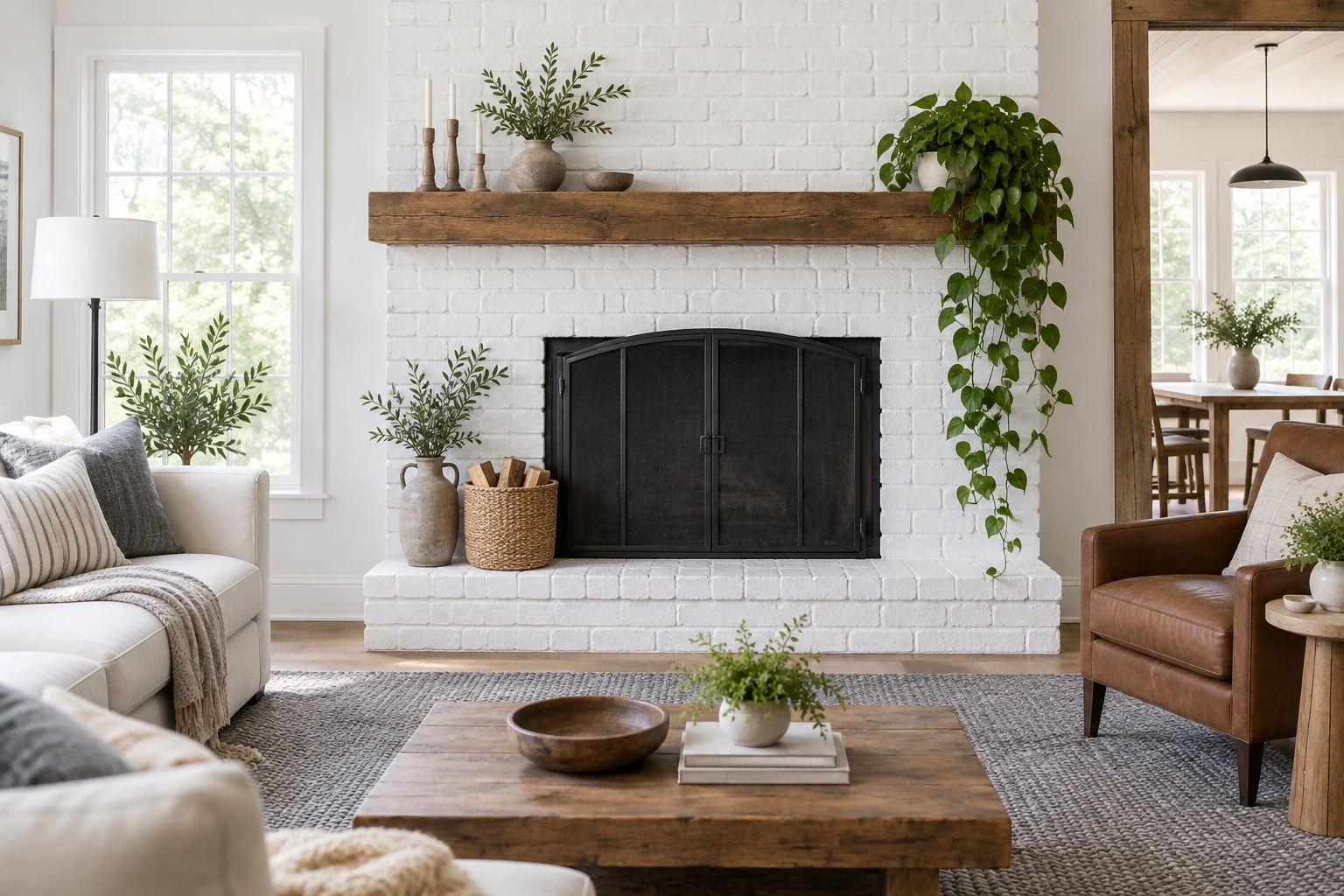
Choosing a stark white paint for your masonry sets a crisp foundation for the entire living room. This bright background lets natural morning light bounce around the space while highlighting the rough texture of the mortar lines. From there, you can layer natural materials and high-contrast metals to warm up the room.
Paint Brick White

Cover your dark-toned painted brick or dated masonry with a flat white latex paint to create a clean slate. A stark white painted brick surround reflects natural daylight and makes a tight living room feel less heavy. Start by scrubbing the mortar joints with a wire brush and a heavy-duty degreaser to remove decades of soot. Apply a specialized masonry primer using a thick three-quarter-inch nap roller to push the liquid deep into the porous clay. Finish with two coats of heat-resistant interior acrylic to ensure the finish holds up against the high temperatures of an active firebox.
Add a Wood Mantel

If you have a painted mantel instead of wood, installing a chunky reclaimed wood brown mantel shelf breaks up the vast expanse of white masonry. A solid wood beam introduces deep organic tones that warm up the cold painted surface and gives you a dedicated spot for decor. Look for a six-inch-thick beam salvaged from an old barn or factory. Mount it securely by drilling heavy-duty steel lag bolts directly into the mortar joints, leaving about four feet of clearance above the hearth floor. Sand the rough edges lightly and seal the timber with a clear matte polyurethane.
Set a Black Screen

Place a matte black metal screen over the open firebox to establish a sharp visual anchor. This dark iron element grounds the bright white brick and hides the messy ash left behind after a fire. Measure the exact height and width of your opening, then buy a freestanding trifold screen that overlaps the edges by at least two inches on each side. The heavy gauge steel mesh blocks stray sparks from popping onto your floor, while the powder-coated black finish resists peeling and fading from extreme heat exposure.
Drape a Green Vine

Set a potted trailing green vine on the right side of the mantel, like the plant in the photo, to soften the rigid geometric lines of the masonry. Live foliage introduces a subtle organic shape that cascades down the bright white backdrop. Buy a low-maintenance pothos or philodendron in a simple ceramic pot and place it near the edge of the wood shelf. Let the longest stems spill freely over the front and side, trimming them back with sharp shears once they reach a foot below the timber. Water the soil weekly to keep the leaves vibrant.
Layer a Grey Rug

Laying a soft gray wool rug on the floor just in front of the hearth defines the seating area. The muted gray fibers bridge the gap between a dark floor and the bright painted brick surround. Select a low-pile wool blend that resists stray embers better than synthetic materials like nylon or polyester. Position the edge of the rug about six inches away from the firebox to comply with basic safety clearances. Vacuum the surface weekly with a brush attachment to pull trapped wood dust and pet hair out of the woven backing.
Display a Landscape Print

Lean a framed abstract landscape print in soft grays and whites directly against the painted masonry. Resting the artwork on the reclaimed wood mantel eliminates the need to drill holes into hard brick while adding a focal point. Choose a large twenty-four-inch wooden frame that fits the scale of the chimney breast. The muted watercolor tones blend quietly with the surrounding stark white wall rather than fighting for attention. Secure the bottom edge with a small strip of poster putty to keep the artwork from slipping forward when doors close heavily in the house.
Paint the Hearth Grey

Brush a soft matte gray enamel across your smooth fireplace hearth floor to hide daily dust and ash. This mid-tone shade contrasts neatly with the stark white brick above it, creating a distinct visual boundary for the floor zone. Sweep the concrete or tile surface thoroughly and wash it with a trisodium phosphate solution to cut through old wax and grime. Apply a specialized porch and floor paint using a synthetic brush to cut into the corners. Let the first coat dry for twenty-four hours before adding a second layer for maximum scuff resistance.
Build Open Bookshelves

Construct stark white built-in bookshelves in the wall alcoves flanking the chimney breast. Custom shelving maximizes dead space and provides a structured home for reclaimed wood bowls and matte black vases. Measure the width of your alcove and cut three-quarter-inch plywood down to size for the shelves. Paint the entire unit the exact same white as the brick so the two structures merge visually into one large architectural feature. Space the shelves about fourteen inches apart to accommodate tall hardback books and larger decorative objects without making the display feel cramped.
Store Chopped Wood

Filling a tall vertical niche beside the fireplace with neatly stacked reclaimed wood logs adds rustic texture to the room. Keeping your fuel source right next to the firebox saves you from making cold trips outside during winter evenings. Build a simple plywood box insert that measures eighteen inches wide and four feet tall, sliding it into the empty wall cavity. Stack the split logs horizontally, packing them tight all the way to the top to create a textured accent wall. The natural brown bark brings warmth and complements the chunky wood mantel shelf perfectly.
Mount Brass Sconces

Attach a pair of warm brass wall sconces directly onto the chimney breast on either side of the mantel. The metallic finish adds a subtle gleam that breaks up the flat white paint and provides soft ambient lighting in the evenings. Hire a licensed electrician to run the wiring through the mortar lines before you paint the brick. Position the fixtures about sixty inches from the floor, ensuring they sit symmetrically above the hearth. Use low-wattage LED bulbs to cast a gentle, warm glow that highlights the rough texture of the painted masonry.
Position a Leather Accent Chair

Angling a rich cognac leather accent chair near the hearthside seating area creates an inviting reading spot. The warm brown upholstery echoes the timber tones of the mantel and pops against the bright white brick background. Select a chair with a relatively low profile so it does not block the view of the fire from the rest of the room. Drape a soft gray throw over the backrest to tie in with the rug and hearth colors. Keep the front legs about three feet from the firebox to prevent the leather from drying out.
Paint the brick and hearth floor before you bring any furniture into the room. Save the mantel installation and decorative styling for last to avoid unwanted paint splatters on your wood finishes.
