
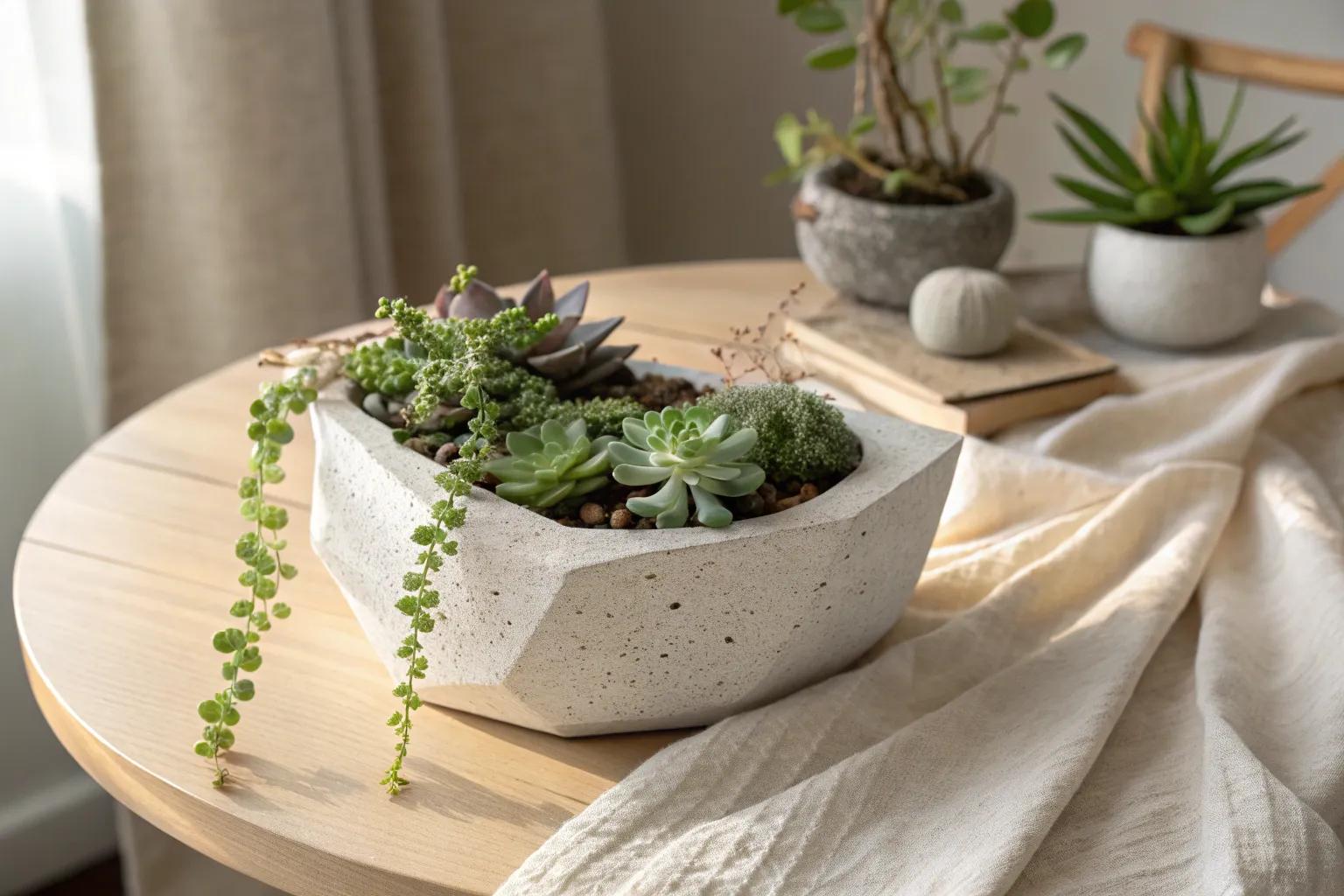
Have you ever stumbled upon those charming, stone-like planters and wondered if you could make them yourself? Well, you absolutely can, and the secret lies in crafting with hypertufa molds.
1. Basket Molds

Find old baskets at thrift stores to create one-of-a-kind planters. Keep in mind, baskets might need to be sacrificed in the process, but the results are worth it.
2. Wooden Frames

Construct a simple wooden frame to mold geometric planters. The clean lines are perfect for a modern aesthetic. You can also explore these creative outdoor cement craft ideas to expand your project collection.
3. Fabric Impressions

Use textured fabric like lace to press patterns into the hypertufa surface. It’s an easy way to add a touch of elegance to your projects. You can also experiment with liquid polymer clay to create unique surface textures.
4. Old Towels

Drape an old towel over a mold to create a fabric-like texture on your hypertufa. Once it’s set, the texture is both subtle and stunning. You can also experiment with different shapes by using creative DIY soap molds to achieve unique results.
5. Sand Molds

Create a simple sand mold by shaping a mound and covering it with plastic film. This method is perfect for crafting organic shapes that complement rustic mountain home interiors.
6. DIY Cardboard Molds

Craft your own molds from cardboard for customizable shapes. Just remember to line them with plastic to prevent sticking. You can also repurpose materials by exploring these creative plastic milk bottle craft ideas for your next project.
7. Stone Molds

Imprint hypertufa with actual stones for a naturally rugged finish. It’s a great way to mimic real stone without the weight. You can also try stepping stone painting ideas to add more personality to your garden.
8. Styrofoam Ice Chests

Repurpose a Styrofoam ice chest as a mold for an insulated planter. It keeps roots cool and looks fantastic with a hypertufa finish. You can also explore these DIY clay hanging planter ideas for more creative container projects.
9. Bubble Wrap Texture

Line your mold with bubble wrap to create a unique, textured surface on your hypertufa pieces. It’s an easy way to add interest and dimension. If you enjoy working with bubbles, check out these creative DIY bubble wands for more summer fun.
10. Salvaged Birdcages

Transform the base of a birdcage into a mold for an intricate hypertufa trough. I found one while hunting for items using these creative yard sale signs, and it became an instant conversation starter in my garden.
11. Unique Impressions with Keys

Press old keys into the hypertufa surface for a quirky, steampunk vibe. It’s an unexpected and delightful detail that always catches the eye.
12. Beach Balls for Spherical Planters

Deflate a beach ball to use it as a mold for a round planter. Once the hypertufa is set, simply cut away the ball to reveal your creation. Explore more stylish modern planter ideas to complete your home decor.
13. Repurposed Plastic Containers

Raid your recycling bin for old plastic tubs or containers—they make excellent hypertufa molds. I love using yogurt pots for smaller planters; just line them with a plastic bag for easy release.
14. Kitchen Colanders

Repurpose metal colanders for a perforated, lace-like effect in your planters. I love the delicate patterns this creates on hypertufa.
15. Metal Cans

Transform old metal cans into molds for rustic, industrial-style planters. Just line them with plastic to prevent rust. These projects pair perfectly with our rustic industrial bathroom ideas.
16. Old Lampshades

Transform an old lampshade into a unique mold for a conical planter. Just remove any fabric and line it with plastic before packing in the hypertufa mix. You can also explore these clever ideas for the bottom of large planters to improve drainage and reduce weight.
17. Recycled Egg Cartons

Use egg cartons to create small, uniform planters perfect for seedlings. They’re easy to handle and make charming gifts.
18. Old Buckets

Use old buckets to mold sturdy, deep planters. They’re perfect for larger plants and can be easily lined with plastic for a smooth release. You can find more inspiration in our creative cheap container gardening ideas.
19. Leaf Castings

Capture nature’s elegance by using large leaves as molds for decorative accents. I tried a rhubarb leaf once, and the details were simply stunning.
20. Log Molds

Carve a log to use as a mold for natural-looking planters. I’ve seen these blend seamlessly into woodland gardens. Check out these creative log ideas for more inspiration.
21. Hollowed Fruit

Hollow out large fruits like pumpkins for a biodegradable mold. It’s a fun seasonal project that decomposes naturally.