
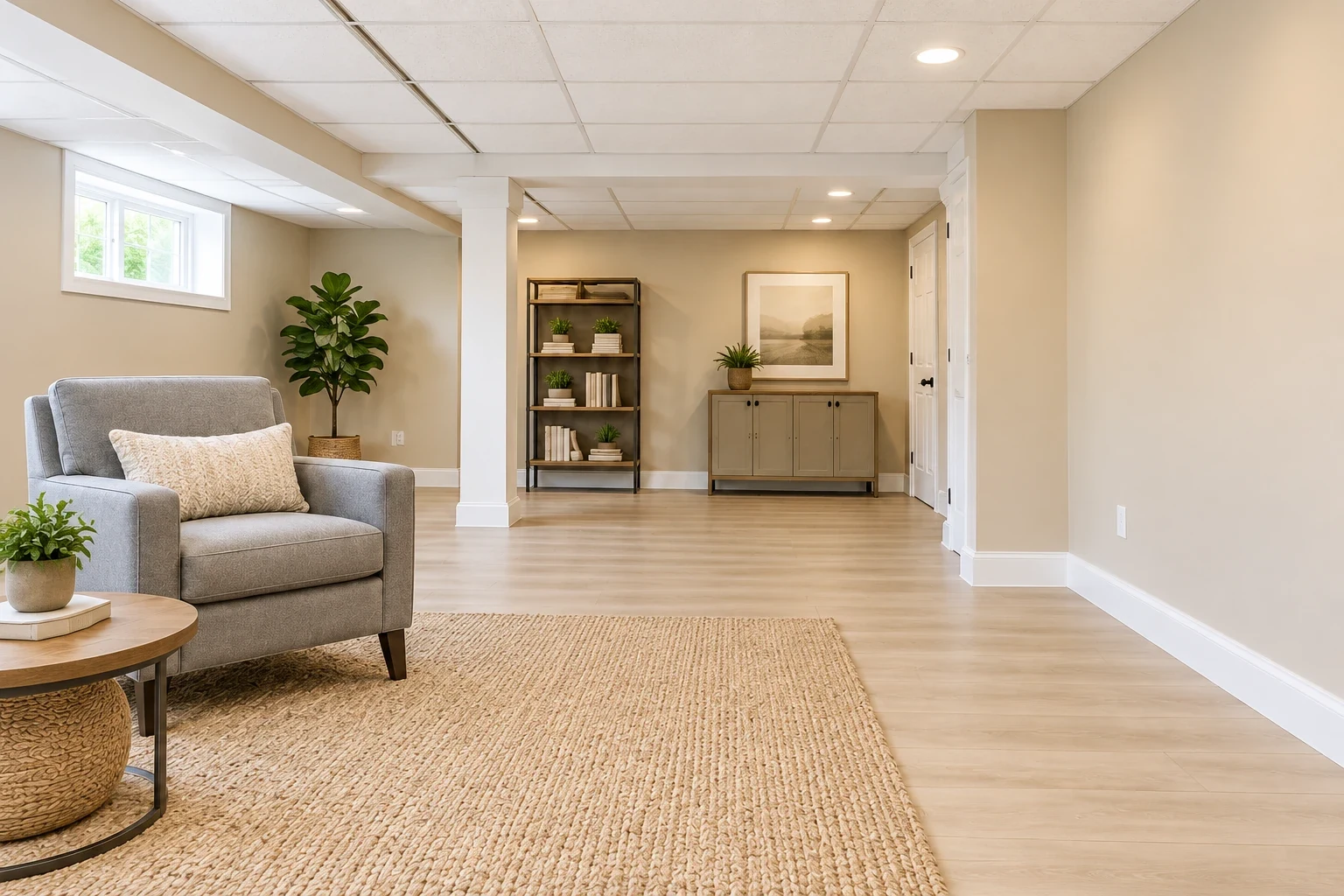
Upgrading your overhead panels costs around $300 and takes just one weekend. A modern basement benefits heavily from updated materials that hide pipes while keeping access open. You can completely change the room’s feel without tearing down the existing framework.
Try Acoustic Tiles

Install crisp white acoustic panels in your existing overhead grid, like the ones in the photo. These dense fiberglass boards absorb echoes from hard floors, making a basement television area sound much clearer. Buy 24-by-24-inch panels with a tegular edge, which drops slightly below the metal track for a three-dimensional look. Lift each tile on an angle through the opening, then let it rest flat on the flanges. You can cut the border pieces with a standard utility knife to fit against the walls.
Add Recessed LEDs

Put recessed ceiling lights built into the drop ceiling to brighten dark corners. Flush LED wafers weigh almost nothing and do not require heavy metal housing above the grid, saving valuable headroom. Trace the provided paper template onto a ceiling tile, cut the circle out with a drywall saw, and snap the light fixture into the hole. Connect the driver box to your house wiring and place it on top of the adjacent tile. Use 4000K daylight bulbs for a clean, natural glow.
Use a Steel Grid

Build the support structure with a brushed steel T-bar grid instead of standard white painted metal. The metallic finish adds an industrial touch that pairs well with modern hardware and gray furniture. Map out your room on graph paper to ensure the border tiles are wider than six inches. Hang the main runner wires from the floor joists above using heavy-duty eye lags spaced every four feet. Snap the cross tees into the main runners to create the square openings for your panels.
Place a Grey Chair

Set a soft gray armchair directly under a recessed light to create a dedicated reading spot. The neutral upholstery grounds the room and bridges the gap between warm floors and cool white overhead panels. Pick a chair with a seat height around 18 inches so it sits comfortably above a plush area rug. Anchor the seating arrangement by placing the front legs of the chair about two feet from the wall. This setup gives you a quiet zone away from the main television area.
Paint Walls Beige

Coat the concrete or drywall with smooth warm beige paint to soften the room’s edges. This earthy tone warms up the cool white ceiling tiles and brushed steel metalwork, keeping the space from feeling like a commercial office. Buy two gallons of flat or matte interior latex paint to hide imperfections on older basement walls. Apply the paint with a 3/8-inch nap roller, working in three-foot vertical sections. Let the first coat dry for four hours before rolling on the final layer.
Snap in Wood Slats

Pop warm beige wood-look slats into the metal tracks above your home gym area. The linear wood grain brings organic texture to a workout space, breaking up the continuous flat white surface. Purchase lightweight PVC or MDF planks designed specifically to clip onto a standard 15/16-inch T-bar grid. Measure the width of your room and cut the planks to length using a miter saw. Leave a quarter-inch expansion gap at the walls and cover the edges with matching perimeter trim.
Upgrade to Coffered

Choose crisp white coffered-style ceiling tiles to add architectural depth over a basement bar. The molded three-dimensional squares mimic expensive custom carpentry without the heavy weight or high cost. Look for rigid styrene or PVC tiles that drop right into an existing grid system. Plan the layout so the deep recessed panels sit in the center of the room, using flat border tiles around the perimeter where you need to make custom cuts. Expect to spend about $15 to $20 per panel for this upgrade.
Hang Steel Pendants

Suspend three brushed steel pendant lights from the ceiling grid over a game table. Bringing the light source down to about 36 inches above the table surface focuses the illumination right on the cards and board games. Buy special electrical box brackets that span across the T-bar grid and transfer the weight of the fixtures to the structural metal framing. Run flexible armored cable from the main junction box to each pendant location. Secure the metal canopy plates flush against the acoustic tiles.
Paint the Grid Grey

Spray an existing white metal grid with soft gray paint for a subtle custom look. The gray lines frame the crisp white tiles, creating a gentle contrast that defines the ceiling without darkening the room. Remove all the ceiling tiles and cover the floors and walls with plastic drop cloths. Use a direct-to-metal aerosol paint and apply three light coats to prevent drips. Let the metal cure overnight before placing the panels back into the openings to avoid scratching the fresh finish.
Leave Joists Exposed

Remove the drop ceiling entirely in a storage room to leave the joists and ductwork exposed. Painting everything crisp white maximizes vertical space and reflects light into tight corners above shelving units. Rent a commercial airless paint sprayer to coat the rough wood, pipes, and wires evenly. Clean the wood thoroughly with a wire brush and vacuum before applying a stain-blocking primer. Once the primer dries, spray a single thick coat of flat white dryfall paint, which turns to dust before hitting the floor.
Embed LED Strips

Run recessed LED strip lighting along the brushed steel edge trim where the ceiling meets the wall. This indirect glow washes down the walls, providing safe illumination along a basement staircase without glaring overhead bulbs. Buy a 16-foot spool of 24-volt warm white LED tape and an aluminum channel with a frosted diffuser cover. Screw the channel directly into the wall framing right below the ceiling grid. Peel the adhesive backing off the tape, press it into the channel, and snap the cover closed.
Try Faux Tin Tiles

Swap standard panels for pressed-tin style ceiling tiles over a workbench or hobby area. The brushed steel finish reflects task lighting while resisting moisture and dust common in utility spaces. Order lightweight PVC versions instead of real metal to save money and make cutting fast. Lay the tiles face down on your workbench and score them with a sharp utility knife and a straight edge. Snap the plastic along the scored line for a clean edge that drops right into the metal grid.
Mount Faux Beams

Attach warm beige faux wood beams across the white ceiling tiles to break up a large room. The rustic wood texture adds warmth and visual interest directly above a reading nook. Purchase hollow high-density polyurethane beams that weigh less than five pounds each. Map out your beam locations to align with the main runners of your metal grid. Drive drywall screws through the metal T-bars directly into the solid mounting blocks glued inside the hollow beams, spacing the screws every 36 inches.
Frame with Wood

Construct a dropped perimeter border around the room using standard wood framing beams. Building a lower wooden edge creates a distinct six inch step down that hides low hanging pipes while defining the central ceiling space. Lay out two by four lumber directly on the concrete floor to assemble the ladder framework before lifting it up. Fasten the completed wood frames into overhead joists using three inch construction screws spaced every sixteen inches. Finish the vertical faces with drywall panels and attach support tracks along the bottom edge for your ceiling grid.
Insert Patterned Panels

Place soft gray geometric patterned ceiling tiles into the grid where the ceiling drops low around ductwork. The modern pattern draws the eye and turns an awkward low clearance spot into a deliberate design feature. Choose thermoformed plastic tiles that measure exactly 23.75 inches square so they sit completely flat in the track. If the low beam requires partial tiles, use a heavy-duty pair of tin snips to cut the patterned plastic. Secure the lightweight panels with hold-down clips so they stay firmly in place.
Finish hanging the structural metal grid before cutting any border tiles. Leave the lighting installation for the very end to ensure exact placement.
