
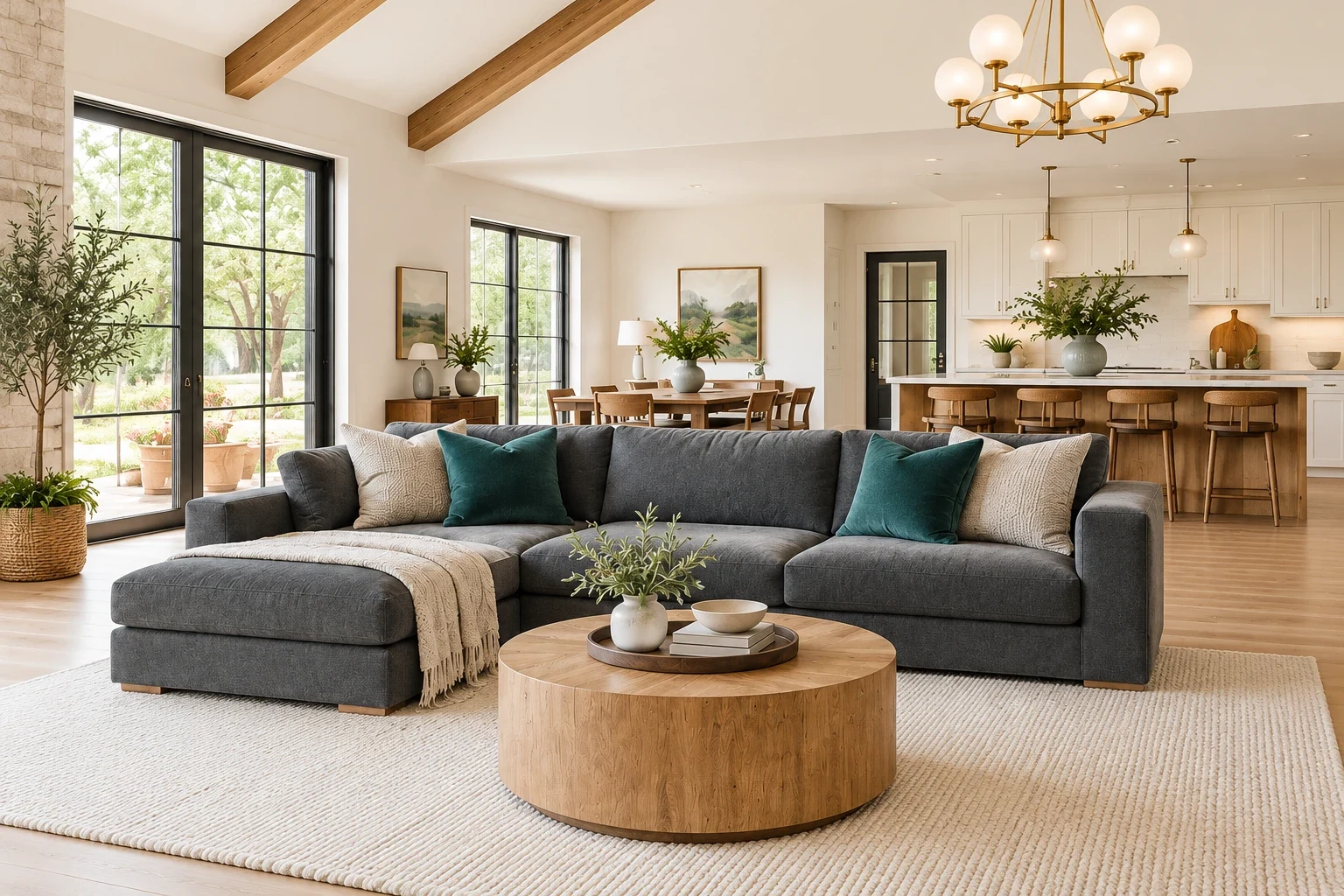
Grounding a large open concept space with a neutral palette of soft white and charcoal gray sets the stage for everything else. This base gives you the freedom to layer natural textures and muted color pops without overwhelming the room. The layout relies on floating the main seating to define the living area within a larger footprint.
Expose Wood Beams

Leave structural ceiling elements visible to draw the eye upward. Exposed oak beams break up a wide expanse of soft white drywall and add architectural weight to a vaulted ceiling. This approach warms up the room from above and creates a rustic contrast against smooth modern surfaces. Wrap existing load-bearing supports in rough-sawn oak boards using construction adhesive and finishing nails. You can source hollow faux wood beams for under $300 that slide directly over basic drywall channels.
Hang a Chandelier

Install a large metal fixture in the center of the ceiling to provide ambient overhead lighting. A brass chandelier with frosted glass shades diffuses harsh bulbs, casting a softer glow across the seating area during dark evenings. The metallic finish adds a subtle gleam that breaks up the matte wood and fabric textures. Suspend the lowest point of the fixture about seven feet above the floor so tall family members can walk underneath it without ducking.
Float a Sectional

Pull your seating away from the walls to create a dedicated conversation zone in an open layout. Using a large charcoal gray sofa as the anchor piece of the living room establishes a clear boundary between the lounge and the walking paths. This arrangement prevents the room from feeling like a cavernous hall. Leave at least three feet of empty floor space behind the back of the sectional to allow for comfortable daily foot traffic.
Toss Teal Pillows

Introduce a quiet block of color to dark upholstery by adding a pair of accent cushions. Muted teal velvet throw pillows soften the heavy look of a charcoal sectional while providing extra lower back support for reading. The velvet fabric introduces a slight sheen that contrasts with flat woven sofa materials. Choose square covers measuring twenty by twenty inches and stuff them with feather inserts that are two inches larger for a plump, firm shape.
Add an Oak Table

Place a low wooden surface right in front of your main seating to hold drinks and remotes. A round warm oak coffee table softens the rigid, straight lines of a large L-shaped sectional. The circular shape eliminates sharp corners, making it easier to navigate around the tight space between the cushions and the table edge. Keep the tabletop exactly level with or one inch below the sofa seat cushions so you can reach your coffee cup comfortably.
Layer a Textured Rug

Roll out a soft white tufted area rug over bare floorboards to define the lounging footprint. A thick floor covering absorbs sound in a large room and provides a warm surface for bare feet on chilly mornings. The subtle geometric pattern hides minor wear while breaking up the solid color block of the floor. Buy an eight-by-ten-foot size so the front legs of all your seating pieces rest fully on the fabric edge.
Bring in a Potted Tree

Fill an empty corner with a tall leafy ficus tree to introduce organic shapes and greenery. Indoor plants soften harsh right angles where the walls meet and bring a slice of nature indoors. A heavy charcoal gray ceramic pot keeps the tall plant stable and ties into the dark tones of the main seating. Line the bottom of the planter with two inches of gravel before adding potting soil to ensure the roots drain properly after watering.
Display Abstract Canvas

Hang a large piece of framed modern art on a blank wall to establish a visual focal point. A canvas showing abstract brushstrokes in muted teal and charcoal gray pulls the room’s entire color palette together in one spot. This prevents a vast soft white wall from feeling unfinished or bare. Mount the frame using heavy-duty drywall anchors, positioning the center of the canvas exactly fifty-seven inches from the floor to match standard gallery height.
Style Oak Bookshelves

Organize built-in warm oak shelving with a mix of reading materials and decorative objects. Displaying soft white ceramic vases alongside stacked hardcover books breaks up the visual weight of solid paper spines. This arrangement turns a basic storage alcove into an intentional display area that feels personal and curated. Group books in odd numbers and alternate between vertical rows and horizontal stacks to create a balanced rhythm across the wooden shelves.
Hang Sheer Drapes

Frame tall glass panels with lightweight window treatments to control incoming daylight without blocking it entirely. Soft white sheer linen curtains filter harsh afternoon sun while maintaining a bright, well-lit interior space. The vertical fabric folds draw the eye upward, emphasizing the architectural height of the room and complementing the charcoal gray and white palette. Mount your brass rod exactly four to six inches above the top of the window frame to make the ceiling appear even higher. Let the linen panels pool about one inch on the floor for a relaxed finish.
Add a Woven Pouf

Keep a round woven jute floor pouf near your reading corner for flexible, low-profile seating. This small addition offers a casual place to rest your feet without cluttering the open floor plan. The rough natural fiber introduces a tactile, earthy element that contrasts heavily with warm oak floorboards and soft charcoal gray blankets. Choose a piece filled with dense polystyrene beads so it holds a firm shape under heavy weight. Fluff the pouf by rolling it on its side every few weeks to maintain an even, supportive structure.
Set a Round Side Table

Position a small pedestal side table next to an armchair to provide a convenient drop zone. A compact charcoal gray table gives you a dedicated spot for a ceramic mug or a book, making the seating area much more functional for daily use. The single central leg of a pedestal base frees up foot room compared to a traditional four-legged design. Pick a table with a base diameter of at least twelve inches to prevent tipping.
Dust your sheer curtains and velvet pillows weekly with a soft brush attachment on your vacuum. This simple habit stops airborne dirt from dulling the lighter fabrics over time.
