
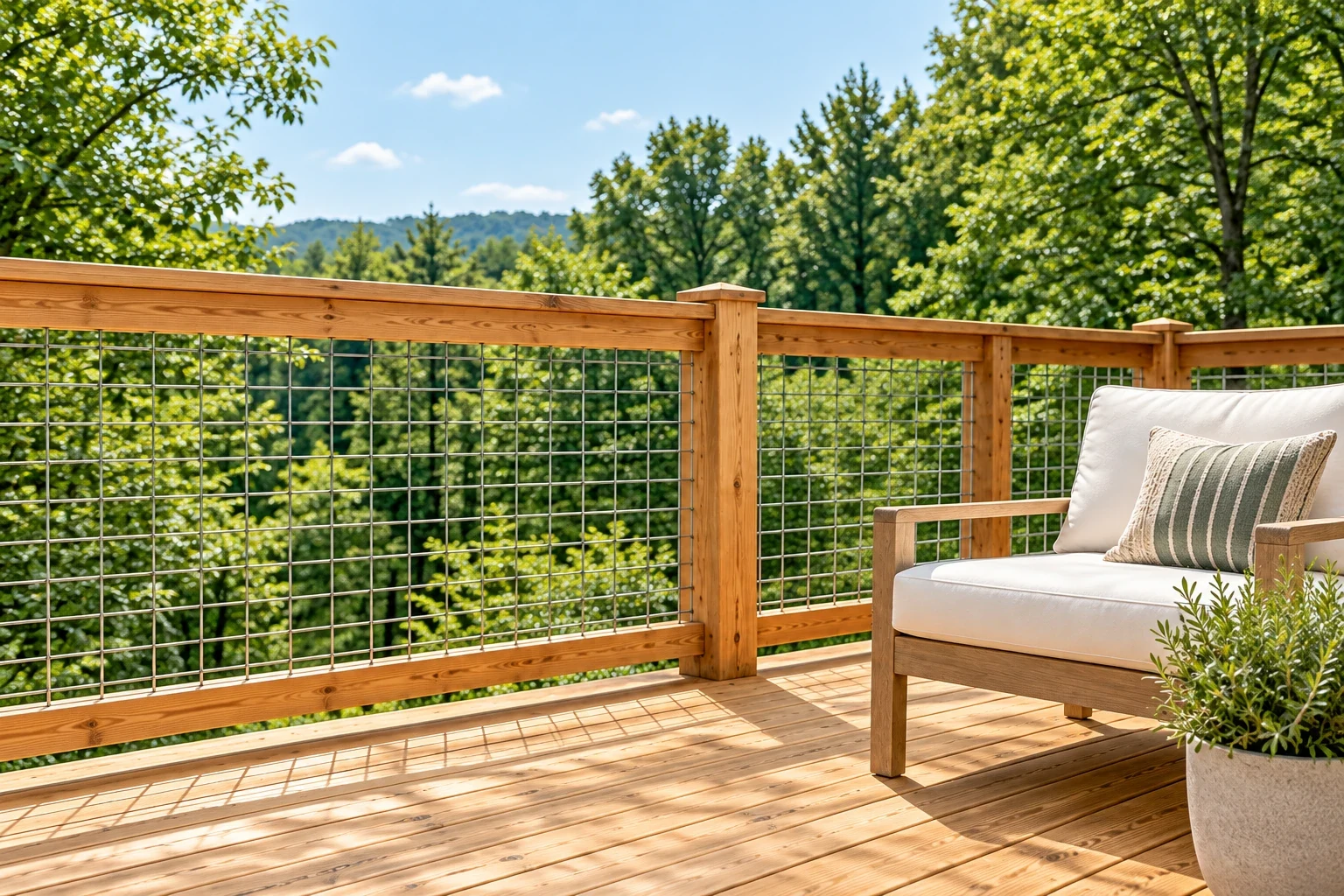
Mixing warm pine with thin metal wire lets midday sunlight pour right across the deck floor. The slim grid pattern leaves neighboring trees and lawn clearly visible from every seat. Using standard lumber and simple deck accents keeps material costs low while securing the perimeter.
Add a Pine Rail

Install a smooth warm pine top rail running horizontally across your deck perimeter. This wide, flat surface provides a comfortable place to rest your hands while looking out over the yard. It also caps the wire mesh below, preventing sharp edges from catching on clothing. Select two-by-six pine lumber for the top piece to give it substantial width. Sand the edges with 120-grit paper so the wood feels soft to the touch before you seal it.
Use Wire Panels

Fill the open sections between your uprights with galvanized steel hog wire mesh. This farm-grade material costs significantly less than custom glass or black metal balusters specifically, yet it still keeps children and pets safely contained. The thin metal grid preserves your line of sight to the lawn. Buy a 16-foot cattle panel from an agricultural supply store for around thirty dollars. Cut the heavy gauge wire to fit your exact frame dimensions using heavy-duty bolt cutters.
Frame with Pine

Anchor the wire mesh using sturdy warm pine vertical posts spaced evenly along the edge. Wood posts offer a classic look that blends well with natural outdoor surroundings and costs less than metal alternatives. They provide the necessary structural support to keep the tensioned wire panels from bowing. Set four-by-four pine posts every six feet to maintain a rigid barrier. Secure the mesh panels to the inside of the posts using galvanized U-nails hammered in every six inches.
Set a White Chair

Place a soft white outdoor lounge chair right beside the railing to create a dedicated reading spot. The pale fabric stands out crisply against the warm wood and metallic grid, breaking up the heavy textures. Sitting close to the edge allows you to look through the horizontal rails directly into the yard. Choose a chair with fade-resistant acrylic upholstery that can handle direct afternoon sunlight. Position it at a slight angle facing the best part of your view.
Lay Pine Decking

Run warm pine floor boards across the deck to match the material of your perimeter frame. Keeping the flooring and the upright structure in the same wood family creates a cohesive, intentional appearance that looks expensive. The consistent color draws the eye outward toward the boundary of the space. Fasten five-by-four-inch pressure-treated pine decking boards using exterior-grade deck screws. Leave a quarter-inch gap between each board to allow rainwater to drain through to the ground below.
Stain the Wood Frame

Apply a clear protective sealant onto the warm pine top rail using a wide bristle brush. This transparent coat highlights the natural wood grain against the lush green lawn without altering the base color. A good sealant prevents the pine from turning gray and splintering after months of rain and sun exposure. Wait until the new wood has dried out completely, usually about three weeks after construction. Brush on two thin coats of oil-based weatherproofing, letting the first layer dry for 24 hours.
Build Matching Stairs

Construct warm pine deck stairs framed with the same galvanized steel wire railings leading down to the yard. Having stair railings matching the deck railing ties the entire backyard layout together into one continuous design. It carries the modern industrial farmhouse style all the way to the grass. Build the stair stringers out of two-by-twelve treated lumber for maximum stability. Staple the cut wire panels into a routed groove along the diagonal stair rails to hide the sharp cut ends.
Hang String Lights

Suspend soft white globe string lights between the warm pine posts to illuminate the perimeter at night. The gentle overhead glow makes the outdoor area usable long after the sun goes down, without requiring expensive hardwired fixtures. The round bulbs soften the rigid right angles of the wood and metal structure. Screw small metal cup hooks into the top inside face of each post. Drape a 25-foot strand of shatterproof LED bulbs along the edge, leaving a slight dip in the wire between each hook.
Grow Climbing Vines

Train lush green ivy to wrap organically through the grid of the galvanized steel wire panel. The living plants soften the industrial look of the metal mesh and blend the man-made structure into the surrounding garden. As the foliage fills in, it adds a layer of natural privacy without blocking the breeze. Plant English ivy or jasmine in a long planter box at the base of the railing. Weave the longest vines through the bottom squares of the wire by hand to start them climbing.
Add a Drink Ledge

Create an extra-wide warm pine top rail to serve as a convenient bar ledge for beverages. This functional upgrade gives you a place to set down a soft white ceramic mug or a plate without needing a bulky patio table. It turns the perimeter into an active gathering spot rather than just a boundary. Fasten a two-by-eight pine board flat across the top of your existing posts. Sand the surface completely smooth and wipe up any spills quickly to protect the wood finish.
Group Potted Ferns

Arrange three galvanized steel buckets filled with lush green ferns sitting directly on the warm pine decking. The metallic planters echo the material of the wire mesh, tying the floor decor to the vertical structure. Ferns thrive in the partial shade provided by the nearby railing and add vibrant color to the flat wooden expanse. Drill three half-inch drainage holes in the bottom of each metal bucket before adding soil. Space the pots a few inches apart in an empty corner to soften the angles.
Top with Metal Caps

Secure a galvanized steel pyramid cap onto the top of each square warm pine deck post. These inexpensive metal covers protect the vulnerable end grain of the wood from absorbing standing rainwater, which prevents premature rotting. The silver caps also coordinate perfectly with the wire panels for a finished, professional detail. Purchase steel caps designed for standard four-by-four pine posts from the local hardware store for under five dollars each. Tap them gently into place with a rubber mallet, then drive the included side screws directly into the wood.
Roll a White Rug

Lay out a soft white woven outdoor rug over the warm pine decking boards in your main seating zone. The light color contrasts heavily with the pine floor, defining a specific area for lounging or dining. It also feels much softer under bare feet than the hard wooden planks. Choose an eight-by-ten foot rug made from recycled plastic bottles so it resists mold and mildew. Hose it down once a month and let it dry over the railing to keep the white fibers looking clean.
Install Solar Lights

Mount a soft white solar light fixture onto the side of a warm pine deck post near the patio door. Solar units cost nothing to operate and require zero complex wiring, making them an ideal budget lighting solution. They cast a gentle wash of light down the wood post, highlighting the grain at night. Position the fixture facing outward so the solar panel on top catches direct midday sunlight. Attach the mounting bracket using two small wood screws at eye level.
Build the main wooden framework and attach the wire panels first to secure the perimeter. Leave the decorative touches like string lights and potted ferns for later when the structure is finished.
