
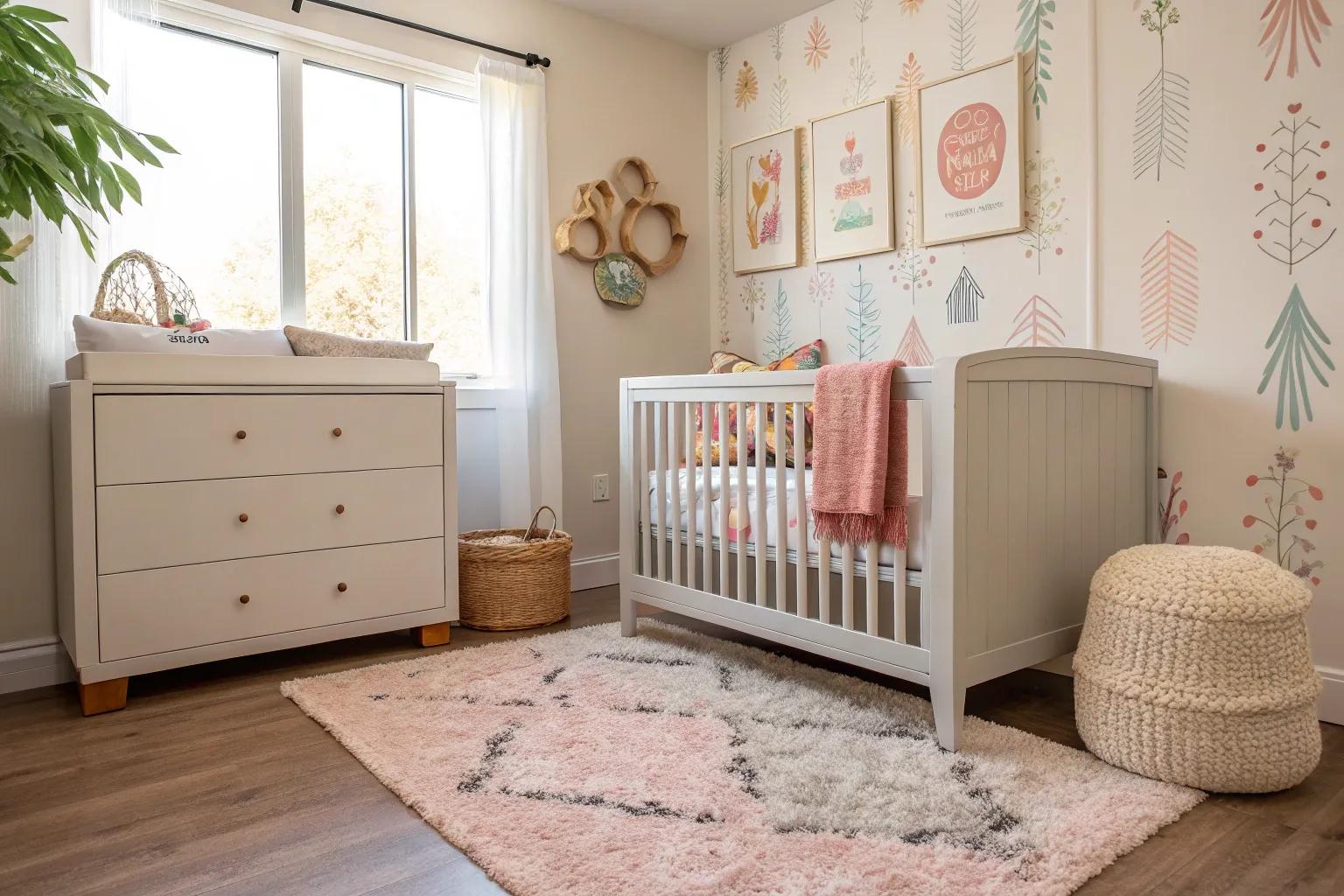
Creating the perfect nursery can feel like a game of chess, where every piece must be strategically placed to ensure both functionality and a welcoming atmosphere. With my design expertise, let’s explore some thoughtful nursery layout ideas that balance practicality with charm.
1. Crib Next to Changing Station

Position the crib near the changing station for an efficient flow during diaper changes. This setup is particularly handy during those late-night nappy duties, a common challenge addressed in these nursery in parents bedroom ideas.
2. Mirror Image

For twins, mirror the cribs to create a harmonious and balanced space. Much like the design principles in minimalist kids’ room ideas, symmetry not only pleases the eye but also efficiently organizes the room.
3. Personalized Decor

Add a personal touch with custom wall art like some darling baby footprint art or name decals. This unique element makes the space truly yours and adds character to the nursery.
4. Hidden Storage Options

Utilize hidden storage solutions like under-crib drawers to keep the nursery tidy. This clever use of space ensures everything has its place and is a great tip for anyone exploring DIY nursery ideas on a budget.
5. Convertible Furniture

Invest in adaptable convertible furniture that grows with your child, such as cribs that turn into toddler beds. This forward-thinking choice saves money and adapts to changing needs.
6. Eco-Friendly Materials

Select eco-friendly materials for a sustainable nursery design. This approach can be very cost-effective, aligning with many budget-friendly nursery projects. Not only do these choices benefit the environment, but they also ensure a safe space for your baby.
7. Playful Rug as a Focal Point

Anchor the room with a playful rug that defines the play area and adds a splash of color. This space can later evolve, so check out these craft room design layouts for future inspiration. This not only brings warmth but also encourages tummy time and play.
8. Center Crib

Place the crib in the center of the room to make it a minimalist focal point, perfect for showcasing a unique crib design. This unconventional setup allows for flexible space allocation for play and changing stations.
9. Mixing Patterns and Textures

Blend various patterns and textures to create a dynamic and inviting space. For instance, a piece of custom infant footprint art can add a lovely personal texture. This approach keeps the nursery visually stimulating and cozy.
10. Soft Lighting Ambiance

Create a warm atmosphere with soft lighting, essential for those late feeds and bedtime stories. Dimmable lights are especially useful for a nursery inside a parent’s bedroom, allowing you to adjust the mood as needed.
11. Multi-Purpose Room

Combine the nursery with an office or guest room by strategically placing furniture. This versatile approach is great for maximizing limited space while keeping it functional, a concept that also applies to many creative craft room designs.
12. Crib Opposite Rocking Chair

Position the crib opposite a rocking chair to create a balanced visual flow. This arrangement, often featured in DIY nursery ideas on a budget, allows for a central play area and keeps all essentials within reach.
13. Corner Crib

Tuck the crib into a corner to create a cozy sleeping nook, a personal favorite for its compact efficiency. This layout helps delineate sleep from play areas and is especially useful when creating a nursery in the parents’ bedroom.
14. Floating Shelves for Storage

Use floating shelves to keep essentials organized and within reach, a trick I’ve found invaluable in tight quarters. They add vertical storage without taking up precious floor space.
15. Accent Walls with Texture

Introduce texture with an accent wall using wallpaper or wood panels. This adds depth and interest without overwhelming the room and is a popular project among other affordable DIY nursery ideas.
16. Crib Next to Rocking Chair

Place the crib close to a rocking chair for seamless nighttime feeds and soothing moments. This functional layout keeps both baby and parent comfortable, a key principle found in many minimalist kids’ room ideas.