
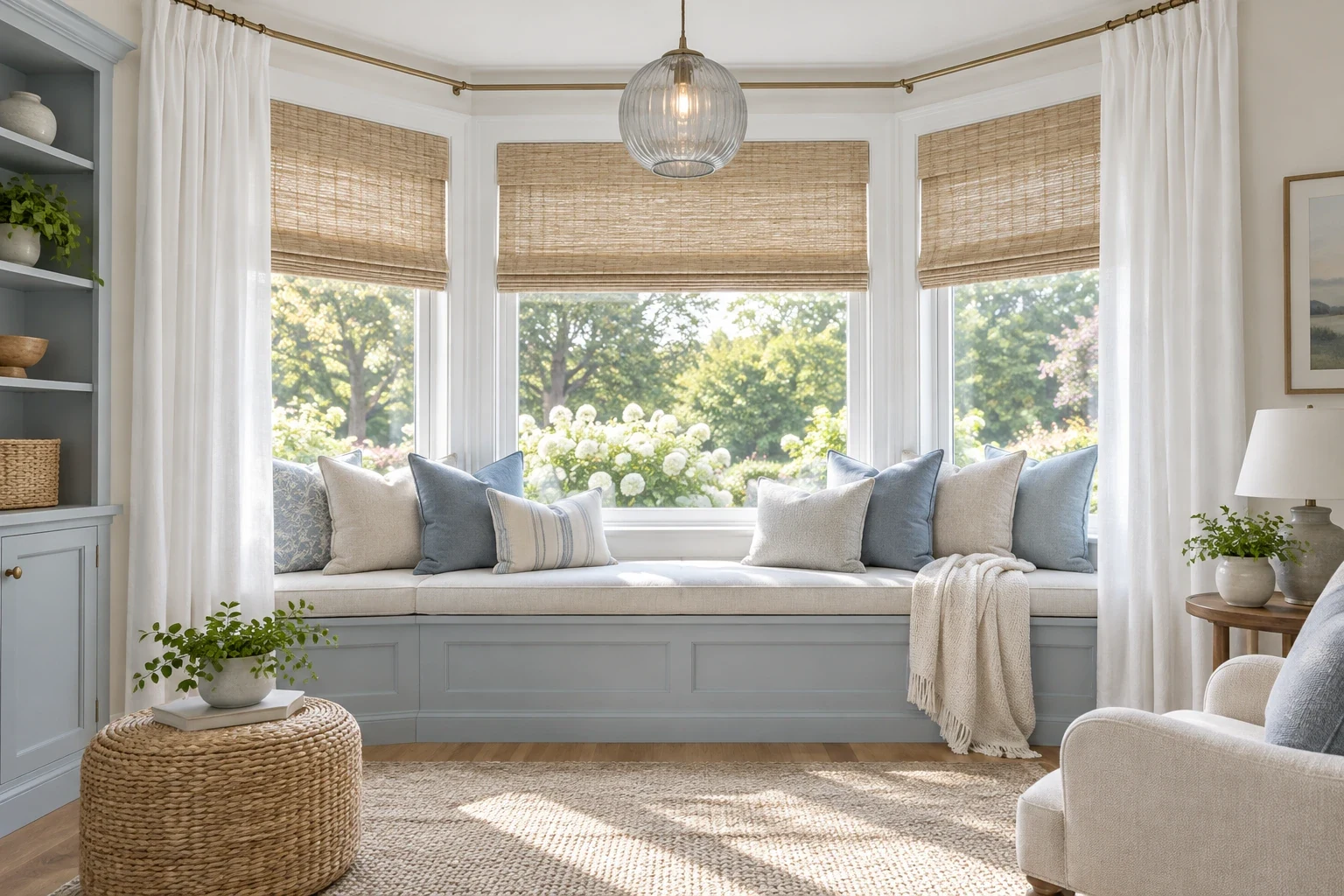
Deciding whether your bay window reading nook will hold a built-in bench or remain open floor space dictates every other choice you make. A custom bench maximizes the footprint while offering hidden storage for books and blankets. Keeping the floor clear allows room for a small bistro table or an open view to the garden.
Hang Roman Shades

Mount woven roman shades directly inside the window frame. This approach controls morning glare without covering the decorative trim of the bay. Measure the exact width of each glass pane and order shades with a quarter-inch deduction for clearance. Choose a warm beige natural fiber like jute or bamboo, which typically costs around $40 to $80 per panel. The textured material filters harsh sunlight while maintaining privacy from the street.
Add a Pendant

Suspend a single pendant light from the ceiling directly above the alcove center. Overhead lighting defines the recess as its own distinct zone separate from the main room. Drop a light gray glass fixture so the bottom rim sits roughly 72 inches above the floor, or 36 inches above a bench seat. Use a warm 2700K LED bulb to create a comfortable reading spot after dark. Hardwiring a new box usually requires an electrician, but a plug-in swag cord offers a $30 alternative.
Frame with Drapes

Install a continuous curtain rod across the outer wall to hang floor-length drapes. Framing the entire bay rather than individual windows makes the architectural feature feel wider. Mount the rod bracket four to six inches above the window trim to draw the eye upward. Hang crisp white linen panels that just brush the baseboards. You will need double the fabric width of the opening so the curtains look full when pulled shut, softening the hard angles of the recess.
Build a Bench

Construct a custom window seat that spans the full width of the bay. A built-in bench provides permanent seating and reclaims the awkward angles for practical use. Frame the base using standard two-by-four lumber and top it with three-quarter-inch plywood cut to match the wall angles. Paint the base a soft blue in a satin finish to resist scuffs from shoes. Leave the front open for baskets or add hinged lids under the seat cushion to store extra seasonal blankets.
Layer Soft Pillows

Arrange cushions and pillows on the window seat to soften the hard wooden backrest. Mixing different textures and sizes invites people to sit and lean comfortably against the glass. Start with two 22-inch solid square pillows in the back corners for support. Add a slightly smaller 20-inch patterned option in soft blue, and finish with a warm beige lumbar pillow in the center. Use feather-down or down-alternative inserts so you can chop the tops for a relaxed shape.
Add Built-In Bookshelves

Fit narrow shelving units into the side walls of the bay recess. Utilizing the vertical space on the return walls keeps reading materials right where you need them. Space the shelves 10 to 12 inches apart to accommodate standard hardcovers and paperbacks. Paint the wood soft blue to match the trim, integrating the storage directly into the architecture. Break up the rows of warm beige books with a small white ceramic vase to keep the display looking intentional rather than cluttered.
Lay a Cozy Rug

Anchor the alcove by placing a small rug on the floor right in front of the bay. A floor covering catches bare feet and visually connects the window zone to the rest of the room. Select a light gray textured area rug measuring three by five feet. Slide the long edge flush against the crisp white baseboard of the window seat. Leave at least eight inches of warm wood floor exposed around the perimeter so the rug defines the nook without crowding it.
Add a Small Bistro Table

Position a compact dining set directly inside the window alcove. This setup creates a dedicated spot for morning coffee or casual meals without requiring a full dining room. Choose a small round crisp white bistro table no larger than 30 inches in diameter to allow clear movement around it. Pair it with two warm beige woven chairs tucked underneath. Ensure the table height is around 28 to 30 inches, leaving enough clearance to slide the chairs back comfortably without hitting the glass.
Keep the Garden View

Leave the glass panes completely bare to frame the outdoors. Skipping window treatments maximizes natural daylight and treats the landscaping like a living piece of art. Clean the glass thoroughly inside and out using a squeegee and a mixture of water and white vinegar. Place a simple white cushion on the sill to provide a low-profile resting spot that does not block the lush green trees outside. This minimalist approach costs nothing and works best for homes with private, secluded yards.
Drape a Throw Blanket

Toss a thick knit throw over the edge of the seating area. A folded blanket adds immediate warmth and breaks up the long, flat line of the bench cushion. Pick a light gray cotton or wool blend measuring at least 50 by 60 inches. Fold it in half lengthwise and drape it casually over the soft blue window seat, letting one end trail slightly toward the floor. This provides an extra layer for chilly mornings and costs between $25 and $60 at most home goods stores.
Set Plants on the Sill

Line up a collection of small houseplants directly on the ledge. The intense sunlight caught by the angled glass creates a microclimate perfect for growing indoor greens. Group three small potted green plants, like pothos or succulents, in matching white ceramic pots. Set them on the warm beige window sill, spacing them about six inches apart. Place a cork coaster under each pot to protect the painted wood from water rings, and rotate the plants weekly so they grow evenly toward the sun.
Install Wall Sconces

Attach a hardwired or plug-in light fixture on the narrow wall flanking the bay. Side lighting reduces harsh overhead shadows and illuminates the alcove well for reading. Mount a light gray metal wall sconce to the crisp white wall beside the window frame, positioning it approximately 60 inches from the floor. If you want to avoid electrical work, buy a plug-in version and secure the cord against the trim with small cable clips. Use 40-watt equivalent bulbs to keep the output soft and relaxing.
Expose Hardwood Floors

Remove old carpeting to reveal original wood boards running directly into the bay alcove. Continuous flooring reflects incoming daylight past the room threshold, creating an unbroken line of sight right to the window casing. Pull up the carpet and foam pad, then pry away all perimeter tack strips with a flat crowbar. Sand the bare planks smooth and apply two coats of clear water-based polyurethane to protect the wood from fading under direct sun. This warm beige hardwood floor grounds the alcove while contrasting neatly with a soft blue window seat cushion and crisp white trim.
Tossing a throw blanket over the bench is the fastest change you can make right now. You just need a few seconds to fold the fabric and add texture to the alcove.
