
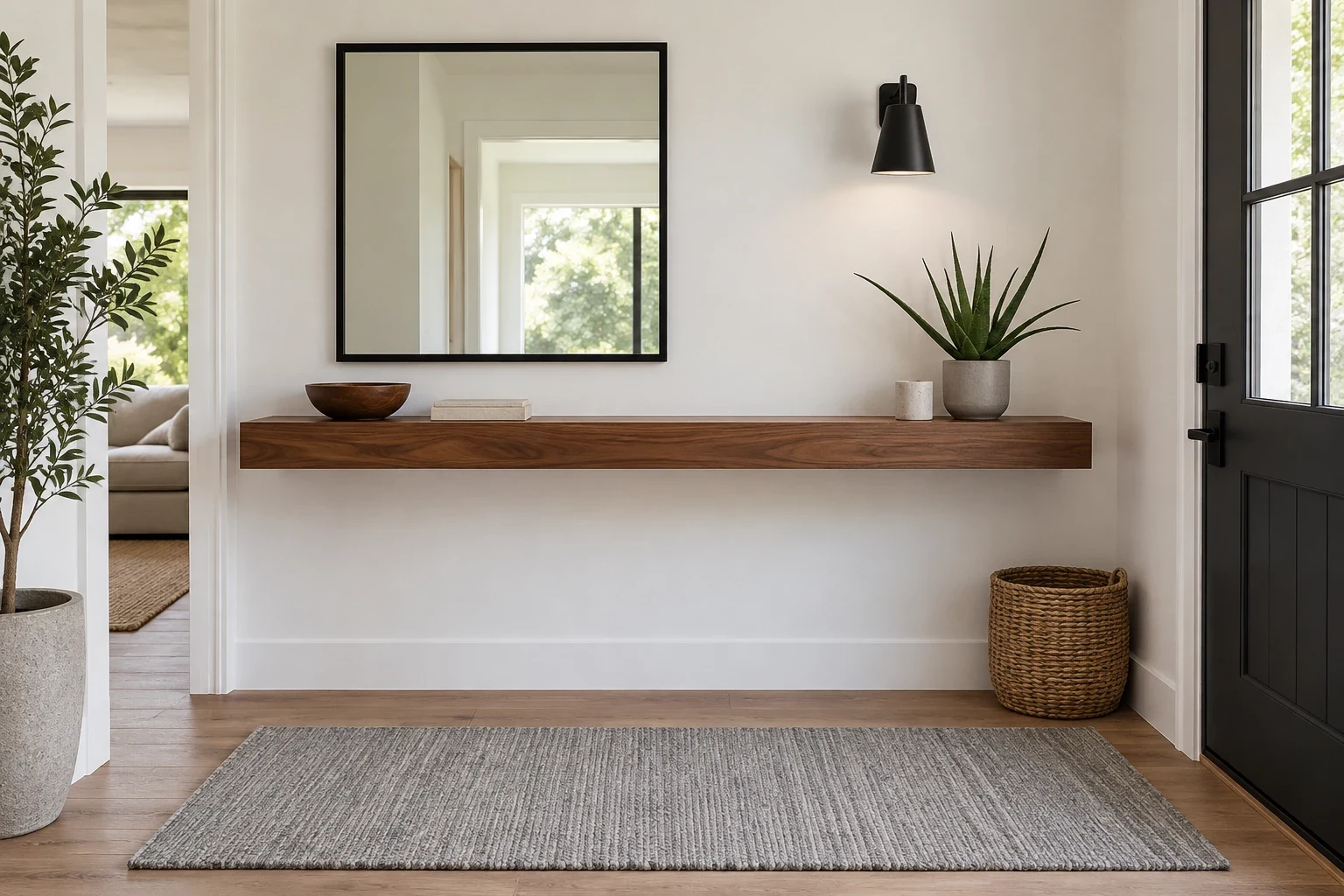
Committing to a strict three-color palette prevents a tight entryway from feeling cluttered. A foundation of crisp white walls paired with warm walnut wood and matte black metal establishes a clear visual structure. This approach lets you add functional pieces without overwhelming the limited square footage.
Hang a Flat Mirror

Mount a rectangular mirror with a thin frame directly above your entryway drop zone. A flat reflective surface bounces morning light deeper into the corridor, cutting down on the need for heavy overhead fixtures. Choose a matte black metal frame measuring about 24 by 36 inches to keep the profile slim against the wall. Position the bottom edge roughly six inches above your shelf so you have clearance for small items below it.
Mount a Sconce

Install a hardwired wall sconce instead of relying on floor lamps that eat up valuable square footage. Moving your lighting to the wall frees up floor space while still providing targeted illumination for finding keys or checking your coat. Look for a matte black metal fixture that extends no more than eight inches from the drywall. Wire it to a standard dimmer switch near the front door to control the brightness during early mornings.
Mount a Wood Shelf

Secure a floating shelf directly to the wall studs to create a dedicated drop zone for daily essentials. Skipping legs entirely keeps the floor clear, which makes sweeping easier and visually expands the tight room. Buy a warm walnut slab that is at least 1.5 inches thick and 36 inches long to handle the weight of mail and accessories. Use heavy-duty concealed steel brackets rated for 50 pounds to prevent the wood from sagging over time.
Add a Potted Aloe

Place a compact, low-maintenance succulent on the end of your floating ledge. Bringing in a live plant breaks up the rigid straight lines of the wood and metal fixtures without demanding daily care. Buy a small aloe plant and repot it into a six-inch soft gray ceramic planter with a drainage hole. Set a cork coaster underneath the ceramic base to protect the walnut finish from accidental water rings after watering.
Lay a Grey Runner

Roll out a long, narrow rug down the center of your corridor. Just as area rugs grounding the seating zone define a living room, a runner defines the path of travel in a hallway. Pick a soft gray textured synthetic blend that measures two feet wide by six feet long. Place a non-slip rubber pad cut one inch smaller than the rug underneath to stop the fabric from shifting when you walk through the door.
Keep Walls Crisp White

Paint the entire corridor with a flat white finish to maximize the available natural daylight. Light walls reflect the sun from adjacent rooms, preventing narrow passages from feeling like dark, enclosed tunnels. Buy two gallons of a high-quality acrylic latex paint in a pure, untinted white. Roll two even coats over the drywall, allowing four hours of drying time between applications. This ensures a solid, opaque coverage that successfully hides old scuffs and provides a clean backdrop for your dark metal accents.
Hang a Gallery Wall

Group a tight collection of small artwork above your wooden wall trim. Clustering multiple small frames together creates a single focal point rather than scattering visual clutter across the entire room. Select eight to ten simple sketches and soft gray abstract prints housed in identical matte black frames. Map out the arrangement on the floor first, leaving exactly two inches of spacing between each frame before hammering the picture hooks into the drywall.
Layer a Soft Cushion

Toss a textured linen pillow onto a wooden accent chair in the corner. Much like a sofa as the central seating anchor dictates a lounge area, a single comfortable chair establishes a clear spot to put on shoes. Purchase a 20-inch square soft gray linen cover and fill it with a firm down-alternative insert. Prop it upright against the backrest of a warm walnut chair to soften the hard wooden spindles.
Set a Metal Tray

Dedicate a shallow catchall to hold your daily pocket items the moment you walk inside. Containing loose keys and sunglasses inside a defined border stops them from spreading across the entire wooden surface. Buy a matte black metal tray measuring about eight by ten inches with a one-inch raised lip. Place it on the right side of your warm walnut ledge, leaving the rest of the wood completely bare for a cleaner look.
Expose Ceiling Beams

Strip back overhead drywall to reveal the raw structural joists across your mudroom ceiling. Exposing overhead structural framing draws the eye upward to maximize vertical space, which tricks the brain into perceiving extra room in a tight entry. Hire a carpenter for roughly $500 to remove drywall boards and sand the timber smooth with 120-grit sandpaper. Apply a clear matte polyurethane finish to the warm walnut wood joists to lock in natural textures. Paint surrounding drywall panels a crisp white finish and install matte black metal hooks along the wall below for balanced storage.
Wire a Dark Pendant

Suspend a single dome light from the ceiling directly over your main counter. Dropping the light source lower focuses the illumination exactly where you need it, similar to how a coffee table as a low central piece grounds a living room. Pick a matte black metal pendant that measures roughly 12 inches in diameter. Hang the fixture so the bottom rim sits 36 inches above the warm walnut surface to avoid glaring into your eyes.
Mount a Roller Shade

Fit a minimal fabric shade inside the frame of your entryway window. A flat shade blocks harsh glare and provides privacy at night without the bulky fabric folds of traditional curtains. Order a custom-cut soft gray light-filtering roller shade that fits snugly inside the window casing. Secure the mounting brackets directly into the top jamb with one-inch wood screws, ensuring the mechanism rolls smoothly without catching on the side trim.
Coat the Front Door

Brush a dark, solid color onto the interior side of your main entry door. A dark door acts as an anchor at the end of a white hallway, giving the eye a clear destination as you walk through the house. Tape off the hinges and apply two coats of a matte black exterior-grade enamel using a foam roller. Let the paint cure for a full 24 hours before reattaching your warm walnut handle to prevent chipping.
Stack Hardcover Books

Arrange a small pile of reading material on your wooden drop zone. Stacking a few books adds a subtle layer of texture and personality without taking up permanent floor space. Select exactly three hardcover volumes featuring soft gray and black spines to match your room palette. Lay them flat on the warm walnut floating ledge, placing the largest book on the bottom and the smallest on top to create a stable, neat pyramid.
Paint the walls and door first to establish your color base. Mount the shelves and lighting next, saving small accents like trays and books for last.
