
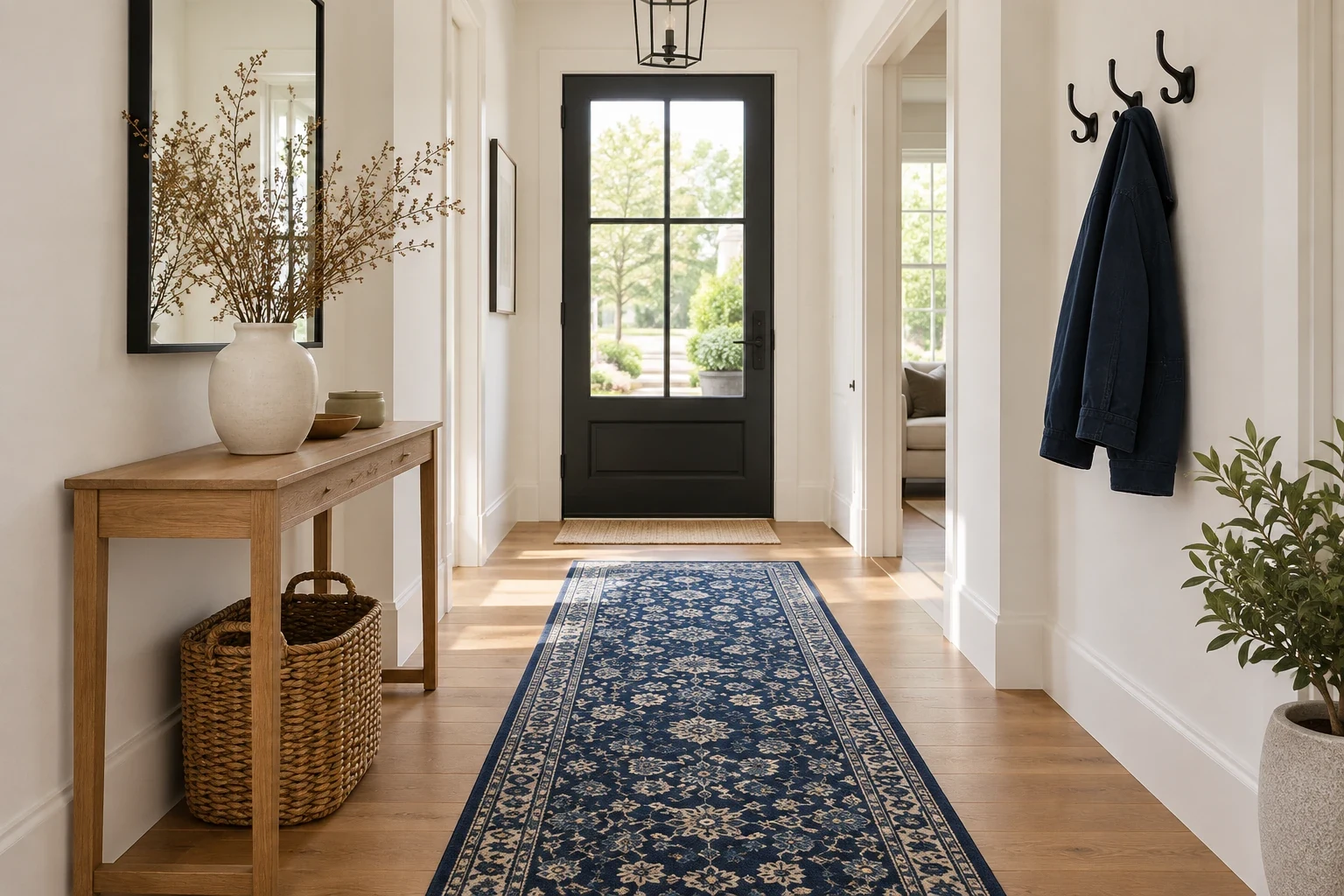
Morning light hitting soft white walls makes dark paint accents and matte black fixtures stand out clearly in a narrow hallway. Combining warm oak furniture with dark blue tones creates a balanced drop zone that manages daily clutter. Simple additions like woven baskets, runner rugs, and gallery frames give the space structure without taking up floor room.
Hang a Wall Mirror

Center a rectangular mirror roughly 6 to 8 inches above your console table to reflect natural light down the corridor. A matte black metal frame provides a crisp border that contrasts clearly against soft white paint. This setup bounces morning sun back into the room, reducing the need for artificial lighting during the day. Mount the glass using heavy-duty wall anchors rated for at least 50 pounds to keep it secure.
Mount Black Hooks

Install a row of individual wall hooks near the door for coats and bags. Spacing three matte black metal hooks about 12 inches apart gives thick winter jackets enough room to hang flat without bunching. This keeps your daily outerwear off the furniture while matching the dark iron hardware used elsewhere. Screw the base plates directly into a wall stud, as heavy wool coats and loaded backpacks will quickly pull drywall anchors loose.
Vase with Branches

Bring in organic texture by standing a few dried branches in a simple ceramic vessel. A soft white vase blends into the wall behind it, letting the brown twigs act as a subtle natural focal point. This arrangement costs nothing if you forage the stems outside, and it requires zero watering or maintenance. Trim the branches so they reach no higher than the top third of your mirror to keep the display balanced.
Tuck in a Basket

Slide a large woven storage bin into the empty floor space directly beneath your table. Wicker adds a coarse, tactile element that breaks up the flat wooden surfaces and painted baseboards. It provides a hidden spot to drop shoes or umbrellas the moment you walk inside. Measure the clearance under the bottom shelf first, and buy a basket that leaves at least two inches of breathing room so you can pull it out without scraping the wood.
Roll Out a Runner

Laying a long runner rug on the floor draws the eye straight down the corridor. A dark navy blue pattern hides dirt from muddy shoes while protecting the oak floorboards in your highest traffic zone. The textile also absorbs echoes, softening the harsh acoustics typical of narrow passageways. Choose a low-pile wool or synthetic blend roughly 2.5 feet wide, and always place a non-slip rubber pad underneath to keep the fabric firmly planted.
Paint the Door Navy

Coating the interior side of your front door with deep blue paint grounds the entire entryway. Navy blue masks smudges around the doorknob and ties in perfectly with the textiles on the floor. The dark color makes the surrounding soft white walls feel even brighter when morning light hits the panels. Use a durable satin or semi-gloss interior enamel, which usually costs around $25 a quart, and wipe it down with a damp cloth when dust settles.
Pull Up an Oak Bench

Set a slim wooden bench against the opposite wall to give yourself a dedicated spot to tie shoes. A warm oak frame topped with a soft white linen cushion matches the console while offering practical seating. Tossing a single navy blue throw pillow on top connects the bench to the room’s darker accents. Look for a seat depth of about 14 to 16 inches so it does not block the main walkway.
Hang a Black Pendant

Swap out a basic flush mount for a hanging metal light fixture to lower the illumination closer to eye level. A matte black pendant shade focuses a warm bulb directly onto the floor, creating a cozy atmosphere before sunrise. This dark metal element draws attention upward and establishes a visual link with your mirror frame and door hardware. Hang the fixture so the bottom rim sits roughly seven feet above the floor to ensure ample head clearance.
Create a Gallery Wall

Line up a row of identical frames along the side wall to introduce some personality. Three matte black frames holding abstract navy and white art tie the entire color palette together in one spot. Hanging them directly above a slim oak wainscoting anchors the artwork and prevents the long wall from looking empty. Space the frames exactly two inches apart and use a laser level to keep the top edges perfectly straight across the corridor.
Paint the door and install the heavy wall hooks first to get the messy work out of the way. Leave the mirror, console table, and decorative textiles for the final setup phase.
