
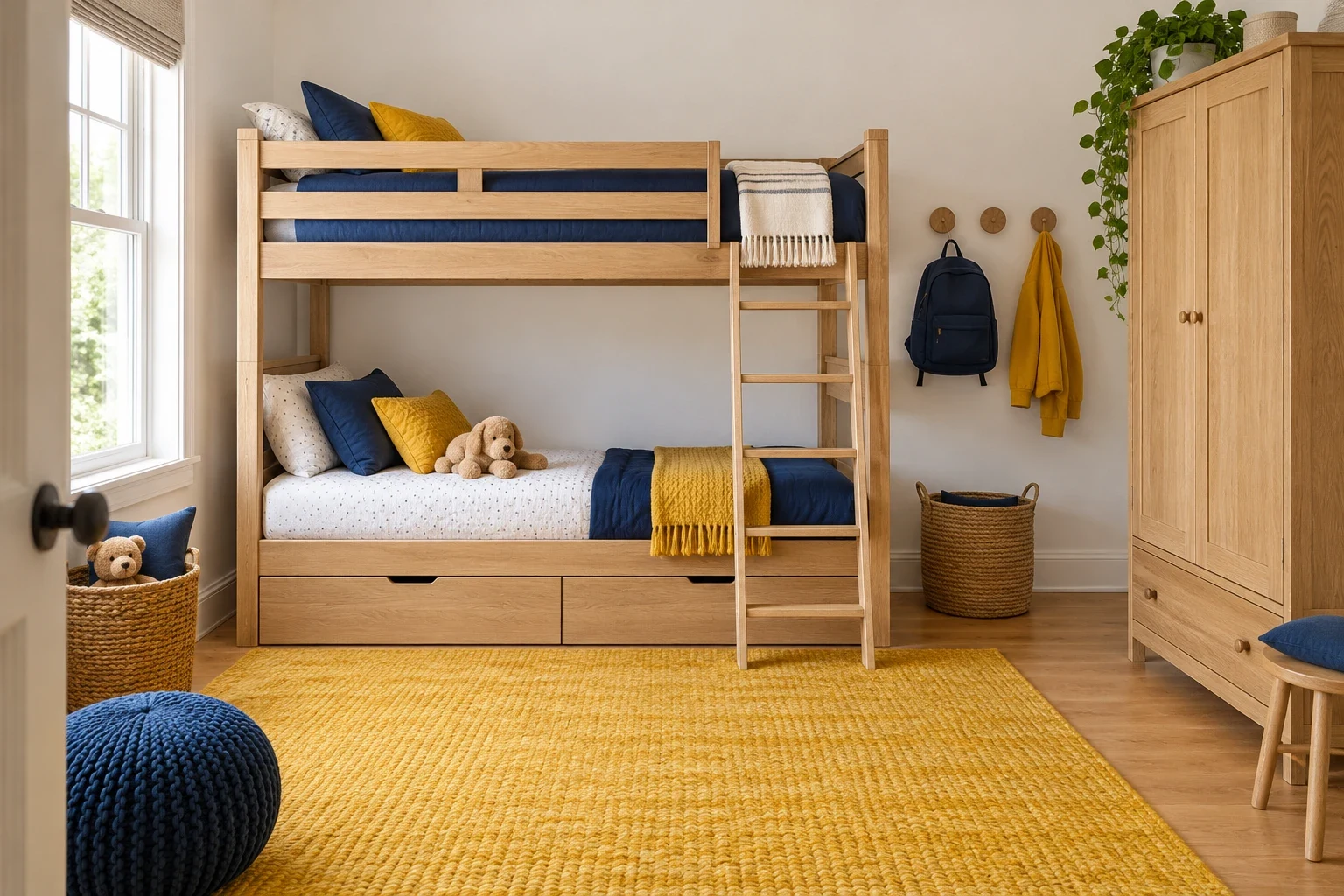
Pushing heavy furniture against the walls opens up the center of a shared kids’ bedroom. This layout clears enough floor space for siblings to play together without tripping over each other. Combining navy blue, soft white, and light oak accents keeps the room feeling calm and organized.
Build Bunk Beds

Free up valuable floor space by choosing a sturdy light oak frame that stacks the sleeping areas. Bunk beds solve the biggest hurdle in tight quarters by cutting the furniture footprint in half. Look for a solid wood frame with a weight capacity of at least 400 pounds per level to ensure it lasts through the teenage years. A simple wooden ladder attached flat against the side prevents the climbing steps from eating into the room’s open play area. You can add pink bedding as a color accent later if you want a change from navy blue.
Add Base Drawers

Slide two flush light oak drawers into the empty gap beneath the bottom bunk. Capturing this unused zone provides deep storage for bulky winter sweaters or extra bed linens without requiring another dresser. Measure the clearance between the floor and the bed rail, aiming for drawers at least eight inches deep. Mount the drawer boxes on heavy-duty steel casters rather than wooden tracks so they roll out smoothly over the floor. Finish the fronts with recessed finger pulls to keep the walkway clear of snagging hardware.
Lay a Bright Rug

Anchor the play area with a large mustard yellow area rug over the oak floor. A bright textile introduces a block of warmth that breaks up the continuous wood tones of the furniture. Select a flatweave or low-pile wool rug with a subtle woven texture, which resists crushing under heavy foot traffic. Buy an eight-by-ten-foot size to ensure the edges reach under the bottom bunk and the armoire. Place a quarter-inch felt pad underneath to prevent slipping and cushion the floor for kids sitting down to play.
Place an Armoire

Position a tall light oak armoire against the soft white wall to handle hanging clothes. Going vertical with clothing storage frees up the lower wall space that a wide dresser would otherwise block. Choose a cabinet measuring around 72 inches high with interior wooden hanging rods and adjustable lower shelves. Anchor the unit directly into the wall studs using heavy-duty metal anti-tip straps to keep it secure. The closed doors hide the visual clutter of mixed clothing colors, keeping the bedroom looking tidy.
Mount Wall Hooks

Fasten a row of three light oak wall hooks onto the soft white wall near the doorway. Providing a quick drop zone encourages kids to hang up their jackets and backpacks instead of tossing them on the floor. Space the wooden pegs about twelve inches apart so bulky winter coats have room to hang flat. Install the peg rail at a height of 48 inches from the floor, making it easy for younger siblings to reach. Screw the backplate directly into a wall stud to support the weight of heavy canvas bags.
Suspend a Navy Pendant

Hang a matte navy blue metal dome pendant light from the center of the soft white ceiling. A single overhead fixture casts a warm, even glow across the entire room without taking up any surface area on nightstands. Pick a dome measuring at least sixteen inches across to ensure the light pool reaches the corners of the space. Drop the cord so the bottom rim sits roughly seven feet above the floor to clear the top bunk. Fit the fixture with a dimmable LED bulb to serve as both a reading light and a nightlight.
Tuck in a Desk Chair

Push a mustard yellow metal chair completely under the light oak desk when homework time ends. Clearing the floor space prevents siblings from bumping into furniture in a tight shared bedroom layout. Select an armless metal seat with a footprint under eighteen inches wide so it slides smoothly between the table legs without catching. Stick thick felt pads onto the bottom of all four metal legs to protect the wood floor from scratches. Choose a durable painted metal chair for under forty dollars that wipes clean with a damp cloth after art projects.
Install Wall Bookshelves

Mount three floating light oak shelves on the soft white wall to store children’s books vertically. Lifting storybooks off the work surface clears critical desk space while keeping reading materials organized for both kids. Space the wooden ledges fourteen inches apart vertically to accommodate oversized picture books and tall binders. Place a heavy mustard yellow metal bookend at the outer edge of each shelf to stop paperbacks from tipping over. Drive steel mounting brackets directly into wall studs using three inch wood screws to safely support up to forty pounds of books per tier.
Wallpaper an Accent Wall

Cover the far wall behind the oak dresser with a subtle navy blue and soft white geometric wallpaper. A small-scale pattern adds visual depth to the room without overpowering the tight square footage. Select a peel-and-stick vinyl paper that costs around forty dollars per roll, allowing you to update the room’s style as the kids grow. Line up the geometric repeats carefully at the seams using a plastic smoothing tool to push out any trapped air bubbles. The dark navy background hides minor scuffs and handprints in a high-traffic area.
Use Fabric Storage Bins

Sort loose toys into two collapsible navy blue fabric storage bins inside an open light oak cubby unit. Soft-sided containers corral small plastic blocks and art supplies that normally clutter the floor. Measure the interior dimensions of your cubby holes and buy square bins that are one inch smaller on all sides for a smooth fit. Choose canvas bins reinforced with rigid cardboard inserts so they hold their shape when pulled out by their handles. The dark fabric conceals the messy contents while blending with the room’s color scheme.
Display Plush Toys

Line up a row of soft plush animals against a navy blue bolster pillow on the window seat. Grouping stuffed toys in one designated spot keeps the actual sleeping beds clear of unnecessary clutter. Buy a firm cylindrical bolster measuring thirty-six inches long to act as a structured backrest against the glass. Arrange the plush animals by size, placing the tallest ones in the back so everything looks intentional rather than messy. This arrangement turns the window ledge into a comfortable reading nook that utilizes the room’s perimeter.
Attach a Bedside Tray

Clamp a natural wood clip-on bedside tray securely to the top bunk guardrail. A suspended shelf gives the child on the top bunk a safe place to set a small glass water bottle and a hardbound book. Look for a tray with an adjustable felt-lined clamp that tightens around wooden rails up to two inches thick without scratching the finish. Ensure the tray surface has a raised one-inch lip around the perimeter to stop round objects from rolling off. This tiny addition eliminates the need for the top sleeper to climb down the ladder at night.
Build the heavy wooden bunk beds and armoire first to establish the floor plan. Then, add the smaller organizational details like the wall hooks and bedside tray.
