
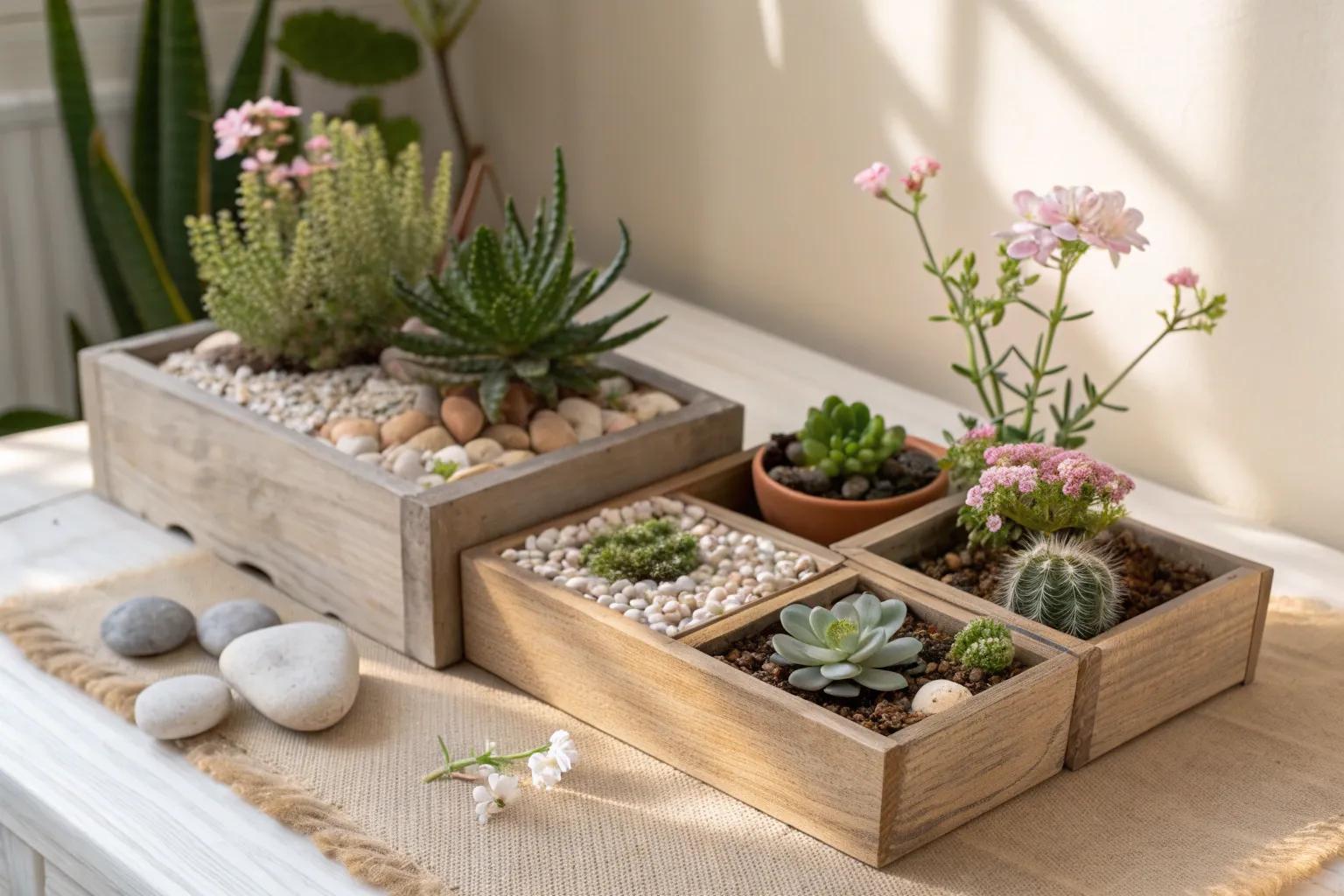
Transforming simple materials into a garden sensory bin is a delightful way to bring the outdoors inside. With these creative ideas, you’ll be able to craft an engaging and interactive experience for kids of all ages.
1. Miniature Vegetable Garden

Create a tiny farm by using toy carrots, radishes, and tomatoes as the centerpiece of your sensory bin. I love watching kids pretend to harvest their crops, sparking their imagination and teaching them about veggies.
2. Texture Exploration

Mix different textures like smooth pebbles and rough mulch. This contrasts beautifully and gives kids a sensory feast. Explore our creative sensory bin ideas to find more ways to engage their touch.
3. Bug Adventure

Introduce plastic bugs or critters to your bin for an added element of surprise. It’s always fun to see the kids’ eyes light up at the sight of a ‘friendly’ bug. You can also try these pumpkin sensory bin ideas for more seasonal fun.
4. Flower Power Play

Fill your bin with artificial flowers of every color and let kids ‘plant’ their own vibrant garden. This idea always reminds me of the colorful wildflower fields back home in Texas. You can find even more creative ways to use water beads to enhance this sensory activity.
5. Colorful Seeds

Use colorful beads or lentils to represent seeds for planting. I love how this adds a pop of color and encourages fine motor skills as kids ‘plant’ their seeds.
6. Fairy Garden Fantasy

Incorporate tiny fairy houses and figures for a magical twist. This is a nod to my childhood dreams of fairies living in the garden, and kids adore it! Explore these magical fairy garden ideas to get started.
7. Natural Wonders

Scatter stones and faux leaves throughout the bin to mimic a natural setting. Collecting unique stones has always been a hobby of mine, and it’s delightful to share this with kids. You can incorporate these elements into dinosaur sensory bin ideas to create an immersive prehistoric landscape.
8. Recycled Creations

Use recycled containers as plant pots, teaching kids about reusing materials. I always enjoy turning something old into something new and beautiful. Check out these creative indoor plant pot ideas for more inspiration.
9. Gardening Challenge Cards

Create cards with simple challenges or tasks, like ‘plant three red flowers’. This interactive element keeps kids engaged and learning through play. You can also incorporate these tasks into our September sensory bin ideas for more seasonal fun.
10. Water Play

Add a small amount of water to one section of the bin for real planting experiences. Kids love getting their hands wet, and it’s a sure way to bring more life to the activity. You can find more inspiration in our November sensory bin ideas.
11. Eco-Friendly Elements

Incorporate biodegradable items like paper pots or bamboo tools. It’s a great introduction to sustainability without making it feel like a lesson.
12. Birdwatching Bin

Add toy birds and a small birdhouse to spark interest in our feathered friends. It’s a favorite of mine as it brings a piece of the sky into our little garden. If you enjoy this activity, you might also like our construction site sensory bin ideas.
13. Seasonal Touches

Add items that represent the current season, like pastel eggs for spring or orange leaves for autumn. Each season brings new surprises and keeps the activity fresh and exciting. You can also explore our creative Halloween sensory bin ideas for festive fall inspiration.
14. Mini Garden Tools

Include tiny shovels, rakes, and watering cans to give kids the full gardener experience. I find that these tools are a hit with little ones who love to mimic adult tasks.
15. Edible Garden

For a tasty twist, include edible items like cereal or dried fruit as part of the landscape. This is a safe and delicious way for younger kids to engage with the sensory bin. You can also explore these creative kinetic sand sensory bin ideas for more tactile fun.