
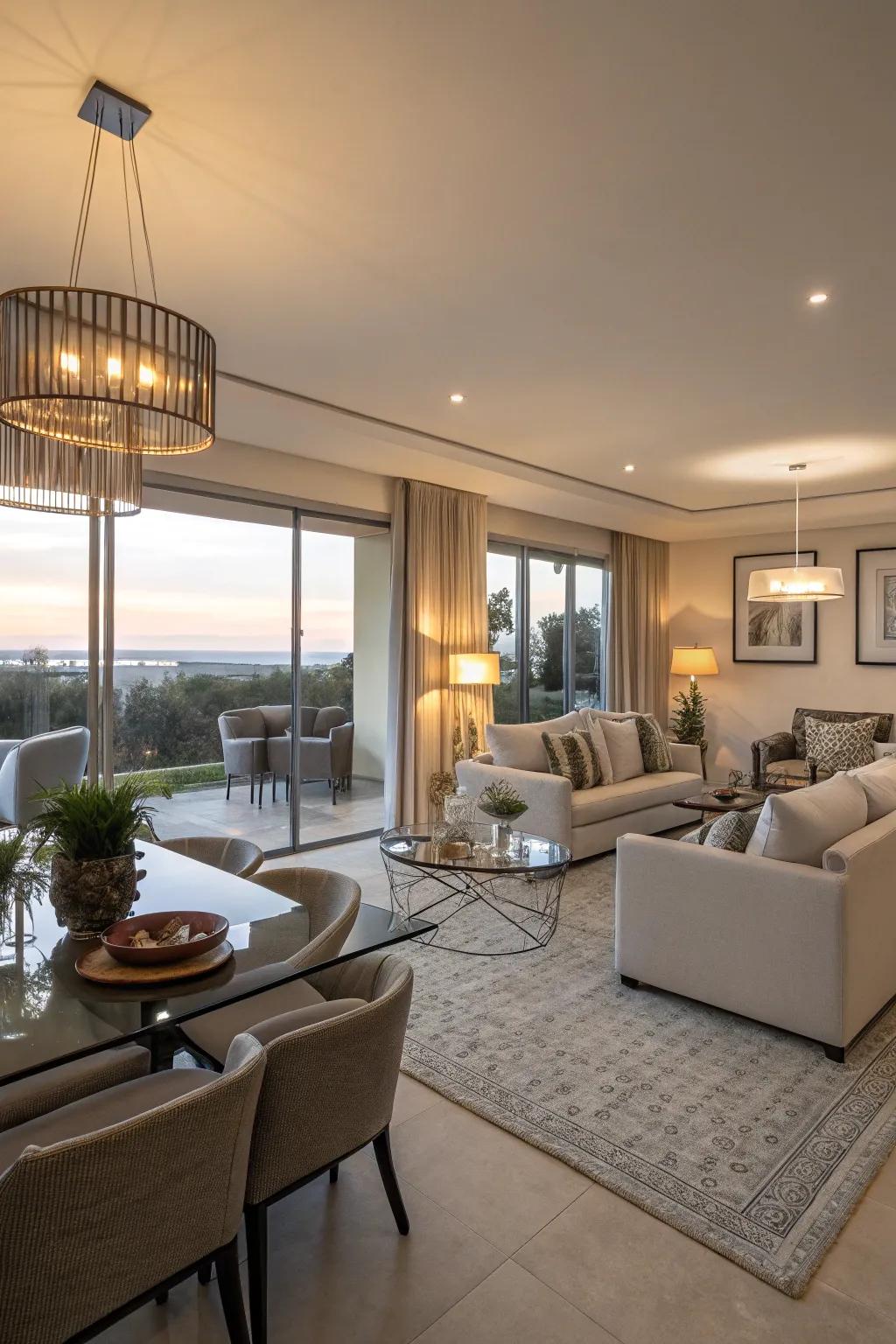
Open concept floor plans have revolutionized how we think about living spaces, offering flexibility and a sense of unity in our homes. Let’s explore some creative ideas to make your open floor plan both functional and inviting.
1. Combine Living and Dining Areas

Keeping your living room and dining area adjacent can create a seamless flow, perfect for hosting gatherings. This is especially important when dealing with limited square footage, as seen in many apartment living room bedroom combo ideas. I often suggest this to clients who love entertaining, as it allows for easy movement and interaction. Just imagine your guests mingling effortlessly between the dinner table and the cozy couches.
2. Accent Chairs for Cozy Corners

Instead of having multiple sofas, try adding a sofa with accent chairs to form a snug seating nook. This setup not only saves space but also creates a warm, inviting atmosphere. I’ve found that this arrangement encourages conversation and adds a personal touch to the room.
3. Revamp Your Kitchen Island

Give your kitchen island a makeover by painting it a bold color, making it the centerpiece of your open space. In my experience, a colorful island can transform a neutral kitchen into a vibrant gathering spot. It’s a great way to inject personality without overwhelming the entire space, especially when paired with complementary modern tile flooring ideas.
4. Divide with a Console Table

A console table behind the sofa can subtly divide your living area while providing extra storage. I often use this trick in open spaces to create a sense of separation without closing off areas. Place books or plants on the table for added charm.
5. Patterned Wallpaper for Cohesion

Use patterned wallpaper to make your open space look cohesive and visually interesting. To further unify the aesthetic, consider how your wallpaper choice coordinates with different floor color ideas. I’ve used this technique to tie together different areas, creating a unified look. It’s a simple way to add depth without overcomplicating the design.
6. Highlight with Accent Ceilings

Accent ceilings can be as striking as accent walls, adding dimension to your open floor plan. Consider using wood planks or beams to distinguish different areas subtly. I’ve found this method enhances the architectural interest without cluttering the space.
7. Strategic Use of Large Mirrors

Incorporate large decorative mirrors to break up space and enhance natural light. This is a fantastic trick for smaller rooms, similar to techniques found in small narrow basement design. Mirrors can create an illusion of separate areas while maintaining openness. This trick has helped many of my clients who want to add a touch of elegance and functionality.
8. Warm Up with Dining Room Seating

Introduce warmth with brown leather dining chairs to make your open concept feel inviting. This approach adds a cozy touch that pairs well with rustic farmhouse flooring ideas. I’ve used this approach to add a cozy touch to spaces dominated by neutral colors. It’s a simple change that brings depth and comfort to the dining area.
9. Unify Spaces with an Accent Color

Choose an accent color to appear in various elements across your open floor plan. In my projects, using a consistent color in different spaces helps tie the rooms together. This concept can even extend to your foundation, so it’s worth exploring some cohesive floor color ideas. It’s like a visual thread that connects the entire home.
10. Define Areas with Rugs

Use area rugs to define different zones within your open space. I’ve found rugs to be an effective way to delineate spaces like the living room and dining area without using walls. It also adds texture and warmth, which works well with many current flooring trends.
11. Corner Off with a Sectional Sofa

A sectional sofa can naturally create a barrier between living areas. This is one of my favorite strategies for clients who want to maintain intimacy in a large open room. For other non-permanent solutions, explore these temporary room divider ideas. It provides ample seating while subtly partitioning the space.
12. Match Artwork with Furniture

Coordinate artwork patterns with furniture to connect different areas of your open plan. I’ve seen how this technique can unify spaces, making them feel harmonious. This same principle of unity applies to your floors; check out these farmhouse flooring ideas for inspiration. It’s a designer’s secret to achieving balance and style.
13. Create a Cozy Entryway

Add a bench and rug to your entryway for an inviting touch as you transition into the open space. This small addition can make a big difference in how welcoming your home feels. Applying smart design to compact areas is key, a concept also explored in these small narrow basement ideas. It’s a practical yet stylish way to enhance your entrance area.
14. Keep Kitchen Bars Minimal

Maintain a minimalist decor on your kitchen bar to enhance the flow between rooms. I’ve found that less clutter on kitchen surfaces helps keep the space feeling open and airy. It allows the architectural lines of your open plan to shine.
15. Stick to a Consistent Color Palette

Using a consistent color palette throughout your open space can create a cohesive look. I’ve always recommended this approach to clients who want a harmonious design. A great place to start is from the ground up with some inspiring floor color ideas. It ensures that each area feels like part of a well-thought-out whole.
16. Bookcase as a Stylish Divider

A bookcase can serve as an elegant divider while offering additional storage. This is one of my go-to solutions for adding structure without closing off spaces. It allows you to display your favorite decor items, adding personality to your home.
17. Repeat Textures Across Spaces

Incorporate the same textures in furniture and decor to add interest and coherence. I often repeat textures like wood or fabric to create a seamless transition between areas. This is especially effective with foundational elements, as seen in many rustic farmhouse flooring ideas. It’s a subtle yet effective way to unify an open floor plan.
18. Differentiate Areas with Lighting

Use distinct lighting fixtures to highlight different areas in your open plan. I love using pendant lamps for dining spaces and floor lamps for reading nooks, creating defined zones. Strategic lighting is crucial in challenging rooms, a major theme in these small narrow basement ideas. Lighting is an art, and it’s fascinating how it can transform spaces.