
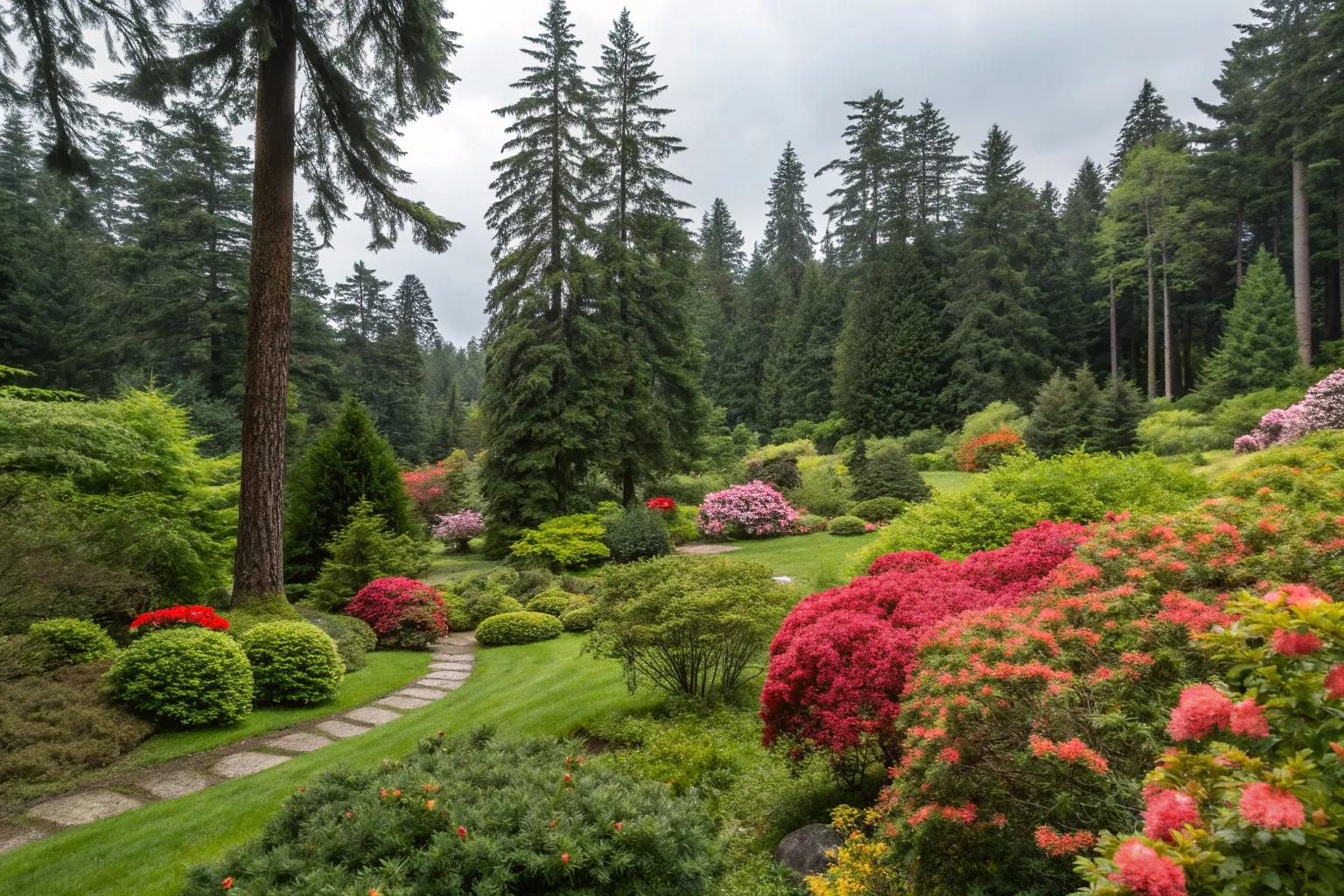
Welcome to the enchanting world of Pacific Northwest gardens, where the misty air and verdant landscapes create a gardener’s paradise. Let’s explore some delightful ideas to transform your outdoor space into a lush haven.
1. Embrace Native Ferns

Native ferns thrive in the Pacific Northwest’s shady, moist conditions and add a touch of elegance to any garden. I love how they unfurl in spring, adding texture and a rich green backdrop to more colorful plants. Consider planting sword ferns and maidenhair ferns for a lush, layered look.
2. Create a Woodland Retreat

Utilize the existing trees in your yard by designing a woodland garden beneath their canopy. Incorporate native shrubs like vine maple and salal to mimic the natural forest floor. I find the dappled sunlight filtering through leaves creates a serene and mystical atmosphere.
3. Add a Water Feature

Incorporate a water feature to celebrate the life-giving rain of the Pacific Northwest. A small pond or a gentle waterfall can enhance the tranquility of your garden. I adore how the sound of water creates a calming ambiance, perfect for relaxation.
4. Go for Woodland Wildflowers

Planting woodland wildflowers brings seasonal color to shady areas. I find trilliums and bleeding hearts charming as they pop up in early spring. These flowers create a natural, wild look that blends beautifully with the forest setting.
5. Incorporate Mossy Elements

Use moss to enhance the natural feel of your garden. Moss thrives in the damp climate and can cover rocks, logs, or even garden furniture. I love how it adds an ancient, untouched vibe to any space.
6. Design with Layers

Create a layered garden to mimic the natural forest structure. Start with tall trees, then add shrubs, and finish with groundcovers. This approach not only looks stunning but also supports local wildlife by providing diverse habitats.
7. Choose Evergreen Shrubs

Evergreen shrubs like rhododendrons and azaleas offer year-round structure and blooms in spring. They are staples in Pacific Northwest gardens, and their vibrant flowers contrast beautifully with the lush greenery. I can’t get enough of their color in my own garden!
8. Incorporate Japanese Garden Elements

Add a touch of tranquility with Japanese garden elements like stone lanterns and raked gravel. These features complement the natural beauty of the Pacific Northwest. I’ve found that a simple stone path can transform a space into a meditative retreat.
9. Opt for Native Groundcovers

Choose native groundcovers like kinnikinnick and salal to fill in the gaps and reduce maintenance. These plants keep weeds at bay and provide a lush carpet of green. I love how they knit the garden together seamlessly.
10. Introduce a Zen Corner

Create a Zen corner with a small bamboo fountain and gravel bed for a peaceful retreat. The simplicity of this setup invites meditation and relaxation. I find it to be a perfect spot for quiet reflection.
11. Plant Edible Berries

Take advantage of the climate by planting edible berries like blueberries and huckleberries. They thrive here and offer delicious rewards throughout the growing season. My berry bushes are always a hit with family and friends!
12. Experiment with Textures

Combine textures with plants like hostas and grasses to add visual interest. The interplay of smooth leaves and feathery plumes creates a dynamic landscape. I enjoy experimenting with different combinations to see what works best.
13. Add a Cozy Fire Pit

Include a fire pit as a focal point for gatherings. It’s a cozy addition that allows you to enjoy the garden even on cooler evenings. I love hosting friends around the fire, sharing stories under the stars.
14. Use Ornamental Grasses

Ornamental grasses sway gracefully in the Pacific breeze, adding movement to the garden. Their changing colors throughout the seasons provide constant visual interest. I find them to be a versatile and low-maintenance option.
15. Incorporate Rustic Wood Features

Use rustic wood elements like trellises or benches to enhance the natural feel. Weathered wood blends seamlessly with the surrounding environment. I adore the timeless charm it brings to my garden.
16. Create an Evergreen Border

Design an evergreen border to provide structure and privacy year-round. Evergreen hedges like boxwood or yew create a lush backdrop for seasonal plantings. I appreciate their reliability and the sense of enclosure they offer.
17. Opt for Natural Pathways

Choose natural pathways made of gravel or stepping stones to guide visitors through your garden. These materials blend with the landscape and are affordable solutions. I find they add a casual, inviting feel to any garden.
18. Incorporate Stone Accents

Use stone accents like boulders or stepping stones to enhance the natural look. Stones add texture and permanence to the garden. I enjoy strategically placing them for both visual interest and practical use.
19. Add a Touch of Color with Annuals

Even though perennials are a staple, annuals can provide a splash of seasonal color. I love tucking them into pots or along borders for a vibrant boost. They offer flexibility and can be changed each year to refresh the garden’s look.
20. Use Drift Planting

Create a drift planting effect by grouping several of the same plant species together. This technique mimics natural patterns and creates a cohesive look. I find it especially effective for groundcovers and low-growing perennials.
21. Incorporate Waterwise Plants

Choose waterwise plants that can thrive with minimal irrigation. These plants ensure your garden remains beautiful without excessive water use. I appreciate how they help me conserve resources while still enjoying a lush landscape.
22. Add a Vegetable Patch

Cultivate a vegetable patch to enjoy fresh produce right from your garden. Raised beds or container gardening are great options in limited space. I love the satisfaction of harvesting my own veggies for dinner.
23. Create a Rain Garden

Design a rain garden to manage runoff and support native plants. This eco-friendly approach can help reduce stormwater impact. I find it rewarding to see how it contributes to both the garden’s beauty and the environment.
24. Install Lighting Features

Use lighting features to illuminate your garden and extend its enjoyment into the night. Solar-powered lights or string lights add ambiance without adding to your energy bill. I love how lighting transforms the garden, creating a magical nighttime escape.