
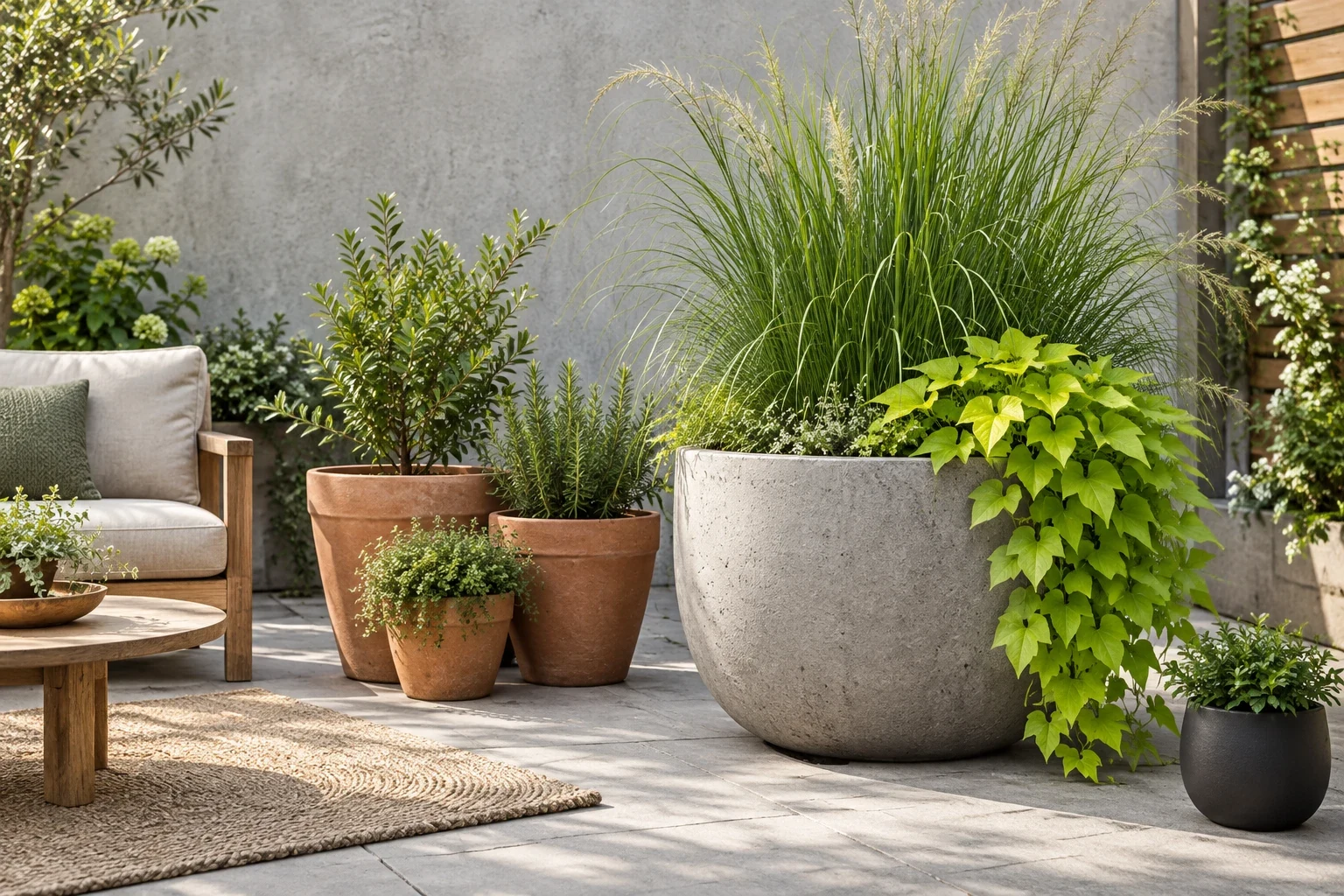
Morning coffee on a sunny patio demands containers that handle heat and daily watering without fading. The plants and pots need to stand up to outdoor elements while softening hard concrete edges. A mix of durable containers and resilient greenery creates a reliable outdoor living area that lasts through the season.
Grow Tall Grasses

Plant tall ornamental grasses in planters to give a flat outdoor area immediate vertical scale. These hardy plants thrive in direct sunlight and sway with the breeze, adding subtle motion to a static corner. Select a species like feather reed grass and plant three nursery pots directly into the center of a wide container. Leave at least four inches of space around the perimeter for trailing plants or soil amendments. This central height anchors the arrangement without requiring daily pruning or complicated support stakes.
Use a Concrete Pot

Choose a large round concrete pot to house your heaviest soil loads and tallest plants. The dense material insulates roots against rapid temperature shifts during hot afternoons and resists tipping in strong winds. Look for a container measuring at least 24 inches in diameter with a pre-drilled drainage hole at the base. Fill the bottom third with empty plastic bottles or lightweight foam packing peanuts before adding soil. This reduces the overall weight if you ever need to shift the planter across the pavers.
Drape Green Vines

Tuck a vibrant green sweet potato vine around the inner rim of your main container to soften the hard edges. This fast-growing trailer spills downward, breaking up the solid block of gray material and keeping the soil shaded from baking sun. Buy two small starter plants for about five dollars each and bury their roots just beneath the top layer of potting mix. Water them thoroughly every two days until established. The cascading leaves will quickly cover the right side of the pot within a few weeks.
Stack Terracotta

Cluster three warm terracotta pots together on the ground to create a layered focal point that feels deliberate. The porous clay lets excess moisture evaporate, which keeps drought-tolerant roots from rotting after heavy rain. Pick three different sizes, such as 8, 10, and 12-inch diameters, and group them tightly so their rims overlap slightly. Place the tallest pot in the back and the smallest in the front. Buying basic clay pots at a hardware store keeps the cost under thirty dollars for the entire trio.
Add a Black Pot

Set a small matte black pot directly on the concrete floor to introduce a sharp, modern contrast against lighter surfaces. The dark finish absorbs heat, which helps warm the soil faster during cool spring mornings. Choose a resin or fiberglass model measuring about ten inches wide to keep it lightweight. Position it slightly apart from the main groupings, like the one in the photo, to balance the visual weight of the arrangement. Wipe the exterior with a damp cloth weekly to remove dust and hard water spots.
Mix Bright Pink Flowers

Grow bright pink begonias in a gray vessel to inject intense color into a neutral corner. These blooms prefer partial sun and stand out sharply against their own vibrant green leaves and the muted stone below. Space four six-inch begonia plants evenly across the surface of the soil, pressing them down firmly. Mix in a slow-release granular fertilizer formulated for flowering plants at the time of planting. Water the soil directly at the base to avoid wetting the delicate petals and encouraging fungal growth.
Layer Ferns in the Shade

Place a large lush green fern in a square dark container along a sunless wall to brighten up a dim spot. Ferns thrive in low light and high humidity, making them ideal for covered areas that receive no direct afternoon rays. Pick a planter with a sharp, geometric shape to contrast with the soft, feathery fronds. Ensure the container holds at least three gallons of moisture-retentive potting mix. Check the top inch of soil every few days, watering only when it feels completely dry to the touch.
Build a Tiered Wood Stand

Arrange a three-tiered wooden stand against a fence to maximize vertical growing space for edible plants. Stepped shelves allow each level to receive adequate sunlight without casting shadows on the row below. Assemble a basic frame using pressure-treated pine boards and exterior wood screws, which should cost around forty dollars in materials. Line the shelves with small clay containers planted with basil, mint, and parsley. Space the pots two inches apart so air can circulate freely, reducing the chance of mildew forming on the leaves.
Line the Patio Steps

Alternate terracotta and gray containers down a flight of stone stairs to guide foot traffic naturally. Breaking up a long staircase with trailing green vines softens the hard edges of the masonry and makes the transition feel intentional. Select pots that are no wider than eight inches so they do not become a tripping hazard. Place one pot on the far edge of every alternating step. Fill them with creeping jenny or ivy, trimming the vines with garden shears once they reach the tread below.
Plant in a Wooden Crate

Repurpose a rustic wooden crate as a container to add rough texture to a smooth seating area. The slatted sides provide excellent drainage and airflow for shallow-rooted plants and small white blooms. Line the interior with a heavy-duty plastic landscape bag and punch five holes in the bottom for water to escape. Staple the plastic securely to the upper inside rim before adding potting mix. Rest the crate on a wooden bench, keeping the damp timber lifted away from direct contact with the ground.
Flank with Matching Pairs

Position two identical tall dark planters on either side of glass doors to frame the entrance. Symmetrical manicured green shrubs create a formal transition point between the indoor and outdoor living areas. Buy containers that stand at least thirty inches high to bring the foliage closer to eye level. Fill the lower half of each pot with crushed gravel to lower the center of gravity and prevent them from blowing over. Water both shrubs evenly so they grow at the same rate and maintain their mirrored appearance.
Display a Succulent Bowl

Display a shallow terracotta bowl on a concrete ledge to showcase low-profile, drought-resistant varieties. A mix of textured green and purple succulents requires very little water and thrives in hot, exposed locations. Purchase a bowl that is roughly four inches deep and fill it entirely with a fast-draining cactus soil mix. Plant the rosettes close together, covering any exposed dirt with a thin layer of decorative aquarium gravel. Leave the bowl alone for a full week after planting before giving it a light watering.
Repurpose a Metal Trough

Use a galvanized metal trough along the edge of the slab to form a low, solid barrier. The reflective steel surface bounces light around the space and holds enough soil to support tall grasses and trailing vines simultaneously. Drill a half-inch drainage hole every twelve inches along the bottom panel using a metal-rated bit. Raise the entire trough by placing a one-inch thick paving stone under each corner. This slight lift ensures water drains completely away from the base, preventing the metal from rusting prematurely.
Hang Purple Petunias

Suspend a gray hanging basket above the seating area to draw the eye upward and utilize overhead space. Vibrant purple petunias spill over the edges, providing a bright canopy of color that does not consume any floor space. Install a heavy-duty steel ceiling hook directly into a structural beam under the eaves. Use a basket with a built-in water reservoir to cut down on the need for daily watering. Trim off dead blooms once a week to encourage the plant to produce new flowers continuously.
Invest your budget in large, durable concrete planters that resist cracking during temperature swings. Trim costs by picking up basic terracotta pots and fast-growing vines from the local hardware store.
