
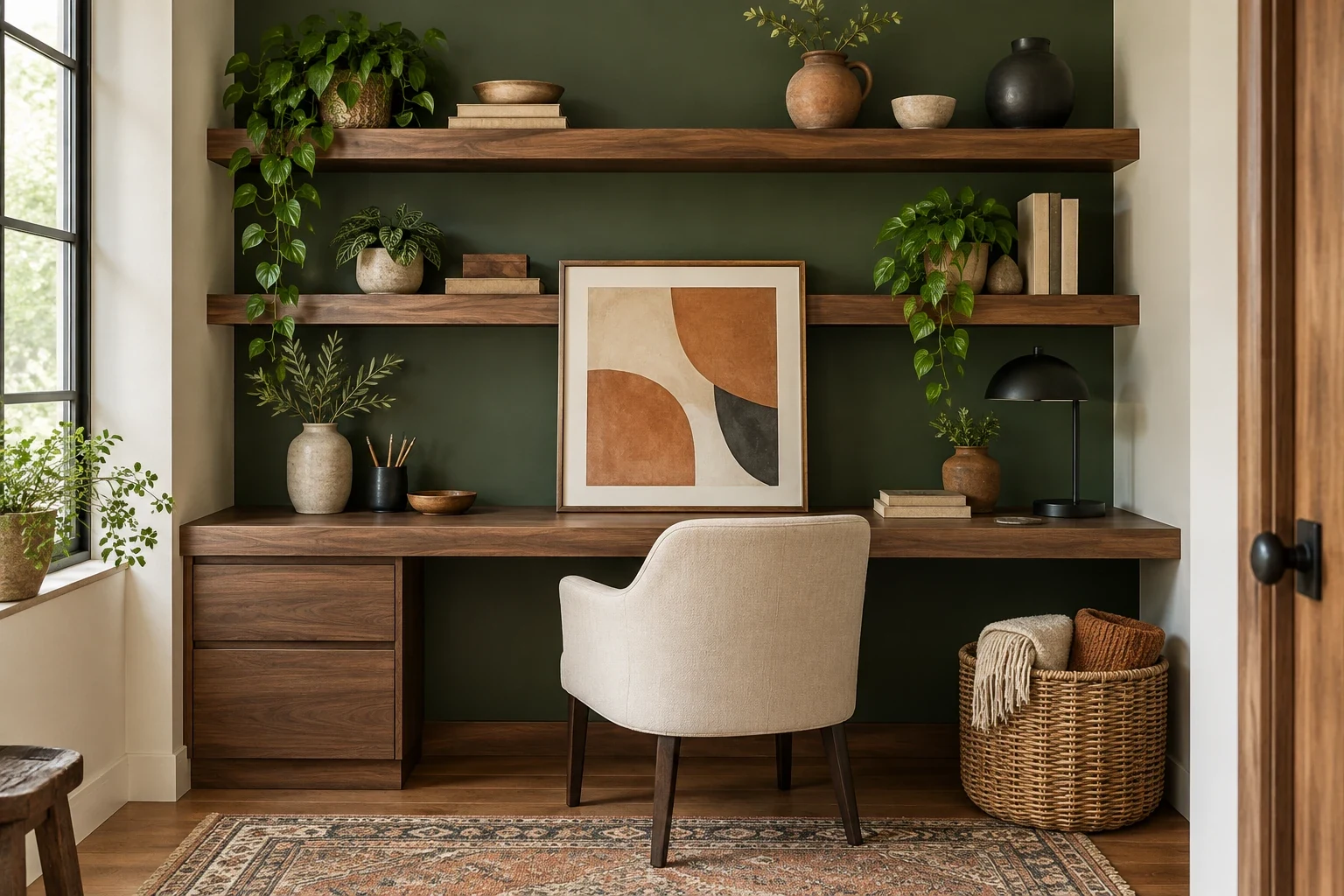
Sitting down to work on dark winter mornings requires a workspace that feels warm and keeps your daily tools within arm’s reach. A narrow alcove handles a full eight-hour shift when you maximize the vertical space and rely on natural textures to soften the hard edges of technology. Organizing the layout around your actual habits prevents clutter from piling up before noon.
Hang Wood Shelves

Mount thick walnut floating shelves directly above your workspace to clear off the flat surface below. Stacking storage vertically keeps essential binders and reference books accessible without eating into your typing area, which helps maintain focus during long shifts. Drill into the wall studs using heavy-duty brackets that cost around twenty dollars per pair. Space the shelves about sixteen inches apart to accommodate standard hardcover books and small decorative objects on the lower tier.
Lean Framed Art

Prop a large framed abstract print against the back wall instead of reaching for the hammer and nails. Leaning your artwork allows you to swap out pieces whenever your mood shifts, saving you the hassle of patching drywall holes later. Pick a frame that measures at least twenty-four inches tall to create a solid focal point behind your laptop. Rest it slightly off-center to leave plenty of room for your desk lamp and pen cups.
Build a Wood Desk

Span the entire width of an empty alcove with a custom natural wood desk to eliminate awkward gaps where pens always seem to drop. A wall-to-wall surface gives you maximum elbow room for reviewing large documents alongside your keyboard. Measure the exact width of your nook at the height of twenty-nine inches, which is the standard ergonomic level for typing. Secure the walnut slab to the side walls using heavy wooden cleats for sturdy, leg-free support.
Add an Armchair

Slide a cream upholstered armchair into the opening under your desk for a softer take on standard office seating. Bringing in a fabric dining or accent chair warms up the rigid lines of monitors and filing cabinets, making the work zone feel like part of the home. Look for a seat height around eighteen inches so your arms rest comfortably on the keyboard. Choose a stain-resistant fabric to handle the inevitable morning coffee drips.
Add a Woven Basket

Place a woven rattan basket on the floor near your chair legs to hold extra layers for chilly afternoons. Keeping rolled blankets in a textured bin prevents them from draping messily over your chair back when you log onto a video call. Pick a basket that measures at least fourteen inches wide to accommodate two thick throws without cramming. The natural fibers introduce a relaxed, tactile element that contrasts well with smooth painted walls.
Paint a Green Accent Wall

Apply deep forest green paint to the wall directly behind your desk. A dark matte backdrop absorbs excess morning sunlight from nearby windows and prevents bright glares, creating high visual contrast that makes a natural walnut desk stand out cleanly. Purchase one gallon of interior eggshell paint for roughly thirty to forty dollars to cover an eight by ten foot wall. Apply painter’s tape along adjacent drywall seams and ceiling edges, pressing the tape down firmly with a putty knife. Roll on two thin coats, allowing two hours of drying time between applications for complete color coverage.
Display a Potted Plant

Set a warm terracotta pot with a trailing green pothos on the corner of your desk for a burst of life. Adding a low-maintenance plant breaks up the rigid geometry of tech equipment and improves the air quality right where you breathe most. Position the pot about six inches from the edge so the vines can cascade down the side of the wood without blocking your mousepad. Water it once a week when the top soil feels dry.
Hang a Globe Pendant

Drop a frosted glass globe pendant light from the ceiling directly above the center of your workspace. Overhead lighting with a diffused shade casts an even, soft glow across your papers, eliminating the sharp shadows that cause eye strain during evening hours. Hire an electrician to hardwire the matte black fixture, or use a plug-in version with a swag hook if you rent. Hang the bottom of the globe about thirty inches above the desktop.
Stack Hardcover Books

Group three fabric-bound hardcover books in terracotta and green tones horizontally on your floating shelf. Stacking reference materials creates a sturdy base for smaller decorative objects while keeping your go-to manuals right at eye level. Select books that measure around eight to ten inches long to build a substantial foundation that will not tip over. Turn the spines facing outward so you can quickly grab the exact volume you need during a busy work session.
Install Brass Drawer Pulls

Swap out generic factory hardware for brushed brass cup pulls on the front of your desk drawers. Upgrading the metal finishes gives a simple piece of furniture a custom, finished look and feels much heavier in your hand when you reach for supplies. Measure the distance between the existing drill holes, often three or four inches, to ensure the new pulls fit without extra drilling. Screw them in tightly from the back using a basic Phillips screwdriver.
Wallpaper the Alcove

Lining the interior walls of your desk nook with a subtle botanical wallpaper establishes a distinct zone separate from the rest of the room. A cream and terracotta pattern adds visual interest during long phone calls without overwhelming the tight square footage. Order two rolls of peel-and-stick paper for about eighty dollars total, which covers a standard closet-sized niche. Smooth the panels down from the ceiling using a plastic squeegee to push out any trapped air bubbles.
Set a Ceramic Pen Cup

Corral your stray wooden pencils and pens into a matte black ceramic cup to maintain a clean surface. Keeping loose writing utensils upright prevents them from rolling off the edge of the desk, saving you from constantly bending over to retrieve them. Choose a heavy ceramic vessel that weighs at least a pound so it stays firmly in place when you quickly grab a highlighter. Place it on your dominant side for the easiest daily access.
Hang Sheer Window Drapes

Frame the window beside your workspace with white sheer curtains to filter the bright daylight entering the room. Lightweight fabrics cut down the harsh glare on your screen while still allowing enough natural illumination to read printed documents comfortably. Install a simple metal rod about four inches above the window frame to draw the eye upward. Let the sheer panels hang all the way to the floor to give the compact area a taller, airier feel.
Mount a Cork Pinboard

Fasten a large cork board with a walnut frame to the wall directly above your desk for physical notes. Pinning up current project outlines and calendars keeps important deadlines visible at a glance without cluttering your typing area with sticky notes. Buy a board that measures at least twenty-four by thirty-six inches to give yourself plenty of layout space. Use heavy-duty wall anchors to ensure the frame stays secure when you push pins into the dense cork.
Place a Blank Monitor

Leaving a sleek black monitor on the desk switched off when you finish your shift signals the end of the workday. A blank screen reduces visual noise when you walk past the alcove later in the evening, helping separate your professional tasks from your personal downtime. Position the base of the screen roughly twenty inches away from your face for proper ergonomic viewing. Route the thick black power cables through a hole drilled in the desk surface.
Invest in a durable solid wood desk surface and an ergonomic chair. Save money on decor by painting the alcove yourself and using woven baskets.
