
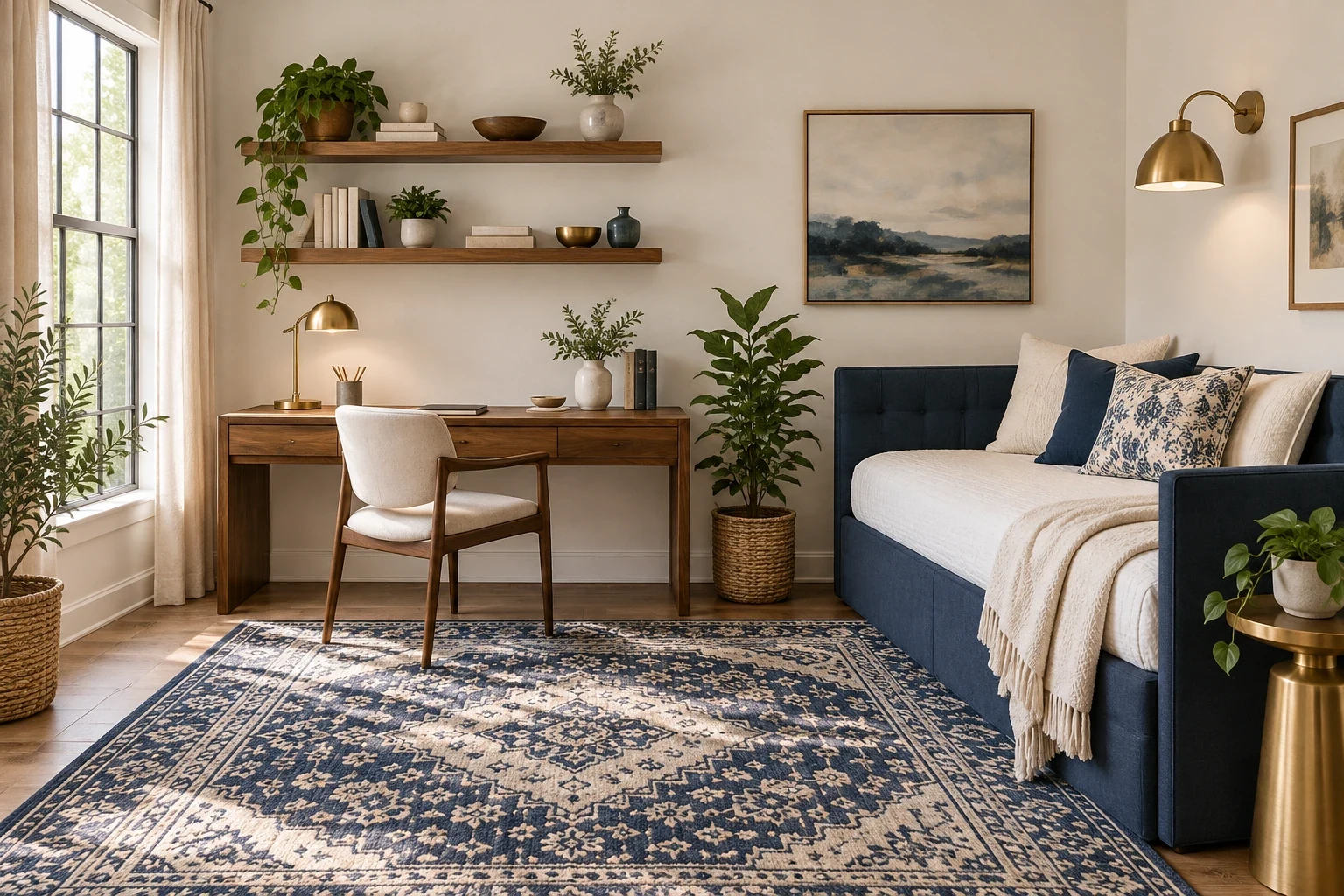
Many homeowners push a heavy mattress and a bulky desk against the same wall, leaving their spare bedroom cramped. Instead, separate the work and rest zones by placing a slim walnut desk and a low daybed on opposite walls. This layout gives both functions room to breathe while keeping the floor path completely open.
Add Walnut Shelves

Install two warm walnut floating shelves directly above your workspace. This setup provides open storage for books and office supplies without consuming valuable square footage on the floor. Space the bottom shelf about 20 inches above the desk surface so your monitor fits underneath. Mount the second shelf 12 to 14 inches higher to accommodate tall binders and reference materials. Secure the hidden steel brackets into the wall studs using three-inch wood screws to ensure the boards support the weight safely.
Tuck in a Daybed

Position a navy blue upholstered daybed against the right wall to handle both seating and sleeping. A daybed functions as a comfortable sofa during work hours and converts to a flat mattress at night, making it ideal for a desk and bed sharing one room. Choose a frame with a low back and structured side panels to mimic a traditional couch. Push the long edge flush against the baseboards, leaving at least 36 inches of walking clearance between the mattress and your work zone.
Set a Walnut Desk

Place a warm walnut writing desk with clean lines against the main wall. A streamlined profile keeps the room feeling open while providing enough surface area for a laptop and notes. Look for a table that measures between 48 and 60 inches wide with thin, tapered legs rather than bulky drawer pedestals. Keep the desktop clear by storing pens and chargers in a single shallow center drawer. Route the power cords down the back leg using simple black zip ties.
Mount a Gold Light

Fix a muted gold wall sconce on the wall above the seating area. Hardwired wall sconces free up the side tables and cast a warm, reading-friendly glow right where you need it. Install the metal fixture approximately 60 inches from the floor, centering it over the daybed mattress. If you want to avoid electrical work, buy a plug-in version that costs around forty dollars. Run the fabric-wrapped cord straight down the wall and secure it with tiny brass cable clips.
Unroll a Navy Rug

Lay down a patterned woven rug in navy blue and cream on the floor. A flat-weave rug anchors the furniture layout and protects the hardwood from rolling chair wheels. Select an 8-by-10-foot size so the front legs of both the desk and the daybed rest on the fabric. Place a quarter-inch felt pad underneath the rug to prevent slipping and add a layer of sound insulation. Vacuum the low pile weekly to keep the cream fibers looking bright.
Hang Soft Curtains

Suspend soft white linen window panels to filter the light in the bedroom corner. Linen diffuses harsh morning sunlight into a soft glow, reducing screen glare while keeping the room bright. Mount a matte black curtain rod four to six inches above the window trim to draw the eye upward. Buy panels that are 96 inches long so they just kiss the floorboards. Add a small potted fern on the sill behind the fabric to bring a touch of green indoors.
Pull Up a Wood Chair

Bring in a warm walnut spindle-back wooden desk chair for your workspace. A solid wood frame offers sturdy back support and blends better with residential furniture than a bulky plastic office seat. Check the seat height before buying; it should sit about 18 inches off the floor to align with a standard desk. Attach heavy-duty felt glides to the bottom of the four legs. These pads cost under five dollars and allow the chair to slide smoothly over your patterned rug.
Fold Soft Blankets

Drape soft white knit throw blankets neatly over the edge of the mattress. Extra layers make the seating area feel inviting and provide quick warmth during drafty afternoon work sessions. Fold a chunky cotton throw lengthwise into thirds, then lay it flat across the foot of the daybed. Choose a thick, ribbed knit that resists wrinkling when you sit on it. Wash the blanket on a gentle cycle every month to maintain the crisp white color against the navy upholstery.
Hang Abstract Pieces

Create a gallery wall with three framed abstract art prints against a blank section of the wall. A structured set of prints fills the empty vertical space and introduces visual interest without distracting you from your tasks. Buy a matching set of muted gold frames measuring 16 by 20 inches. Hang them in a straight horizontal line, leaving exactly two inches of blank wall between each frame. Use a standard 60-inch center height from the floor so the artwork sits at natural eye level.
Hang a Ceiling Dome

Hang a muted gold dome pendant light from the ceiling over the workspace. An overhead metal dome directs a concentrated pool of light downward, illuminating your keyboard and papers. Center the fixture directly above the desk surface, dropping the cord so the rim sits about 30 to 36 inches above the wood top. Install a warm LED bulb to prevent the metal shade from overheating. This task lighting costs around eighty dollars and reduces eye strain during evening shifts.
Tuck in Rattan Boxes

Slide two woven rattan storage boxes neatly under the navy blue bed frame. Woven baskets hide loose cords, extra paper, and seasonal clothing while adding a touch of natural texture to the floor. Measure the clearance under the mattress frame to ensure the boxes fit; you usually need bins shorter than eight inches. Buy rectangular baskets with built-in handles so you can pull them out like drawers. Line the rough rattan interiors with canvas fabric to protect delicate items from snagging.
Add a Brass Desk Lamp

Set a muted gold task lamp on the desktop to illuminate your notebook. A dedicated desk lamp provides adjustable, focused lighting for writing and typing, supplementing the overhead fixtures. Choose a model with an adjustable arm and a heavy base that will not tip over when you move it. Position the lamp on the side opposite your dominant hand to eliminate shadows on the page. Feed the power cord straight back off the edge to keep the surface clear.
Position Near a Window

Orient the writing desk so you have natural light from a window in view while you sit. Facing the outdoors gives your eyes a place to rest during long hours of screen time and boosts daily focus. Leave a gap of at least six inches between the back edge of the table and the window trim. This spacing prevents condensation from damaging the wood finish and allows the curtains to close properly. Wipe the glass panes with a vinegar solution monthly to maximize the daylight entering the room.
These functional layouts suit apartment dwellers who need a quiet workspace without losing an extra bed. Combining the slim walnut desk with the low daybed creates a balanced, highly usable room.
