
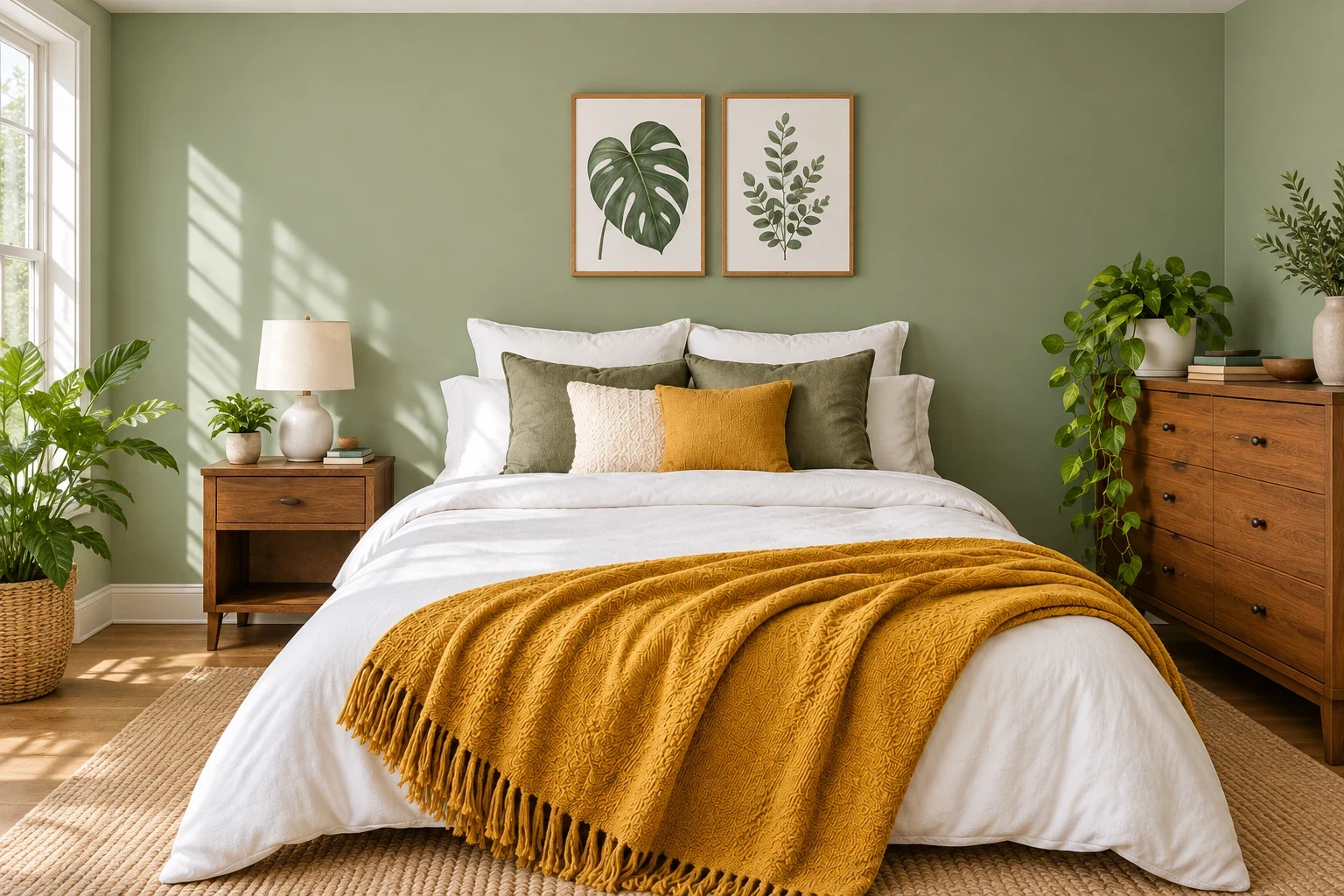
A standard bedroom refresh takes just one weekend and about $150 in paint and simple supplies. Green painted walls act as a calm base that handles both warm wood tones and bright white fabrics well. Bringing in a few tactile layers finishes the space without requiring a full renovation.
Paint the Wall

Coat the main wall behind your bed in a soft sage green. This muted color provides a calm backdrop that absorbs harsh morning light and softens the whole room. Apply two coats of a flat or eggshell finish to keep the surface looking smooth and deep. A standard gallon of premium interior paint costs around $60 and covers about 400 square feet, which handles a typical accent wall. Use a synthetic roller with a three-eighths inch nap to get an even finish without visible streaks.
Hang Plant Prints

Mount two matching botanical prints side by side over the bed. The crisp white backgrounds of the artwork break up the solid green wall, while the leaf motifs connect with the room’s natural color scheme. Pick basic frames with a thin profile, spacing them exactly two inches apart for a tight, organized look. You can find digital downloads of vintage plant illustrations online for under $10 and print them at a local shop. Hang the frames so their center point sits about 60 inches from the floor.
Add a Walnut Stand

Place a single-drawer walnut nightstand next to the mattress. The warm, rich tones of the dark wood contrast sharply against the cool sage paint, bringing essential visual weight to the room. Keep the surface uncluttered to highlight the natural wood grain, leaving just enough room for a white ceramic lamp and a book. Look for a piece measuring around 24 inches tall, which aligns well with most standard mattress heights. A solid wood stand with brass hardware usually runs between $150 and $300 at furniture outlets.
Add a Potted Vine

Set a trailing pothos plant in a basic white ceramic pot on the edge of your dresser. The cascading green leaves add a living element that reinforces the botanical theme of the space. Pothos vines thrive in low to medium indirect light, making them highly resilient for indoor environments. Buy a healthy six-inch starter plant from a local nursery for about $15. Let the vines drape naturally down the side of the furniture, trimming them back with sharp scissors once they reach the floor to encourage thicker growth at the top.
Layer a Soft Throw

Drape a textured mustard yellow throw blanket casually across the foot of the bed. This specific shade of yellow acts as a complementary accent to the green walls, warming up the crisp white bedding underneath. Layered throws give the room a relaxed, lived-in feel while providing extra warmth on cold mornings. Choose a cotton or wool blend measuring 50 by 60 inches for the best drape. You can pick up a quality woven blanket with fringed edges for roughly $40 at most home goods stores.
Roll Out a Jute Rug

Position a chunky woven jute area rug under the lower two-thirds of the bed. Area rugs anchor the sleeping zone and protect bare feet from cold wood floors during the early hours. The thick, natural fibers introduce a rough texture that balances the smooth painted walls and soft cotton sheets. Buy an eight-by-ten foot rug for a standard queen bed, ensuring at least 18 inches of material extends on both sides. A heavy jute rug costs around $200 and lays flat quickly if you unroll it in a warm room.
Install Brass Sconces

Fixing a warm brass swing-arm wall sconce beside the bed frees up valuable space on your nightstand. The metallic finish catches the natural light during the day and casts a soft, focused glow for reading at night. Brass pairs naturally with both sage green and walnut wood, tying the room’s color palette together. Mount the fixture so the bulb sits approximately 30 inches above the top of the mattress. Many plug-in models cost under $80 and only require a drill and two wall anchors to secure in place.
Hang Linen Drapes

Frame your window with a pair of off-white linen drapes on a dark bronze rod. Unlined linen filters harsh sunlight into a soft, diffused glow that keeps the room bright but comfortable. The off-white material contrasts cleanly against the green background without competing for attention. Install the curtain rod roughly four inches below the ceiling line to draw the eye upward. Purchase standard panels that measure 96 inches long to ensure they just brush the floor, usually costing about $60 per pair.
Lean a Floor Mirror

Rest a tall brass-framed floor mirror against an empty corner of the wall. The large reflective surface bounces daylight around the room, making a standard-sized space feel much deeper and brighter. A thin metallic border adds a subtle structural detail without overwhelming the soft tones of the paint. Look for a mirror measuring at least 65 inches tall and 24 inches wide for the best visual proportion. Secure the heavy piece safely by attaching a durable metal furniture strap directly into a wooden wall stud.
Set a Woven Basket

Placing a large woven seagrass basket near the dresser provides a dedicated spot for extra linens. This storage solution keeps bulky items contained while adding another layer of natural, earthy texture to the wood floor. Rolling your spare white and mustard yellow blankets inside makes them quick to grab when temperatures drop. Choose a basket with a diameter of at least 18 inches to hold three thick blankets comfortably. A sturdy seagrass bin with built-in handles typically retails for about $35 at craft or home organization shops.
Mount a Woven Pendant

Swap out a basic ceiling fixture for a large, airy rattan dome pendant light. The open weave design filters the overhead bulb, casting interesting shadows while keeping the room feeling open and bright. Rattan’s natural color connects directly with the jute rug and seagrass basket, creating a cohesive design from floor to ceiling. Hang the fixture so the bottom rim sits at least seven feet above the floor for proper clearance. An oversized rattan shade costs around $120 and installs quickly using the existing ceiling wiring.
Paint the main walls and swap out the overhead lighting before moving any heavy furniture in. You can add the smaller textiles, artwork, and plants at your own pace later.
