
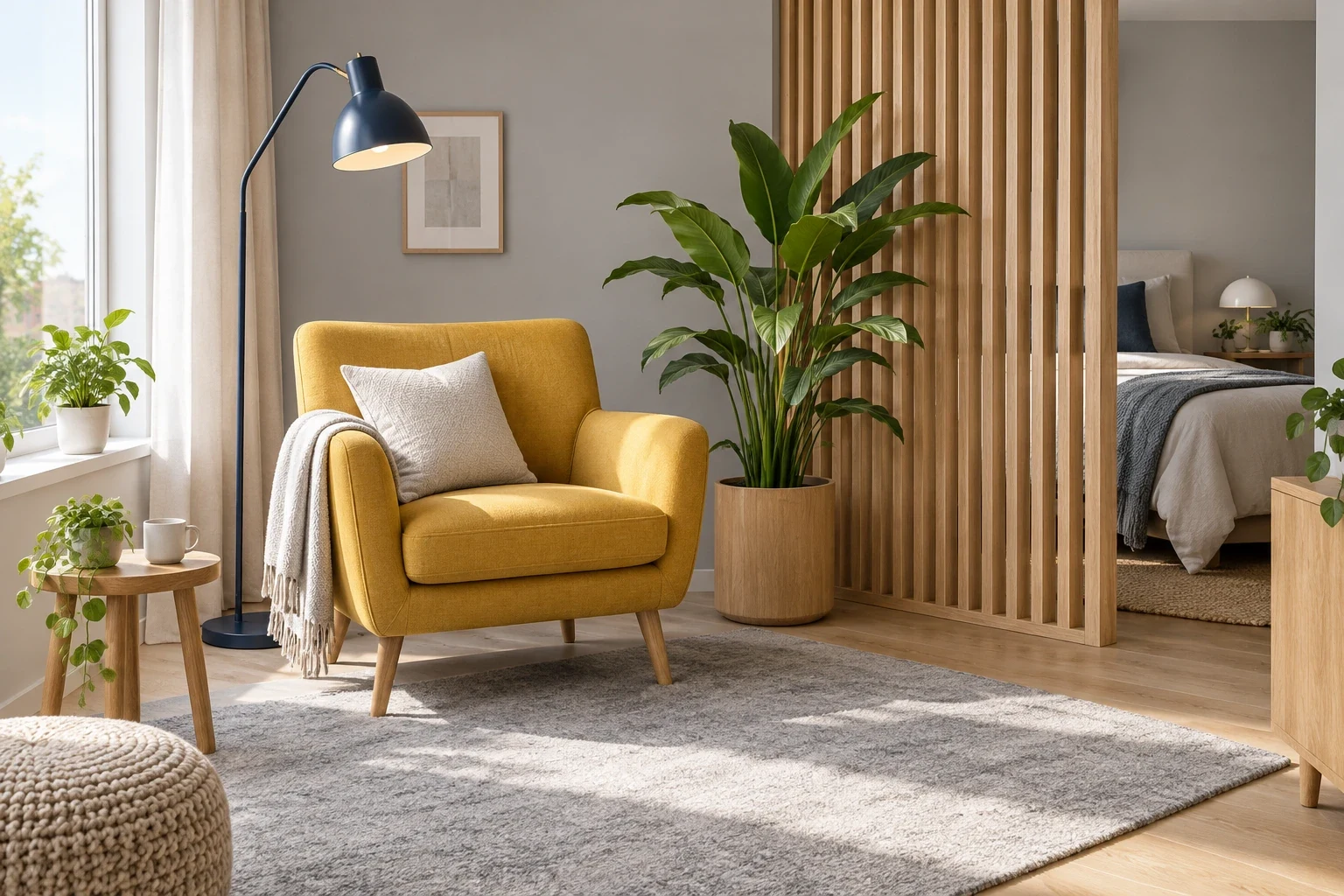
Living, sleeping, and working in one open room often results in a cluttered, confusing floor plan. Setting up a dedicated studio apartment corner reading nook demonstrates how a few strategic pieces establish boundaries. These layout adjustments rely on physical dividers, targeted lighting, and smart furniture placement to create distinct, functional zones.
Stand a Floor Lamp

Stand a tall metal floor lamp in a dark corner to establish a specific zone without taking up floor space. A floor lamp for layered lighting pulls double duty by brightening the room and acting as a visual boundary marker. Choose a slim profile, like a navy blue metal design, that slides right behind an armchair or sofa. Position the base about six inches from the wall so the shade clears the paint. This provides focused reading light while keeping the main overhead fixtures switched off in the evening.
Divide with Slats

Divide your open room by installing a vertical slat partition between the living area and the sleeping quarters. Wood slats offer a physical barrier that still lets morning daylight filter through the gaps, keeping the apartment from feeling closed off. Buy pre-cut light oak boards measuring one-by-two inches and secure them to a top and bottom track. Space the boards about two inches apart to maintain airflow. This basic installation gives the bed a sense of privacy while maintaining an airy, open layout.
Bring in a Plant

Place a tall leafy green plant next to your seating area to break up the hard lines of your furniture. Adding a large houseplant introduces organic texture and visual interest to a boxy room. Set a large indoor tree, like a ficus or monstera, inside a sturdy oak pot to match your wood tones. Keep the planter at least a foot away from heating vents to prevent the soil from drying out too fast. The foliage naturally fills empty vertical space and makes the corner feel lived-in.
Add a Corner Chair

Tuck a colorful upholstered armchair into an empty corner to carve out a dedicated reading spot. A bold accent piece anchors the space and gives you a comfortable place to sit that is separate from the main sofa. Pick a mustard yellow fabric to inject warmth into a neutral palette without overwhelming the square footage. Leave about eighteen inches of clearance around the chair so you can walk past it comfortably. Pair it with a small side table to hold your coffee mug and current book.
Layer a Soft Rug

Roll out a large area rug over your hard floors to clearly define the boundaries of your living zone. A soft textile underfoot absorbs sound and grounds the furniture, preventing pieces from looking like they are floating aimlessly. Select a soft gray rug that spans at least five by eight feet to ensure the front legs of your seating fit on top. Lay a non-slip pad underneath to keep the corners from curling up. This visual anchor separates the lounging area from the kitchen and entry.
Float the Sofa

Pull your sofa away from the wall and float it in the middle of the room to create a natural hallway behind it. Using the sofa as the main seating anchor in the living zone dictates the flow of traffic. Face a navy blue couch toward the window to maximize your view and natural light. Place a light oak coffee table eighteen inches in front of the seat cushions for quick reach. This arrangement leaves the perimeter open for walking and separates the living space from the kitchen.
Tuck Bed in an Alcove

Push your mattress into a recessed wall space to keep your sleeping quarters out of the main traffic path. Having the bed tucked into a separate zone maximizes your usable square footage for daytime activities. Dress the mattress in soft gray linens and drape a mustard yellow throw blanket at the foot for a pop of color. Measure the alcove carefully to ensure a standard full or queen mattress fits with an inch of clearance on each side. This cozy setup feels private and intentional.
Hang Sheer Drapes

Install a ceiling track across your main window wall to hang lightweight sheer curtains. Soft gray drapes filter harsh afternoon sunlight while still keeping the apartment bright and welcoming. Mount the track directly to the ceiling rather than the wall above the window frame to draw the eye upward. Buy curtain panels that measure two inches longer than your ceiling height so they pool slightly on the floor. This continuous line of fabric softens the architecture and provides daytime privacy from neighboring buildings.
Center a Round Table

Anchor a dining corner by placing a round table on top of a modest area rug. A circular shape lacks sharp corners, making it much smoother to walk around in a tight footprint. Pair a light oak table with two navy blue chairs to tie into your overall color scheme. Keep the diameter of the table around thirty-six inches so it comfortably seats two people without crowding the nearby walls. This dedicated eating space stops you from eating every meal on the couch.
Build a Gallery Wall

Arrange a collection of framed art above a console table to give your entryway a distinct personality. A gallery wall draws attention to a specific zone and distracts from the lack of a formal foyer. Group abstract prints in mustard and navy frames, spacing them roughly two to three inches apart for a cohesive look. Hang the lowest frame about six inches above the light oak console to connect the art to the furniture. This vertical display utilizes blank walls without eating up precious floor space.
Use an Oval Table

Position an oval coffee table in the center of your living room to soften the rigid angles of a boxy studio. Relying on a sturdy table gives you a spot to drop books and drinks. Choose a light oak finish that complements your other wood furniture and rests nicely on a soft gray rug. Leave at least sixteen inches of legroom between the table edge and your seating. The rounded edges prevent painful bumps when navigating the room in the dark.
Hang a Globe Light

Suspend a large pendant light from the ceiling to illuminate a specific seating area. A frosted glass globe light casts a warm, even glow that is much softer than standard flush-mount fixtures. Center the fixture directly over a mustard yellow chair, dropping the shade so the bottom sits about six feet off the floor. Use a plug-in pendant with a long cord if you rent and cannot hardwire new electrical boxes. This overhead addition clearly marks the reading nook as its own room within a room.
Place Desk by Window

Set up a slim desk directly in front of a bright window to create an inspiring workspace nook. Looking outside while you work reduces eye strain and makes a small apartment feel less confining. Pick a light oak desk that measures no more than twenty inches deep so it does not protrude too far into the room. Slide a navy blue chair underneath that can double as extra seating when you need another spot. This placement keeps your computer monitors from dominating the main living area.
Prioritize spending on a high-quality mattress and durable sofa for daily comfort. Cut costs on simple sheer curtains and accent rugs to define each area.
