
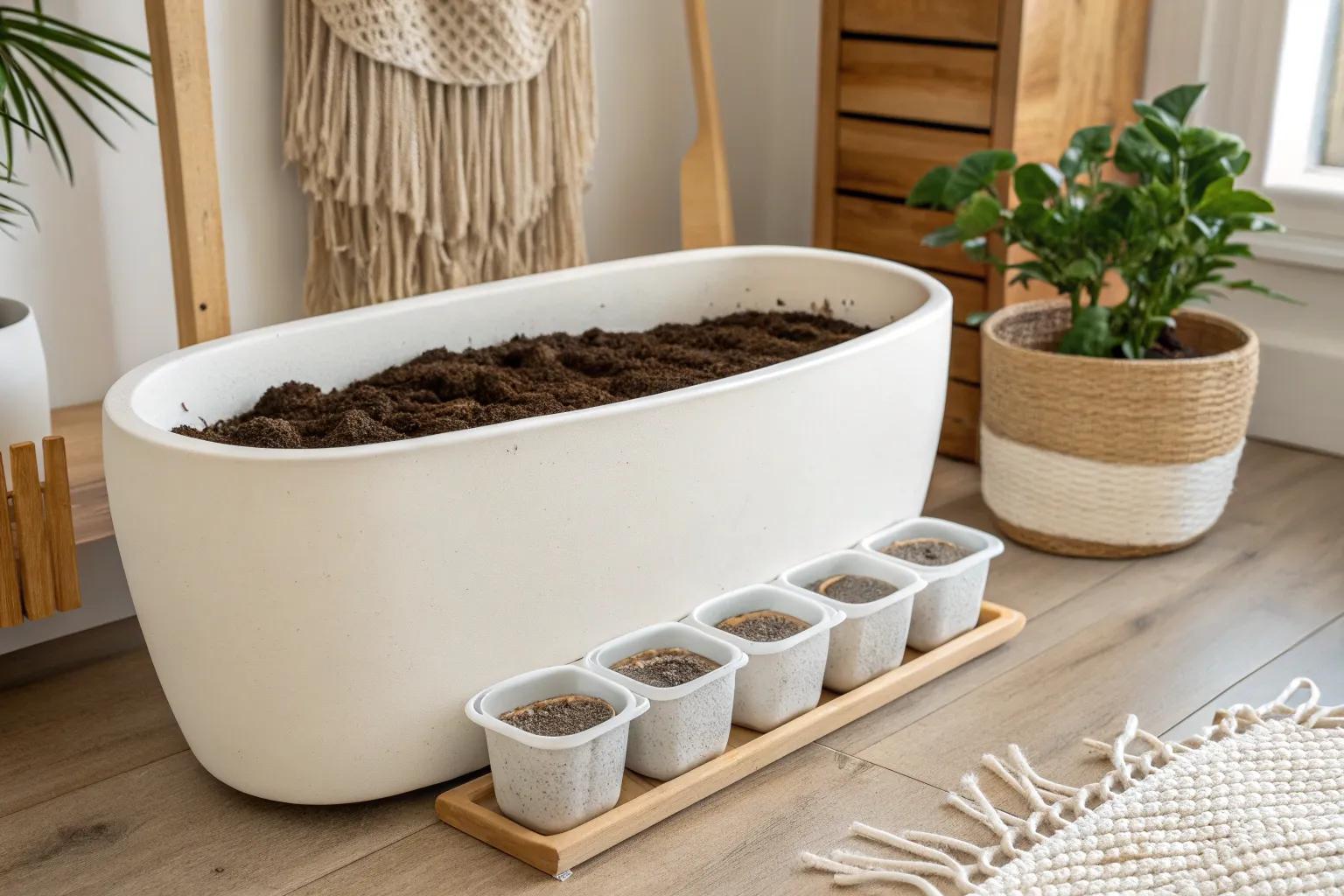
Large planters are a fantastic way to make a statement in your home or garden, but filling them entirely with soil can be costly and cumbersome. Let’s explore some creative and practical ideas to fill the bottom of your large planters, saving you money and sparking your creativity.
1. Incorporate Packing Peanuts

Non-biodegradable packing peanuts are fantastic for filling space in planters. They’re lightweight and provide excellent aeration. Just be sure to secure them in a bag before use, or you might find them floating away during repotting!
2. Use Non-Biodegradable Packing Peanuts

For a filler that won’t break down, non-biodegradable packing peanuts are a reliable choice. They maintain their shape and provide excellent drainage. Just remember to keep them contained to avoid a mess!
3. Incorporate Old Pool Noodles

Those colorful pool noodles can be cut up and used to fill your planters. They’re lightweight, waterproof, and add a splash of color to your gardening routine. Who knew summer fun could double as garden innovation? Check out these creative pool party favor ideas for more ways to repurpose your supplies.
4. Try Foam Take-Out Containers

Clean foam containers from take-out meals can be reused as a lightweight filler. They’re durable and help save on soil. I like the idea of giving these a second life rather than tossing them away.
5. Add Terracotta Shards

Break those old terracotta pots into shards and use them at the bottom of your planter. They create natural drainage and help with weight distribution. Plus, they give your planter a rustic touch. If you have extra pieces left over, check out these mini terracotta pots craft ideas for more inspiration.
6. Use Broken Ceramic Pieces

Repurpose broken ceramic pieces as filler. Not only do they help with drainage, but they also give your planter a unique look. Each time I do this, it feels like creating a little mosaic at the bottom of the pot. You can find more inspiration in our clay herb planter DIY ideas.
7. Try Recycled Cardboard

Flattened cardboard boxes make for an eco-friendly filler. They break down over time, but if you’re doing seasonal planting, this is a great short-term solution. Just make sure they’re dry when you add them.
8. Create a Base with Bricks or Cinder Blocks

For larger, more permanent planters, bricks or cinder blocks can offer the stability you need. They’re heavy, so use them where mobility isn’t a concern. It’s a solid choice for planters on balconies or patios.
9. Utilize Sticks and Branches

Small branches and sticks can be an interesting way to fill space. They add an organic element and are perfect for seasonal planters. Plus, they’re free if you have a backyard or take a walk in a nearby park.
10. Add Stones for Stability

Small stones or gravel can be a great base layer for drainage and stability. They slightly increase the weight, which is perfect for outdoor planters that might face wind. It’s a tried and true method that works every time.
11. Use Old Plastic Bottles

Save those plastic soda and water bottles from your recycling bin! By placing them at the bottom of your large planter, you not only reduce the amount of soil needed but also improve drainage. I’ve found that their irregular shapes create perfect channels for water to flow through. You can also repurpose these containers into creative soda bottle planters for your garden.
12. Fill with Pine Cones

For a more natural approach, fill the bottom of your planter with pine cones. They’re great for drainage and add an earthy touch. I love using them, especially in autumn-themed planters featured in our modern planter ideas guide.
13. Layer with Upside-Down Pots

Turn smaller pots upside down to fill space in your large planter. Not only does this method save soil, but it also adds stability to your planter. I love how this trick reuses old pots that might otherwise be discarded. For more ways to display your greenery, check out these creative DIY wall planter ideas.
14. Incorporate Clean Foam Blocks

Foam blocks from packaging material can be cut to size and used as filler. They’re lightweight and easy to shape. It’s a fantastic way to recycle and keep your planter manageable. These fillers work perfectly inside stylish minimalist ceramic planters.
15. Experiment with Sand

Adding a layer of sand can help with drainage and adds weight to prevent tipping. However, use it sparingly, as too much can compact the soil. I’ve found it particularly useful for plants with high drainage needs.
16. Line with Landscape Fabric

Landscape fabric is a brilliant way to separate the filler from the soil. It keeps everything in place while allowing water to drain through. I always keep a roll handy for projects like this!
17. Experiment with Bubble Wrap

Bubble wrap isn’t just for protecting fragile packages! It can be a lightweight option to fill planters and help with insulation. It’s one of those quirky ideas that’s surprisingly effective.
18. Use Aluminum Cans

Aluminum cans are a durable filler option that’s also surprisingly lightweight. Just make sure the opening faces down to prevent soil from filling them up. It’s a great way to reuse materials while keeping your planter manageable. You can find more inspiration in our creative planter DIY ideas.
19. Layer with Newspaper

Bunched-up newspaper is another budget-friendly filler. It’s biodegradable and fills space nicely. I’ve used it in planters where I plan to change plants often. For more inspiration, check out these budget-friendly backyard ideas.