
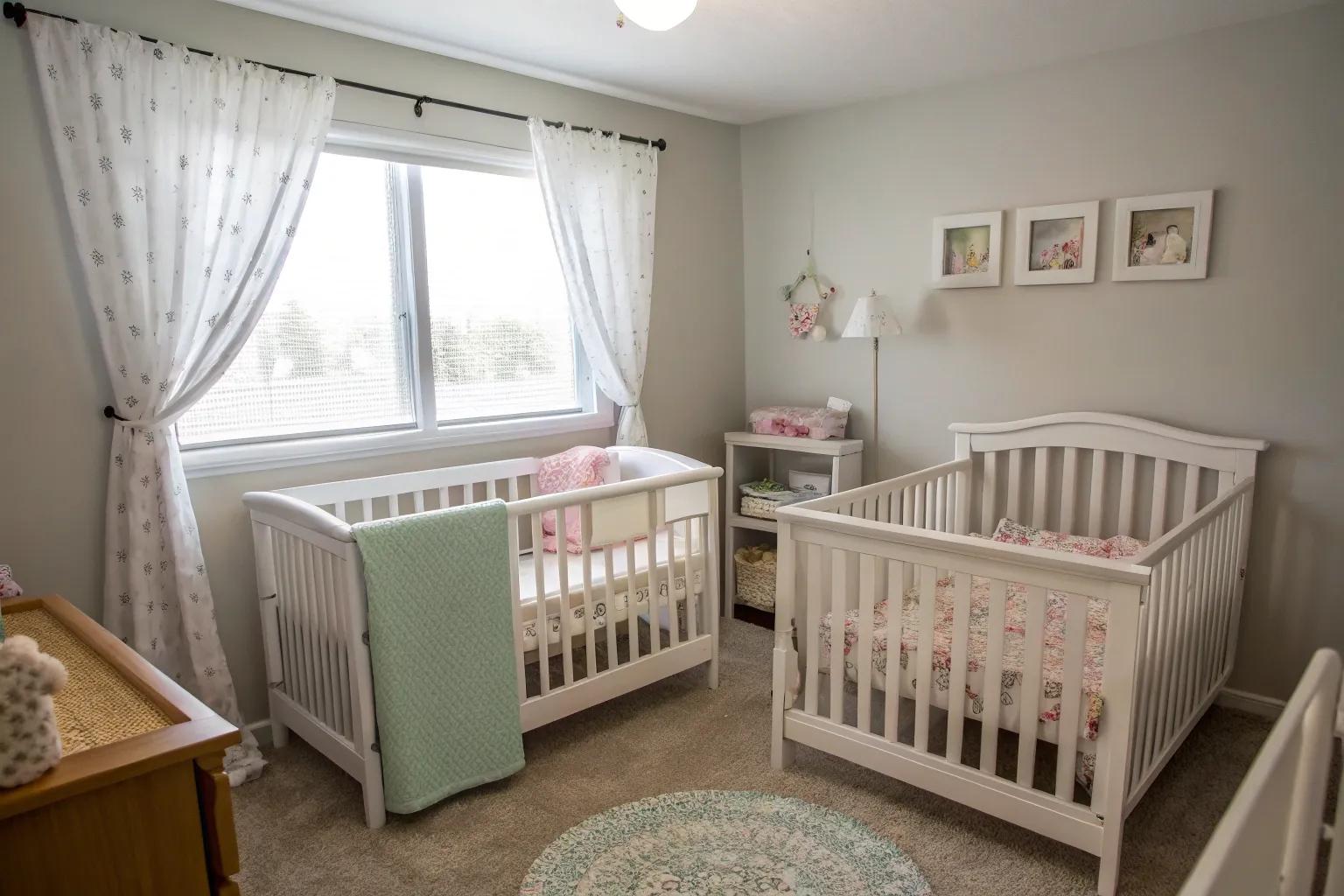
Designing a nursery for twins in a small room is like mastering the art of spatial chess—every move counts. With a touch of creativity and smart planning, you can transform even the tiniest space into a cozy haven for your little ones.
1. Go Vertical with Storage

When floor space is limited, think vertically. Install shelves above cribs or changing tables to keep essentials within reach but out of the way. I’ve found that using vertical space not only maximizes storage but also draws the eye upward, making the room feel larger; you can explore more nursery shelf ideas to see how.
2. Choose Compact Furniture

Opt for compact furniture pieces that serve multiple purposes, like cribs with built-in storage. These help save space without sacrificing functionality, a trick I often employ in tight quarters. Such choices are central to many smart nursery layout ideas and can elegantly keep the room uncluttered while housing all necessities.
3. Utilize Under-Crib Storage

The space beneath cribs is precious real estate. Utilize under-crib storage bins to stash away diapers, blankets, or toys. If you’re feeling handy, you could even incorporate this feature into one of these unique DIY baby crib ideas. During my design projects, this hidden storage has been a lifesaver, keeping the nursery functional and tidy.
4. Opt for a Light Color Palette

Light colors can make a room feel more spacious and airy. A palette of soft whites, pastels, or muted tones can transform a cramped room into a serene retreat, a concept often seen in minimalist kids’ room designs. I’ve seen how these choices create a calming atmosphere, perfect for a nursery.
5. Dual-Purpose Changing Area

Combine the changing table with storage to maximize efficiency. A dresser with a changing pad on top can save space while keeping essentials close. This has been a go-to strategy in many of my compact nursery designs and is one of many effective baby room storage ideas.
6. Consider Multi-Functional Seating

A rocker with storage or a foldable ottoman can offer comfort and utility. These pieces provide seating for parents and a place to store toys or blankets. This dual functionality is key to many flexible nursery layout ideas I’ve incorporated to keep the space flexible.
7. Install Over-Door Hooks

Make use of door space by installing over-the-door hooks or organizers. This is one of my favorite DIY nursery ideas on a budget. They’re perfect for hanging clothes, towels, or diaper bags, keeping them accessible yet out of the way. In my experience, this simple addition can significantly declutter a room.
8. Create a Cozy Reading Nook

Even in small spaces, a reading nook can be a delightful addition. Use a small rug and some cushions in a corner to create a cozy spot for storytime. I’ve seen how these little nooks can become a cherished part of many thoughtful nursery layouts, adding warmth and personality.
9. Use Mirrors to Enhance Space

Mirrors can work wonders in small rooms by reflecting light and creating the illusion of more space. A strategically placed mirror can add depth and brightness to a nursery. This is a trick I often use to enhance the feel of a room without adding clutter.
10. Incorporate a Minimalist Design

A minimalist approach with fewer decorations can prevent a small nursery from feeling overcrowded. Focus on essential pieces with clean lines and functional design. I find that this style not only creates a sense of calm but also makes the space more versatile.
11. Use a Twin Theme for Cohesion

A cohesive twin theme can unify the space, making it feel harmonious. This is just one of many smart nursery layout ideas that can make a room special. Whether it’s a shared color scheme or matching patterns, this thematic approach can tie everything together. I’ve seen how this enhances the aesthetic appeal and creates a balanced environment.
12. Incorporate Sliding Doors

Sliding doors can save precious floor space compared to traditional swing doors. They’re ideal for closets or entryways in compact nurseries. This concept is a cornerstone of many DIY ideas for small rooms, allowing for more flexibility and flow.
13. Add a Pop of Color with Wall Art

Introduce color and personality with wall art that doesn’t take up floor space. You can create amazing pieces yourself; see these DIY nursery ideas on a budget for inspiration. A few vibrant pieces can enliven a nursery while maintaining a clean aesthetic. This is a favored technique of mine to inject life without cluttering the room.
14. Embrace Natural Light

Maximize natural light by keeping window treatments minimal. This is a key principle in many effective nursery layout ideas. Light, airy fabrics allow sunshine to fill the space, making it feel larger. In my experience, natural light has a transformative effect, boosting both mood and perception of space.
15. Utilize Wall-Mounted Lighting

Wall-mounted lighting can free up floor space and add a modern touch. Using sconces or wall lamps is a practical way to illuminate the room without bulky fixtures. This choice complements the sleek, uncluttered look common in many DIY small room decor ideas.
16. Incorporate Multi-Use Rugs

A soft, durable rug can define play areas and add comfort underfoot. In line with many minimalist kids’ room ideas, a single rug can add function without clutter. Choose one that complements your color scheme and provides a cushioned play space. Rugs are a versatile element I’ve frequently used to enhance coziness and style in small nurseries.
17. Opt for Transparent Furniture

Transparent or acrylic furniture pieces can create the illusion of more space. This approach is a great starting point for developing your own nursery layout ideas. They blend seamlessly into the room, maintaining an open feel. I often recommend these pieces for small areas because they add modernity without visual weight.
18. Personalize with Initials or Names

Add a personal touch by incorporating initials or names above each crib. This simple addition is one of the most popular DIY nursery ideas on a budget and can make the space feel special and individualized. I’ve seen how this small detail can add warmth and a sense of belonging to the nursery.
19. Employ Closet Organizers

Closet organizers can significantly enhance storage efficiency. For inspiration, explore these DIY baby closet ideas. Use hanging organizers and bins to compartmentalize clothes and accessories. This strategy ensures everything has its place, a key factor in maintaining order, as I’ve learned over the years.
20. Utilize Foldable Play Equipment

Foldable play mats and equipment can be easily stored when not in use, freeing up space. This is a great example of the clever storage ideas for a toddler room you can use. These items offer flexibility and convenience, perfect for a small nursery. I’ve found this approach keeps the room versatile and ready for any activity.
21. Incorporate a Neutral Base

Starting with a neutral base allows for easy updates and changes in decor. Neutral walls and furniture provide a timeless backdrop, a core principle in many minimalist kids’ room ideas, which can be personalized with colorful accents. This foundation has been key in many of my adaptable nursery designs.
22. Leverage Hidden Storage

Hidden storage in unexpected places, like behind mirrors or under seats, can be a game-changer. These discreet spots help maintain a clean look while providing essential storage. I often utilize this tactic to ensure every inch of space serves a purpose.
23. Choose Double-Duty Decor

Decorative items that serve a purpose, like a clock that doubles as a nightlight, are ideal for small nurseries. Like many clever DIY nursery ideas on a budget, these dual-purpose items are both stylish and functional. I’ve incorporated similar pieces to keep spaces beautiful yet practical.
24. Install a Folding Changing Table

A folding changing table saves space and can be tucked away when not in use. This option is perfect for small nurseries, providing convenience without a permanent footprint. I’ve found it to be a practical solution in many compact designs, including those for a nursery in a parents’ bedroom.
25. Use Color Accents for Personality

Add lively personality with DIY color accents like cushions or curtains. These easily changeable elements can infuse energy and style without overwhelming the room. I often employ this method to keep the space fresh and engaging for little ones.