
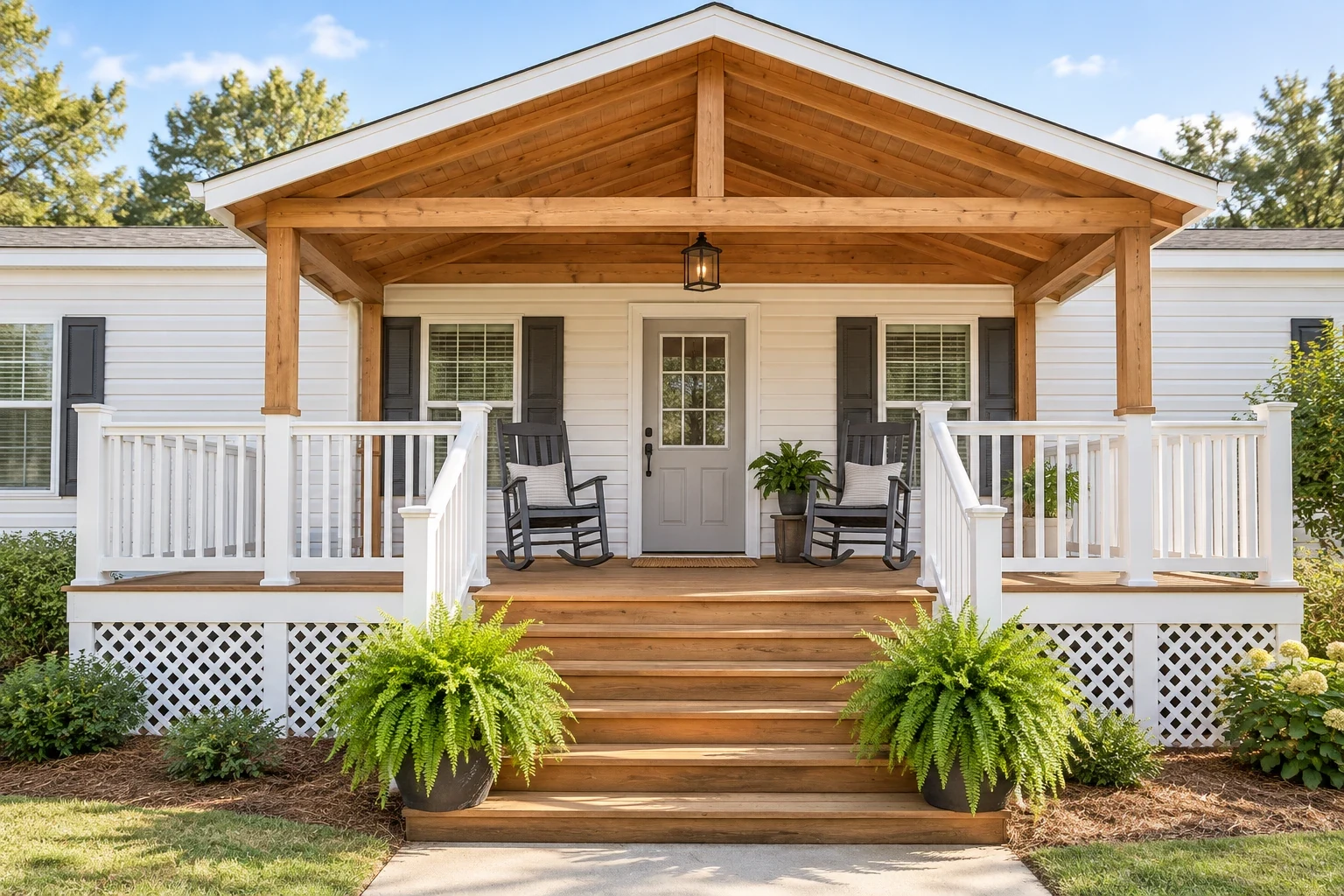
Upgrading a front exterior often takes just one weekend and about 200 dollars for fresh skirting or new planters. A covered porch with a roof turns the entrance of a single-wide home into a functional daily seating area. Adding sturdy wood elements and crisp white paint brings immediate structure to the outside of the house.
Add a Gabled Roof

Build a warm cedar gabled porch roof specifically to protect your front door from heavy rain and harsh summer sun. This overhead addition keeps the entrance dry and extends the life of your wooden deck boards. Measure the width of your current platform and order pre-cut cedar rafters to form the pitch. Secure the framing directly above the existing porch footprint, spacing the beams sixteen inches apart for maximum stability. Leaving the natural wood exposed underneath adds a warm tone to the exterior.
Add White Railing

Frame the porch deck with a crisp white wood railing to define the outdoor seating space. A solid perimeter boundary prevents accidental falls while sharpening the exterior outline against natural cedar floorboards. Secure standard wood posts measuring 36 inches high at each corner, connecting them with horizontal top and bottom rails. Space all vertical balusters four inches apart along the entire frame to meet local safety codes. Apply two coats of exterior semi gloss white paint over primed timber to protect the structure against moisture damage.
Set Rocking Chairs

Place two slate gray rocking chairs on the cedar deck to create a dedicated morning coffee spot. Heavy outdoor furniture provides comfortable daily seating while resisting strong winds that might blow away lightweight plastic chairs. Position the rockers about two feet apart to leave plenty of room for a small side table between them. Look for chairs made of high-density polyethylene or painted solid wood, which cost around 150 dollars each and wipe clean with a damp cloth. The gray tone hides everyday dust perfectly.
Pot Lush Ferns

Set lush green potted ferns beside the wide steps to soften the transition between the yard and the wooden structure. Dense foliage blocks the view of bare support posts and adds a living element to the hard building materials. Buy large plastic nursery pots and drop them directly into decorative outer planters to save money on heavy ceramic containers. Water the ferns every two days during peak summer heat to keep the fronds full. Placing them at the base of the stairs guides foot traffic naturally toward the entrance.
Hide with Lattice

Cover the open base of the porch with white lattice skirting to block animals from nesting underneath the deck. This physical barrier hides structural concrete blocks and utility pipes from plain sight. Cut four-by-eight-foot vinyl or painted wood lattice panels to fit the exact height of your deck clearance. Attach the sheets to a basic wooden frame using exterior screws placed every twelve inches along the border. The diamond pattern allows necessary airflow to keep the ground dry while matching the white upper railings.
Hang Plant Baskets

Suspend crisp white hanging baskets under the porch eaves to draw the eye up toward the warm cedar roof. Trailing green ferns fill the empty vertical space above the railings without taking up any usable floor area. Screw heavy-duty metal ceiling hooks directly into the solid wood rafters, keeping them at least eighteen inches away from the edge to protect plants from harsh afternoon wind. Use lightweight potting soil mixed with perlite so the baskets stay manageable when saturated with water after a heavy rain.
Build Wide Wood Steps

Construct your entry stairs using thick warm cedar treads and crisp white risers to match the main deck above. A wider staircase provides a safer, more stable path for carrying heavy groceries into the house. Cut the treads to a full twelve inches deep so a large shoe fits entirely on the step. Fasten the cedar boards with coated deck screws, then paint the vertical riser boards with exterior white gloss before attaching them. This two-tone approach makes each step highly visible in low evening light.
Mount a Wall Sconce

Install a slate gray metal outdoor wall light on the crisp white siding beside the door frame. Proper exterior lighting illuminates the keyhole at night and deters unwanted visitors from approaching the entrance in the dark. Mount the fixture approximately sixty-six inches from the deck floor so the bulb sits right at eye level. Choose a downward-facing metal shade that directs the beam onto the threshold rather than out into the street. A basic wired sconce costs around forty dollars and takes under an hour to connect.
Lay an Outdoor Rug

Unroll a slate gray and white patterned outdoor rug on the warm cedar deck floor to define the conversation area. A woven synthetic layer catches dirt from shoes before it gets tracked inside the main living room. Select a five-by-eight-foot size made of recycled plastic fibers that resist mold and fading. Center the rug directly under the front legs of your rocking chairs to anchor the arrangement. You can spray the entire piece down with a garden hose once a month to remove accumulated pollen and dust.
Plant a Shrub Border

Planting lush green boxwood shrubs in dark soil along the white lattice skirting anchors the structure to the yard. A continuous row of evergreens hides mud splashes on the lower trim and provides year-round color when other plants die back. Dig a trench twelve inches deep and space the root balls two feet apart so the bushes have room to grow together into a solid hedge. Add a thick layer of dark mulch over the soil to retain moisture during dry weeks and suppress stubborn weeds.
Paint the Front Door

Coat your front door in a slate gray finish to create a strong focal point against the crisp white exterior trim. A darker color hides oily handprints around the handle and gives a standard mobile home entrance a custom feel. Remove the silver hardware first, then apply two coats of exterior-grade acrylic latex paint using a high-density foam roller for a smooth surface. Let the first layer dry for four hours before adding the second. This fifty-dollar update completely changes the first impression of the house.
Pin this page to reference during your next outdoor project. Painting the front door gives you the easiest first win.
