
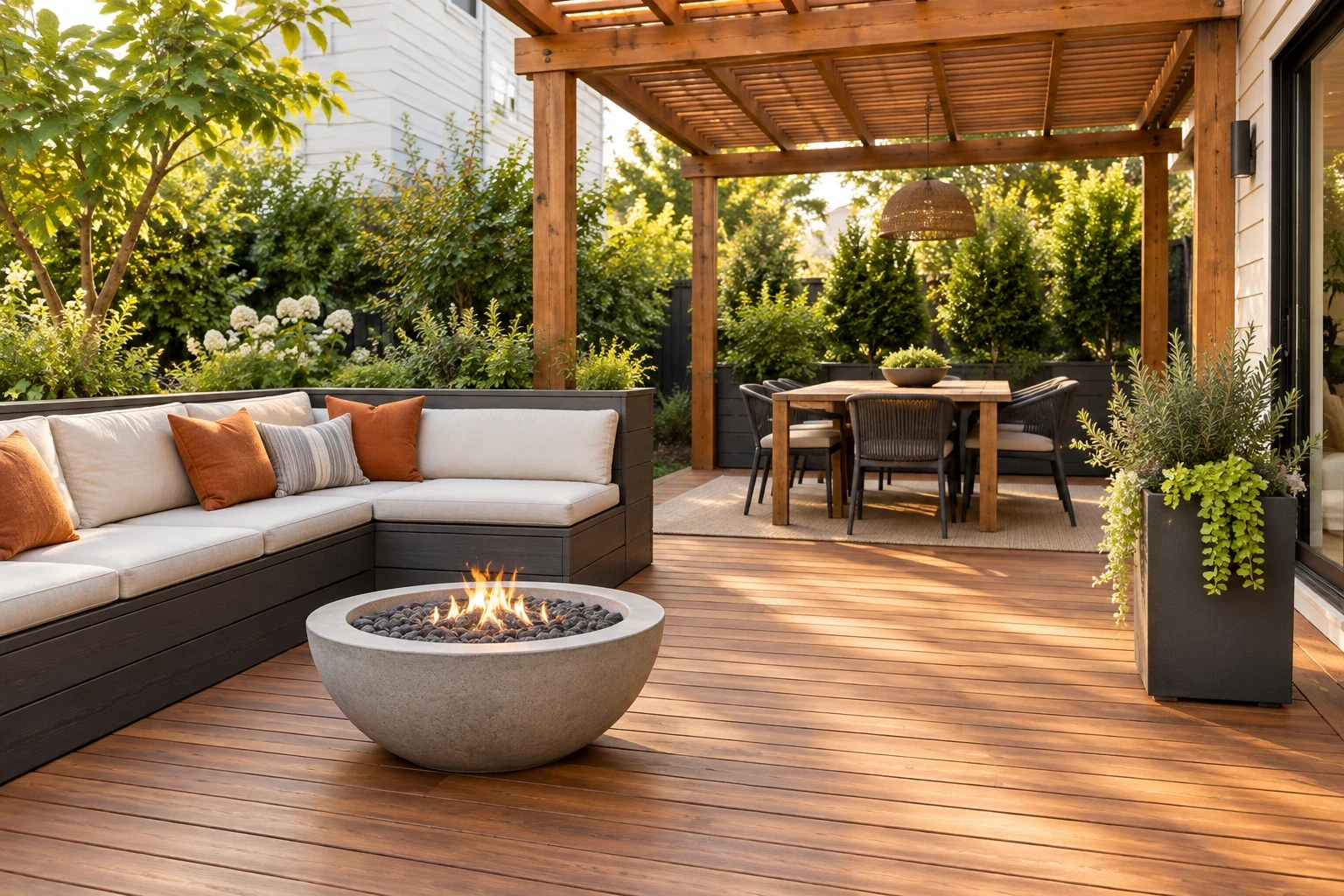
An empty outdoor deck often feels exposed to the elements and lacking clear functional areas. Adding overhead structures, warm cedar materials, and defined seating zones makes the back yard feel connected to the home. Structural updates like wide steps and built-in benches work alongside soft lighting and textiles to complete the space.
Build a Pergola

Construct a cedar pergola overhead to define a specific zone on a large platform. A slatted roof structure blocks harsh midday sun while keeping the air moving around your dining table and chairs. Setting 6×6 inch cedar posts directly into the deck frame provides a stable base that withstands high winds. Leave the wood untreated to let it weather naturally, or apply a clear UV sealant every two years to maintain that warm orange tone.
Add Built-In Seats

Line the perimeter with a built-in wooden bench, like the charcoal gray one in the photo, to maximize seating without cluttering the floor. Permanent benches anchor the edges of the space and eliminate the need for bulky standalone chairs that blow over in storms. Build the seat box 18 inches high and 20 inches deep for standard comfort. Top the wooden base with three-inch thick soft white cushions made from weather-resistant acrylic fabric to prevent mold growth.
Use Orange Pillows

Toss a few burnt orange throw pillows onto your white bench cushions to break up the neutral tones and add visual warmth. Warm colors stand out sharply against gray and white backgrounds, drawing the eye directly to the primary seating area. Choose durable covers made of solution-dyed acrylic that measure exactly twenty by twenty inches for a substantial, proportionate look. Keep the interior inserts firm and supportive by using high-density outdoor foam, which sheds water quickly after a heavy afternoon rain. Store these textiles in a waterproof deck box during the winter months to prevent mildew.
Set a Fire Bowl

Position a low concrete fire pit directly on the cedar deck boards to create a natural gathering point. A heavy, low-profile bowl radiates heat outward toward seated people rather than straight up into the air. Pick a model measuring at least 30 inches across, ensuring it has a protective heat shield underneath to prevent scorching the wood. Fill the center with dark lava rocks to hide the stainless steel burner ring when not in use.
Place a Planter

Set a sleek charcoal planter filled with lush foliage on the floor to soften the hard wooden corners. Tall greenery blocks sightlines from neighboring yards while adding organic texture next to rigid bench lines. Buy a fiberglass or resin pot that is at least 24 inches tall, as these materials look like heavy concrete but remain light enough to move. Drill three half-inch drainage holes in the bottom before adding potting soil to prevent root rot.
Lay Warm Cedar Boards

Fasten warm cedar boards using a hidden clip system for a smooth, barefoot-friendly surface. Removing visible screw heads from the top of the planks prevents water from pooling in the metal divots, which slows down wood decay. Space the boards exactly one-quarter inch apart using a standard spacer tool to allow proper drainage during heavy rain. The uninterrupted wood grain provides a clean backdrop that makes elements like a soft white rug stand out.
Install Charcoal Railings

Mount charcoal gray metal railings along the open edges to secure the boundary without blocking the lawn view. Dark metal balusters blend with the shadows of the yard, keeping the focus on the green grass rather than the barrier itself. Space the vertical metal rods exactly three and a half inches apart to meet standard building codes and prevent small pets from slipping through. Cap the metal frame with a flat, five-inch wide wooden top rail to provide a comfortable flat surface for resting coffee mugs. Finish the wood with a clear weatherproofing sealant to prevent splintering.
Dine Around a Wood Table

Center a round cedar dining table under your pergola to facilitate easy conversation during meals. A circular shape lacks sharp corners, making it easier to walk around in a confined outdoor footprint. Pair a 48-inch diameter table with four white woven chairs to contrast against the warm wood tones. Arrange simple white ceramic plates directly on the bare wood to keep the setup practical and easy to wipe down after eating.
Build Wide Steps

Form wide cedar stairs leading down to the lawn to make the transition feel gradual and open. Stretching the steps to at least six feet wide prevents bottlenecks when people move in and out of the house. Use two standard 2×6 boards for each tread to create a deep, sturdy footing. Flank the bottom step with charcoal planters filled with burnt orange flowers to visually mark the end of the wooden structure.
Hang Cafe Lights

Drape warm white string lights back and forth across the overhead beams to illuminate the area after sunset. A zigzag pattern distributes soft, even lighting across the entire footprint without the harsh glare of a single floodlight. Screw small metal cup hooks into the wood every three feet to keep the heavy-duty outdoor wires taut. Opt for commercial-grade LED bulbs with a 2700K color temperature for a gentle, yellowish glow that mimics candlelight.
Roll Out a White Rug

Unroll a textured soft white outdoor rug over the cedar boards to anchor a separate lounge zone. Adding a large textile underfoot physically defines a seating area while covering any heavily weathered patches of wood. Buy an 8×10 foot rug made entirely of recycled plastic fibers so you can spray it clean with a garden hose. Place the front legs of a charcoal side table on the edge to keep the mat flat in the wind.
Drape a Cozy Blanket

Keep a soft white knit blanket on the cedar coffee table for chilly evenings outside. Having a thick layer ready encourages you to stay outdoors longer once the temperature drops. Choose a machine-washable cotton blend that measures 50 by 60 inches for adequate coverage. Fold it neatly next to a burnt orange tray to inject a small dose of color onto the bare wooden surface while keeping the tabletop organized.
Plant a Border Garden

Dig a lush garden bed right against the cedar base to hide the structural supports. Planting tall green shrubs masks the empty gap between the floor joists and the soil, making the platform look grounded. Space the shrubs 24 inches apart to allow for mature growth, mixing in burnt orange daylilies for seasonal color. Lay a three-inch layer of dark brown mulch over the soil to retain moisture and suppress weeds around the foundation.
Step Down to a Lounge

Build a secondary deck tier to create a distinct living space just a few wide steps down from the main platform. A sunken lounge feels more private and breaks up the monotony of a massive, single-level wooden structure. Construct this new tier using the same warm cedar boards as the top level to maintain a cohesive architectural look. Furnish the space with a white outdoor sofa and a charcoal coffee table, ensuring the furniture scale matches the tighter footprint. Leave at least thirty-six inches of walking clearance around the table to keep the traffic flow completely open.
Hang a Window Box

Mounting a charcoal gray window box on the white house siding brings greenery up to eye level. Lifting plants breaks up a large, blank exterior wall and connects the house visually to the outdoor room. Secure a 36-inch wide resin box directly into the wall studs using heavy-duty lag screws so it can hold the weight of wet soil. Fill it with trailing green vines and burnt orange blooms to echo the colors used below.
Put your main budget into structural cedar elements like the pergola and decking boards. You can save money by choosing basic concrete fire bowls and standard throw pillows.
