
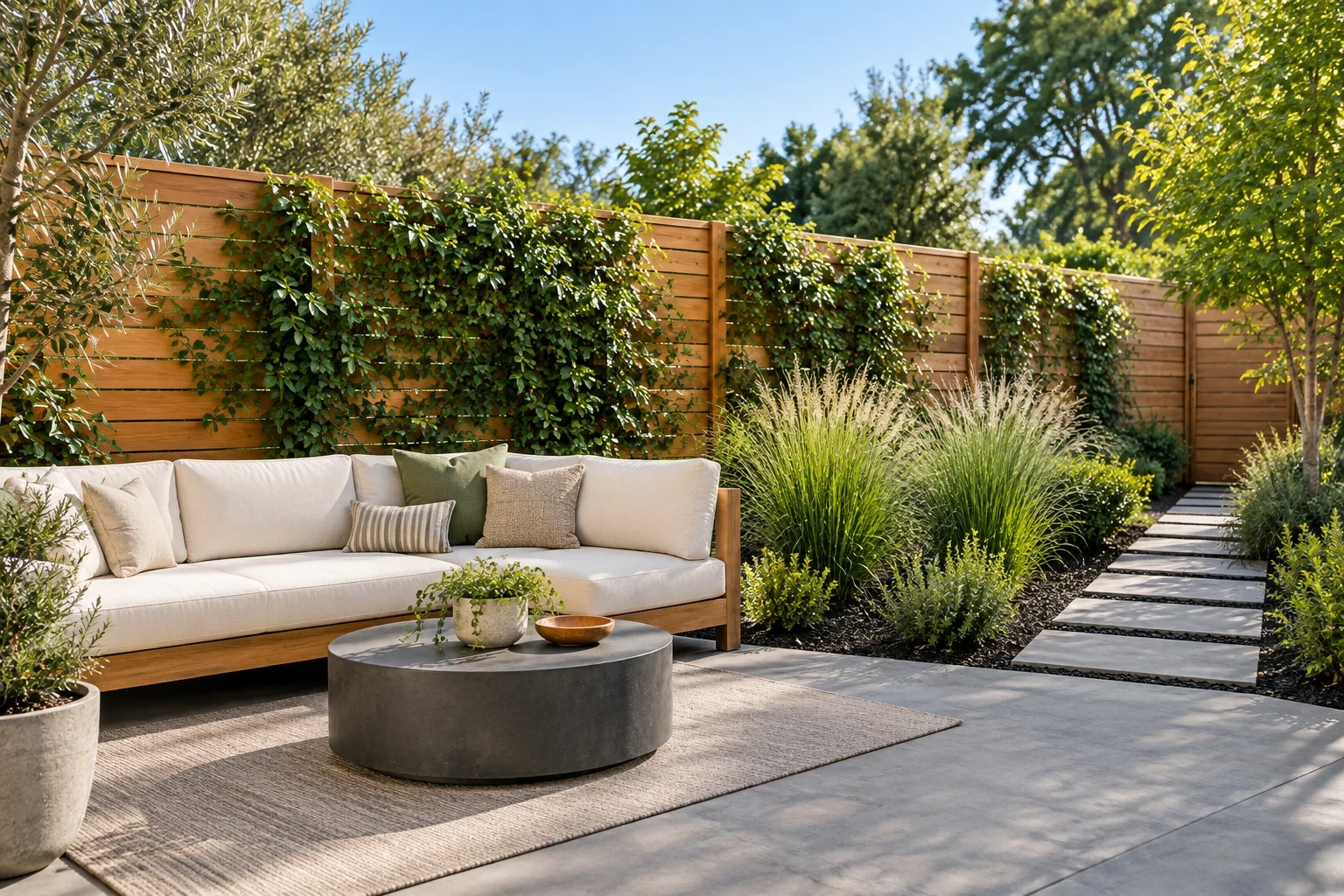
A tall solid wood board privacy fence keeps neighbors from looking in, but a blank wall can make your backyard feel enclosed. Softening that boundary with natural wood, tall plants, and stone details breaks up heavy lines. These updates turn a plain perimeter into a comfortable outdoor space.
Build Cedar Slats

Run your boards horizontally to build a tall solid wood board privacy fence that feels modern and grounded. Traditional vertical pickets draw the eye up, while horizontal lines stretch the space sideways, making a narrow yard feel wider. Buy standard one-by-six cedar boards and attach them to four-by-four posts using two-inch exterior deck screws. Leaving a quarter-inch gap between each slat allows wind to pass through, which reduces pressure on the structure during heavy storms.
Grow Green Vines

Plant climbing greenery along the base of your panels to break up the large expanse of wood. The living leaves soften the hard edges of the timber and bring a natural texture directly into your line of sight. Stretch stainless steel wire horizontally between the posts, spacing the wires about twelve inches apart. Train the young tendrils along this metal grid so they weave across the cedar rather than pulling down the wood itself.
Plant Tall Grasses

Line the perimeter with ornamental grasses to create a soft, moving layer in front of the rigid boards. The tall green stalks rustle in the wind, adding gentle sound and motion that distracts from traffic noise. Dig a shallow trench about two feet wide and fill it with rich soil. Space the root balls eighteen inches apart in a mulch bed at fence base, ensuring they have enough room to expand over the next few seasons.
Add a White Sofa

Position a soft white outdoor sofa right against the wooden boundary to anchor your main seating zone. Pushing heavy furniture to the edge opens up the center of the concrete patio for foot traffic and daily use. Choose a frame made of rust-resistant aluminum or treated teak, and top it with thick foam cushions wrapped in outdoor acrylic fabric. Leave about four inches of breathing room behind the backrest so air circulates against the cedar slats.
Lay a Stone Path

Guide footsteps along the boundary by setting stone gray concrete stepping stones into the ground. A dedicated walkway keeps dirty shoes off the grass and directs movement naturally from the house to the back gate. Buy pre-cast square pavers that measure at least eighteen inches wide to accommodate a normal walking stride. Bury them flush with the surrounding soil or gravel so you can safely run a mower or trimmer right over the edges.
Install Fence Uplighting

Hide small brass uplights in the dark mulch to wash the cedar panels with warm light after dusk. Low-voltage illumination highlights the wood grain and prevents the yard from feeling like a dark cavern at night. Mount the fixtures on sturdy ground stakes about six inches from the base of the boards. Angle the bulbs slightly upward to graze the surface, creating shadows that emphasize the horizontal gaps between the timber pieces.
Plant Trees Behind

Put tall forest green pine trees along the back property line to extend your visual barrier higher than the boards reach. The dense needles block sightlines from second-story windows next door while adding a deep green backdrop. Plant the saplings at least four feet away from the boundary line so their mature trunks do not push against the structure. Water them deeply once a week during their first year to establish strong, deep root systems.
Pour a Gravel Border

Spread a crisp border of charcoal gray gravel along the bottom edge of the wooden panels. This rock layer acts as a splash guard, keeping wet soil and mud from rotting the bottom boards during heavy rain. Dig out a trench six inches deep and line it with heavy-duty landscape fabric to block weeds. Fill the trench with three-quarter-inch crushed stone, keeping the gravel level about an inch below the lowest piece of timber.
Set Up Lounge Chairs

Arrange two soft white outdoor lounge chairs facing a low cedar coffee table to build an intimate conversation spot. Tucking this small grouping near a charcoal gray fence corner utilizes dead space and offers a quiet place to read. Pick chairs with adjustable reclining backs and wheels on the back legs for easy moving. Set them about three feet apart, leaving enough room for the low table to hold drinks and a stack of books.
Build a Stone Fire Pit

Construct a round fire pit out of charcoal gray stacked stone on your concrete patio to create a natural gathering center. The heavy masonry contrasts with the warm cedar boards and holds heat long after the flames die down. Stack the blocks in a circle with an interior diameter of thirty inches, securing each layer with high-heat construction adhesive. Keep the outer edge of the pit at least ten feet away from any wooden structure.
Paint the Wood Charcoal

Coat a tall vertical wooden fence in deep charcoal gray paint to create a sharp visual contrast behind garden beds. Dark background surfaces make bright forest green hosta leaves stand out distinctly while hiding water marks and dirt splatters along the base. Apply two coats of exterior acrylic latex paint with a thick roller to push pigment deep into rough wood grain. Allow four hours of drying time between coats so the finish cures completely. One five-gallon bucket costs $150 to $200 and covers up to 2,000 square feet of wood.
Place White Planters

Group three tall soft white modern planters against the timber to break up the long horizontal lines. The bright containers stand out sharply against the warm wood, bringing structure and a clean modern shape to the deck edge. Fill the bottom half of each thirty-inch pot with empty plastic bottles to reduce the overall weight and save money on potting soil. Top them with trailing forest green vines that will spill over the crisp edges.
Roll Out Green Lawn

Cutting a sharp edge where a vibrant forest green lawn meets the charcoal gray concrete patio defines the yard layout clearly. A crisp transition looks highly intentional and makes even a small patch of grass feel like a manicured feature. Run a half-moon edger along the concrete border once a month, slicing through any creeping roots. Sweep the dirt back into the lawn side to maintain a clean one-inch drop between the concrete and soil.
Frame a Wood Gate

Install a heavy warm cedar wood gate using a charcoal gray metal frame to ensure the door never sags. A steel skeleton supports the weight of the timber, keeping the latch aligned so it opens smoothly every single day. Buy a heavy-duty gate kit that includes adjustable steel corner brackets and a drop rod. Bolt the horizontal cedar slats directly to the metal flanges, matching the exact spacing of the adjacent privacy panels.
Pin this page for your upcoming yard refresh. Pouring a gravel border is a solid first step to test out.
