
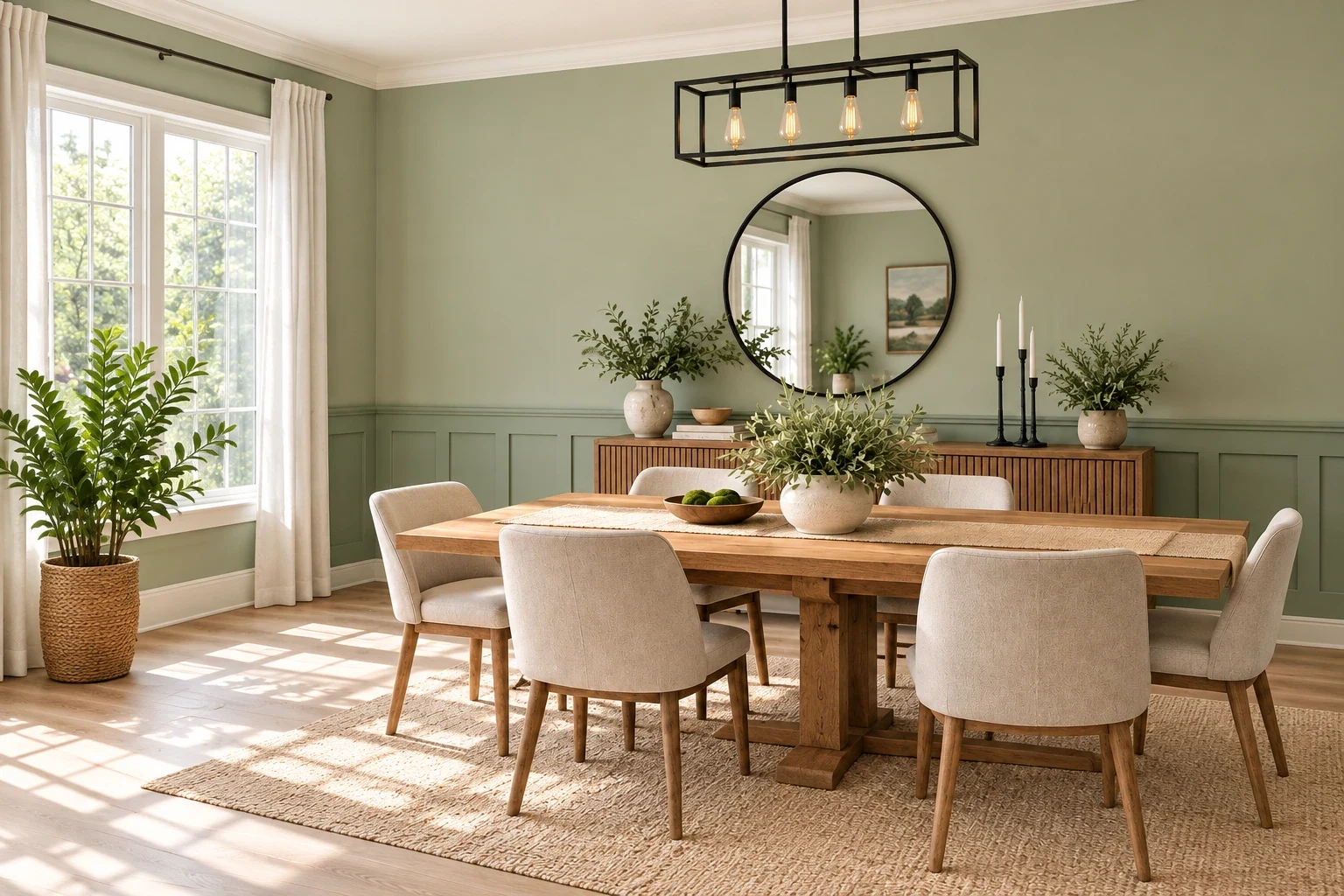
Breakfast and evening meals require a calm environment that handles both morning sunlight and artificial evening light. Setting a wood dining table as the room’s anchor establishes a solid base for the surrounding vertical spaces. You can build up from there using muted greens, structured panels, and dark metal accents to finish the room.
Paint a Sage Wall

Apply a soft sage green paint to the upper sections of your dining space. This muted tone absorbs harsh morning daylight and provides a restful backdrop for daily meals. Buy a gallon of flat or eggshell latex paint for around $40 to cover a standard upper wall area. Tape off your ceiling line and use a standard nine-inch roller with a medium nap to get a smooth, even finish across the drywall.
Hang a Black Light

Install a matte black linear chandelier directly above your eating area. The dark metal creates a sharp visual break against lighter walls and ceilings without looking heavy. Look for a fixture that measures at least one-third the length of your table to maintain proper scale. Mount the canopy to your ceiling junction box and adjust the downrods so the lowest part of the light sits 30 to 36 inches above the tabletop.
Add a Round Mirror

Mount a large round mirror with a thin black frame on the main wall. The curved shape breaks up the straight lines of tables and windows while reflecting natural light back into the room. Choose a mirror spanning 30 to 36 inches in diameter to make a noticeable impact. Secure a heavy-duty drywall anchor rated for at least 50 pounds into the wall, then hang the frame so its center sits at eye level.
Add Wall Panels

Build board-and-batten wainscoting along the lower half of your walls and paint it sage green. This structured woodwork protects the drywall from chair scuffs while adding architectural depth to a plain boxy room. Cut one-by-three inch MDF boards for the vertical battens and one-by-four boards for the top rail. Nail them directly into the wall studs using a brad nailer, space them 16 inches apart, and caulk the seams before painting.
Use an Oak Accent

Place a warm oak dining table squarely in the center of the room. The natural wood grain introduces an organic texture that warms up cool painted walls and provides a durable surface for daily meals. Pick a table measuring at least 72 inches long to seat six people comfortably. Center it beneath your light fixture and leave a minimum of 36 inches of clearance on all sides so chairs have room to slide.
Frame a Gallery Wall

Arrange a neat grid of six square oak frames above a matte black sideboard. A uniform layout fills a large blank space symmetrically, keeping the room feeling orderly instead of cluttered. Buy matching 16-inch wooden frames and fill them with basic abstract cream prints. Lay the arrangement out on the floor first, then hang them on the wall with exactly two inches of spacing between each frame using a laser level for precision.
Mount Brass Sconces

Attach a brushed brass wall sconce with a white linen shade beside your window. The warm metallic finish adds a soft glow in the evening and contrasts nicely against cream curtains. Select a plug-in or hardwired fixture that costs around $60 to $100. Position the backplate on the wall about 60 inches from the floor, ensuring the linen shade sits at a comfortable height to cast ambient light without glaring in your eyes.
Roll Out an Area Rug

Position a textured cream and beige patterned rug under the carved oak dining table to frame the central eating area. A thick floor covering dampens sound reflections off surrounding walls while establishing a soft visual foundation for the heavy wood anchor. Select an eight by ten foot woven textile that fits the proportions of your space. Unroll the rug centered beneath the table base, making sure to leave twenty four inches of exposed pattern along every side. This measurement prevents chair legs from catching on the outer hem during routine morning and evening use.
Mount a Picture Ledge

Fasten a warm oak picture ledge to a smooth cream wall to hold layered art and small ceramic vases. This shallow shelf lets you swap out prints without putting new holes in the drywall. Purchase a 48-inch wooden ledge with a front lip. Locate the wall studs with a finder, drill pilot holes, and drive three-inch wood screws through the shelf back into the wall to support the weight of heavy glass frames.
Display Monochrome Art

Hang a large black-and-white landscape photograph in a thin black frame on a plain cream wall. High-contrast monochrome art draws the eye quickly and works well in rooms with minimal color palettes. Order a poster-sized print measuring 24 by 36 inches from a local print shop. Slide it into a metal frame and suspend it from a single picture hook, positioning it near the entrance so it sets the tone as you walk in.
Apply Textured Wallpaper

Paste woven grasscloth wallpaper in soft cream tones above a warm oak chair rail. The natural woven fibers bring a tactile warmth to the upper wall that regular flat paint cannot achieve. Buy double rolls of real or faux grasscloth, expecting to spend about $50 per roll. Roll a clear wallpaper adhesive onto the wall, press the panels firmly into place, and smooth out any air bubbles with a plastic smoothing tool.
Center a Woven Pendant

Suspend an oversized woven rattan pendant light above a small round oak table. The open weave filters light softly and introduces a relaxed, natural element to a casual breakfast nook. Pick a shade that spans 20 to 24 inches across to anchor the small seating area. Thread the light cord through the top opening, wire it to the ceiling box, and let it hang low enough to illuminate the tabletop without blocking views.
Set Up Tall Branches

Group dried oak branches inside a large matte black ceramic vase on the center of your table. Tall organic elements draw the eye upward toward the chandelier and add life to the room without requiring water. Forage for sturdy branches outside or buy preserved stems from a craft store. Trim the bottoms with pruning shears so they stand roughly two feet tall above the rim, arranging them loosely for a natural, asymmetrical shape.
Check the exact width of your wall studs before purchasing heavy mirrors or shelving. Finding solid wood backing ensures your new decor stays firmly attached to the drywall.
