
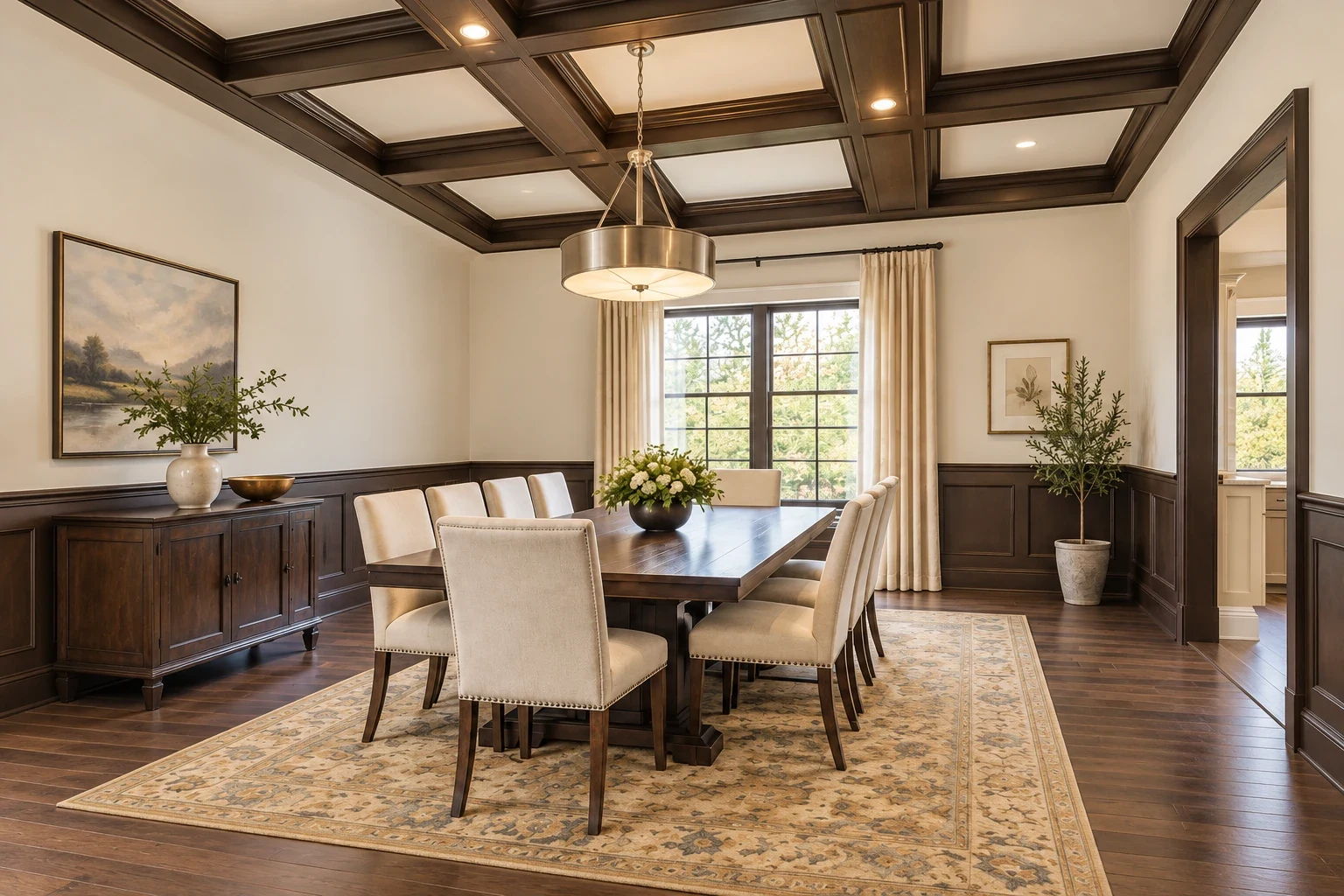
Homeowners frequently ignore the overhead surface and paint it flat white, but treating the ceiling as a fifth wall adds immediate architectural interest. Adding structural wood elements, bold wallpaper, or fresh paint completely changes the dynamic of a formal dining space. Grounding these heavy overhead details with warm rugs, built-in shelves, and potted plants balances the entire room.
Build a Coffer

Construct a grid of intersecting beams to give a flat ceiling structural depth. This classic architectural detail absorbs sound in a large dining room and breaks up a massive empty span. Measure your ceiling dimensions and divide the space into equal squares, usually between 24 and 36 inches wide. Use solid espresso-stained wood for the main beams to create a strong contrast against lighter walls. If solid timber is too heavy, build hollow box beams from 1×6 pine boards and stain them dark to mimic the look of traditional exposed wood ceiling beams.
Add Recessed LEDs

Install small lighting fixtures directly into the lower faces of your wood grid. Hiding the housings inside the dark wood ceiling trim provides targeted downward lighting without cluttering the overhead design. Buy four-inch recessed LED kits with a warm 2700K color temperature for a comfortable dining atmosphere. Run the wiring through the hollow channels of your box beams before closing them up. Connect these lights to a dimmer switch on the wall so you can lower the brightness during evening meals and keep the focus on the table.
Hang a Pendant

Suspend a large central fixture from the middle square of your ceiling grid. A prominent light acts as a focal point, drawing the eye up and anchoring the dining table below. Choose a brushed nickel pendant light measuring at least 24 inches across to stand up to the heavy wood beams. Mount the electrical box directly to the ceiling joists in the center coffer to support the weight of the metal fixture. Leave about 30 to 36 inches of clearance between the bottom of the shade and the tabletop.
Paint Panels Cream

Coat the recessed drywall squares between your wood beams with a warm, pale shade. This lighter color reflects the glow from your fixtures and prevents the dark wood structure from making the room feel like a cave. Select a soft cream interior acrylic paint with a flat finish to hide any drywall imperfections. Apply two coats using a high-nap roller before installing the final trim pieces. The flat finish absorbs glare from the nearby recessed lights, while the cream tone ties directly into the surrounding wall color.
Lay a Gold Rug

Place a large patterned textile under your main furniture to balance the heavy architectural details above. A warm floor covering mirrors the visual weight of an intricate ceiling, keeping the room grounded. Select a muted gold area rug that extends at least 24 inches past all sides of your espresso dining table. This extra border ensures the chairs stay on the rug when pulled out. Choose a low-pile wool blend, which resists crushing under heavy furniture legs and cleans up quickly after accidental food spills.
Install Wood Shiplap

Cover a plain hallway ceiling with horizontal wooden planks to add rich architectural contrast. Running the boards across the narrow corridor creates a distinct linear pattern that breaks up uninteresting drywalled overhead space. Purchase unfinished shiplap boards and apply a dark espresso wood stain before mounting them. Locate the structural ceiling joists with a stud finder and secure each plank using two-inch brad nails driven through the overlapping tongues. Leave a small 1/8-inch expansion gap along the edges, then install a brushed nickel flush mount light in the center.
Wallpaper the Ceiling

Apply a patterned paper directly to the ceiling above a cozy alcove. This unexpected placement defines a specific zone, like a window seat, without needing physical dividers or extra furniture. Pick a muted gold botanical wallpaper that coordinates with the nearby soft cream walls and espresso wood trim. Clean the ceiling surface with a damp sponge and apply a specialized wallpaper primer to ensure strong adhesion. Enlist a partner to help hold the long strips of pasted paper up while you smooth out the air bubbles with a plastic smoothing tool.
Mount Built-In Shelves

Build tall bookcases that reach all the way up to the ceiling line. Taking storage vertical emphasizes the total height of the room and integrates the wall structure with the overhead design. Build the frames using 3/4-inch plywood finished in an espresso wood veneer to match the room’s main ceiling trim. Space the fixed shelves about 14 inches apart to accommodate large books and soft cream ceramics. Finish the top edge with a solid crown molding that sits flush against the ceiling drywall for a permanent, built-in appearance.
Paint a Vaulted Ceiling

Paint steep sloped ceilings in a stairwell landing with a pale, solid color. Using a light tone on angled overhead planes prevents a narrow space from feeling closed in as you walk up the stairs. Buy a standard soft cream latex paint in an eggshell finish, which resists scuffs better than flat paint in high-traffic transition areas. Tape off the adjacent espresso wood handrail and any brushed nickel wall sconces before you start. Use an extension pole on your roller frame to safely reach the highest peak of the vault without a ladder.
Bring in Potted Plants

Use tall indoor greenery to bridge the gap between the floor and the ceiling. Placing an olive tree in an entryway corner draws attention upward, highlighting the overhead height while adding organic shapes to a structured space. Pot a six-foot artificial or live tree in a sturdy brushed nickel planter to match your lighting fixtures. Using potted plants as styling softens the hard lines of espresso wood floors and plain walls. Fill the base of the planter with heavy river rocks to keep the tall trunk stable and upright.
Verify the distance from your floor to the ceiling joists before ordering any large hanging light fixtures. You need enough clearance so people can walk underneath or sit at the table comfortably.
