
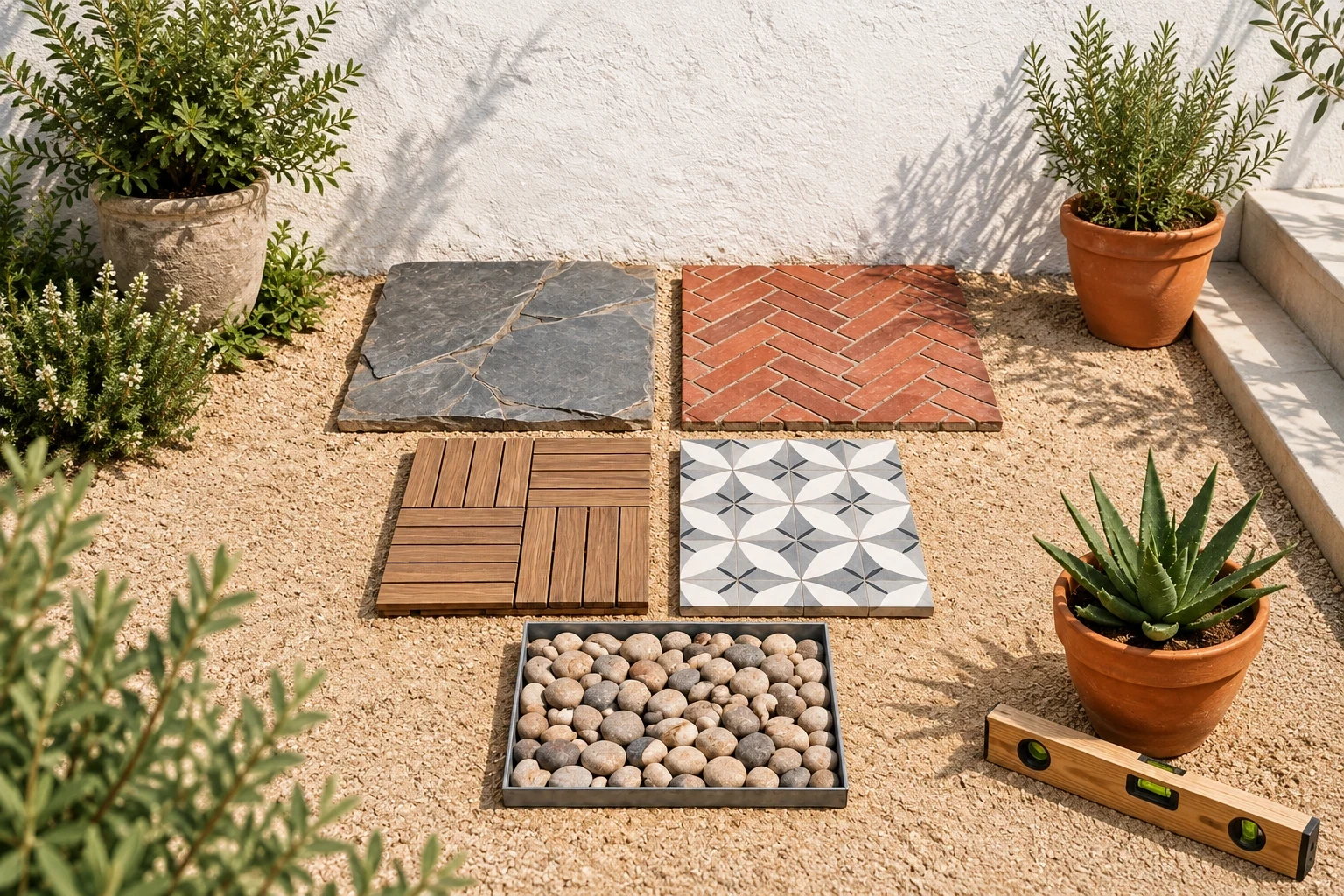
Earthy materials like slate and terracotta absorb midday sunlight rather than reflecting it back into your eyes. A durable ground layer anchors outdoor furniture while managing drainage across the yard. Testing sample boards on leveled sand helps you compare how different textures handle foot traffic and weather.
Slate Flagstone

Lay large, irregularly shaped natural flagstone slabs to establish a durable outdoor base. Dense stone absorbs heat during midday hours and resists chipping under heavy traffic, providing a steady footing for tables and chairs. Select pieces that measure at least two inches thick so they stay anchored without cracking. Dig down four inches, compact a layer of gravel, and add one inch of leveling sand across the space. Position each stone with one inch gaps between them, then sweep polymeric sand into the joints to lock the slabs in place.
Clay Herringbone

Arrange terracotta red brick pavers in a herringbone pattern to create a surface that resists shifting over time. The interlocking zig-zag layout distributes weight evenly, which keeps the base stable even when the ground freezes and thaws. Dig a trench six inches deep, fill it with four inches of compacted crushed stone, and add one inch of leveling sand. Tap the clay bricks into place with a rubber mallet, ensuring the edges sit flush against a rigid plastic edge restraint.
Wood Deck Tiles

Snap interlocking wood deck tiles over a flat outdoor surface to refresh worn ground areas. Sand beige wood tones soften hard architectural lines and provide a comfortable walking surface for bare feet. Purchase tiles crafted from rot-resistant teak or acacia that measure twelve by twelve inches square. Position the plastic grid bases over a level surface and press down until the side connectors click into place. Alternate the direction of the wood slats between adjacent tiles to construct a geometric checkerboard layout that drains water efficiently.
Geometric Tile

Install geometric patterned outdoor tiles to establish a defined base for your seating area. A repeating soft white and slate gray pattern disguises everyday dust while bringing structured visual depth to the ground. Select exterior tiles with a textured slip-resistant finish that holds traction during wet weather. Spread a layer of outdoor mortar using a half inch notched trowel across a leveled base. Press each tile firmly into the mortar bed, maintain quarter inch grout spaces, and apply penetrating sealer across the finished joints.
River Gravel

Spread a thick layer of washed river gravel for a fast and inexpensive ground cover. Smooth sand beige and gray pebbles drain water quickly during heavy rain, preventing puddles from forming around your chairs. Excavate the topsoil down three inches and lay heavy-duty landscape fabric to stop weeds from pushing through. Dump the gravel directly over the fabric, raking it out to an even two-inch depth so that chair legs do not sink too far into the stones.
Checkerboard Pavers

Alternate sand beige and soft white square concrete pavers to build a classic checkerboard terrace, like the hardscape layout in the photo. The contrasting colors break up a large expanse of hardscape, giving a plain backyard more visual structure. Buy 18-inch square pavers and plot out a grid using a string line and stakes. Set each block into a one-inch bed of coarse sand, checking with a two-foot level across multiple pavers to ensure rain will run off toward the yard rather than pooling.
Poured Concrete with Scoring

Score deep grid lines into a poured slate gray concrete floor to create structured geometric sections across your yard. These continuous control joints guide where the slab settles over time, preventing random surface cracking while adding clean lines. Wait until the freshly poured concrete cures enough to support weight without indenting, typically twelve hours after placement. Snap straight chalk lines across the slab at four foot intervals. Run a walk-behind saw with a diamond blade along the lines to cut uniform grooves one inch deep.
Natural Travertine Stone

Choose large rectangular sand beige travertine stones for areas that receive direct, intense sunlight. This natural stone stays remarkably cool underfoot, making it comfortable to walk on near a pool edge or uncovered deck. Order a French pattern kit, which includes a mix of 8-by-8, 8-by-16, 16-by-16, and 16-by-24 inch tiles to create an interlocking, non-linear layout. Dry-fit the pieces first to understand the repeating pattern before permanently bedding them in mortar.
Wide Plank Cedar Decking

Fasten long, wide sand beige cedar planks parallel to the house to elongate the look of a covered lanai. Cedar naturally resists decay and insects, providing a long-lasting wood surface that feels warm and forgiving underfoot. Use six-inch wide boards and secure them to treated pine joists spaced 16 inches apart on center. Drive stainless steel trim-head screws through the edges of the boards using a hidden fastener jig, leaving a quarter-inch gap between planks for air circulation.
Painted Concrete Stencil

Paint an old concrete floor with a soft white base coat and a slate gray floral stencil pattern. This low-cost update hides old stains and gives a plain back door landing the appearance of custom tile. Clean the concrete with a degreaser and apply a masonry primer before rolling on the base color. Tape down a large 12-inch plastic stencil and dab the gray paint on with a dry sponge brush, finishing the whole floor with two coats of clear polyurethane sealer.
Pea Gravel with Stepping Stones

Sink round slate gray stepping stones into a thick bed of sand beige pea gravel to build a casual garden pathway. The solid stones provide a firm place to step, while the loose gravel fills the irregular gaps and handles heavy runoff. Space the stepping centers 24 inches apart to match a standard walking stride. Dig out the path area, add landscape fabric, position the heavy stones directly on the cloth, and pour three inches of gravel around them until flush.
Hexagon Terracotta Tiles

Position rich terracotta red hexagon tiles just past a wooden threshold to transition smoothly from an indoor sunroom to an outdoor floor. The six-sided shape provides classic geometric structure, while wide mortar joints increase foot traction across high traffic entryways. Purchase dense terracotta tiles and seal their surface prior to installation so grout does not stain the porous material. Place three eighths inch tile spacers between each piece during mortar setting, then fill the channel gaps with sanded gray grout to complete the floor.
Turf Ribbons Between Pavers

Leave four-inch gaps between large slate gray concrete squares and fill the voids with strips of artificial turf. This grid adds a vivid punch of green to an open courtyard without requiring any mowing or watering in tight spaces. Pour the concrete pads in place using wooden forms, ensuring they cure for a full week. Cut high-density synthetic grass rolls into narrow ribbons with a utility knife and secure them to the dirt gaps using six-inch galvanized landscape staples.
Exposed Aggregate Concrete

Pour an aggregate concrete walkway to create a textured slip-resistant surface for your front entry. Exposing embedded pebbles in natural sand and gray tones adds grip during wet weather while hiding outdoor dirt and debris. Order a concrete mix heavily seeded with rounded pea gravel stones. Spray a chemical surface retarder evenly across the fresh poured concrete right after troweling. Allow the retarder to set for twelve hours, then use a pressure washer rated at two thousand pounds per square inch to wash away the top paste.
Mosaic Tile Medallion

Embed a circular mosaic inlay of soft white, slate gray, and terracotta red tiles into the center of a stone floor. A central medallion acts as a focal point, grounding the space before you even add cushions on seating or arrange side tables. Purchase a pre-assembled mosaic mesh sheet measuring 36 inches across. Trace its outline onto the patio base, chisel out the recess to a depth of half an inch, and bed the medallion in exterior-grade thinset.
Crushed Granite Surface

Compact sand beige crushed granite to form a smooth, natural outdoor floor around a fire pit area. Decomposed granite packs down hard enough to support heavy iron chairs, yet remains permeable enough to let rainwater soak into the ground. Outline the space with a low stone fence as the boundary to keep the loose material contained. Spread the granite in two separate two-inch layers, wetting each layer thoroughly with a hose before running a heavy plate compactor over the top.
These material choices suit budget-conscious renovators who want durable outdoor lounging areas. Pairing wide plank cedar decking with a crushed granite fire pit zone creates a highly functional backyard layout.
