
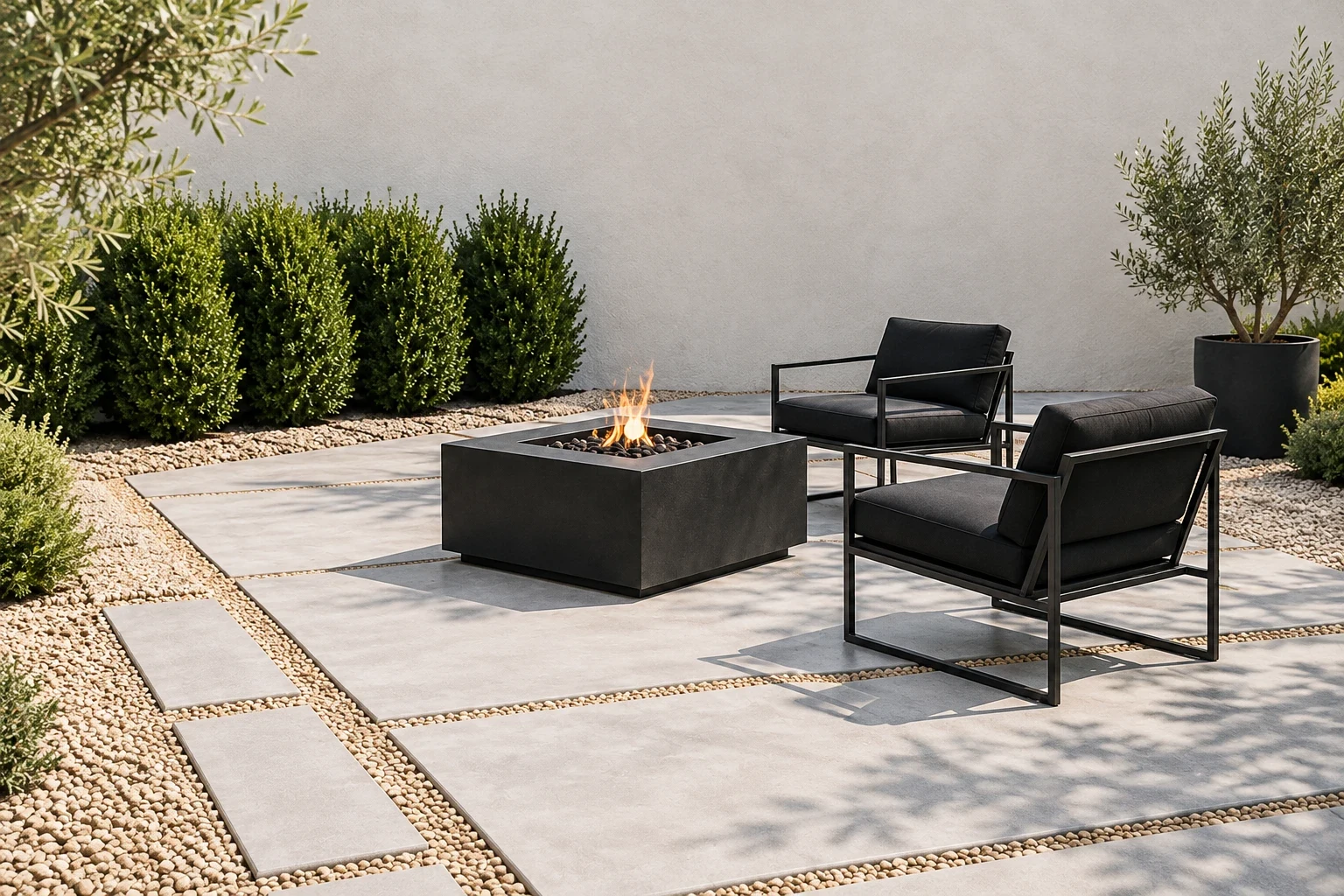
You can clear a patch of lawn and lay down a gravel patio in a weekend for about $300. This low-maintenance setup replaces thirsty turf with structured hardscaping and hardy plants. A few concrete pavers and dark shrubs bring clean order to the backyard without constant mowing.
Plant Dark Shrubs

Line the perimeter of your patio with a neat row of dark green boxwood shrubs. This deep color contrasts against light gray walls and pavers, defining the boundary of your outdoor room. Dig a trench about 18 inches wide along the edge of your concrete slabs. Space the root balls two feet apart so they have room to grow together into a solid hedge. Water them heavily twice a week during their first month in the ground.
Build a Fire Pit

Set a square matte black fire pit directly in the center of the patio. Using a fire pit as the focal point anchors the layout and gives the seating arrangement a clear purpose. Look for a steel or cast iron model that measures at least 30 inches across to provide enough heat. Place it on a level concrete slab, keeping it at least ten feet away from any overhanging branches or wooden fences for safety.
Place Metal Chairs

Arrange two matte black metal club chairs facing the fire pit. Heavy metal furniture stays put during strong winds and resists fading under harsh sunlight. Choose chairs with wide armrests and deep seats, leaving about 24 inches of legroom between the front edge of the chair and the fire pit. If the metal gets too hot in the afternoon sun, keep a pair of outdoor cushions in a nearby shed to toss on the seats.
Lay Concrete Slabs

Form your main patio surface by laying large light gray concrete slabs. Concrete provides a smooth, stable foundation for heavy furniture and eliminates the need to mow or water. Buy pre-cast pavers that measure 24 by 24 inches to cover ground quickly. Dig down four inches, tamp the soil flat, and add a two-inch layer of leveling sand before dropping the slabs into place. Leave a four-inch gap between each paver for drainage.
Fill with Gravel

Pour warm beige gravel into the wide gaps between the concrete slabs. The loose stones allow rainwater to drain naturally into the ground, preventing puddles on your patio. Buy half-inch crushed gravel from a local landscape supplier, which costs about $40 per cubic yard. Pour it directly over the dirt channels and use a stiff push broom to sweep the stones level with the top edges of the concrete pavers.
Edge with Corten Steel

Install rusty corten steel edging to create a sharp divider between light gray gravel and a bed of dark green foliage. The steel barrier stops loose stones from migrating into your planting beds and keeps the yard looking tidy. Buy four-inch tall steel strips and hammer them into the dirt using a rubber mallet. Leave about one inch of the metal exposed above the soil line. Over time, the steel develops a protective rust patina.
Install Deck Tiles

Cover a flat concrete patio section near a modern privacy fence with interlocking dark teak wood deck tiles. These snap-together squares warm up the cold look of concrete and feel comfortable under bare feet. Measure your square footage and order tiles in packs of ten. Start in one corner and click the plastic bases together, working your way across the slab. You can cut the edge tiles with a standard jigsaw to fit tight spaces.
Add a Water Basin

Rest a sleek matte black metal water basin with a gentle bubbling fountain on your light gray concrete patio. The sound of moving water masks nearby traffic noise and attracts local birds. Choose a basin that holds at least 15 gallons so you do not have to refill it every day. Run a thin outdoor power cord from the submerged pump to a covered GFCI outlet. Drop in a chlorine tablet monthly to prevent algae growth.
Place Stepping Stones

Create a side walkway by setting square light gray stepping stones into a path of warm beige gravel leading to a gate. This directs foot traffic away from delicate plants and prevents muddy shoes after a rainstorm. Space the center of each stone about 20 inches apart to match a natural walking stride. Dig a shallow depression for each paver so the top surface sits completely flush with the surrounding gravel.
Plant a Shade Tree

Position a mature shade tree in a garden bed to cast shadows over your concrete patio. A thick dark green canopy cools the hardscaping during summer afternoons and reduces glare on light gray surfaces. Dig a hole twice as wide as the root ball but keep the depth exactly the same. Mix half of the native soil with compost before backfilling. Stake the trunk with two wooden posts and heavy-duty straps for the first year.
Tuck in White Blooms

Dig into a bed of warm beige gravel near a concrete slab and plant small white flowering perennials. Adding flowering perennials breaks up the heavy hardscaping and softens the straight edges of the patio. Scrape the gravel aside, cut a small X in the landscape fabric beneath, and dig a six-inch hole. Drop in the plant, pack the soil tight, and push the gravel back around the base to lock the moisture in.
Install a Black Screen

Build a modern slatted privacy screen painted matte black directly behind a row of dark green shrubs along the property line. The dark backdrop makes the green foliage pop and blocks sightlines from neighboring windows. Use treated one-by-two pine slats spaced half an inch apart on sturdy four-by-four posts. Apply two coats of exterior matte black paint using a paint sprayer for even coverage. Sink the posts at least two feet deep in concrete.
Eat at a Bistro Set

Park a small matte black metal bistro table with two matching chairs in a quiet nook on the light gray patio surface. This compact setup provides a dedicated spot for morning coffee without eating up valuable floor space. Look for a table around 24 inches round so it fits tightly against a wall or fence. If your patio has a slight slope for drainage, adjust the leveling feet on the table legs to stop coffee spills.
Spread Bark Mulch

Dump dark brown bark mulch around the base of your dark green shrubs. A thick layer of mulch suppresses weeds, retains soil moisture, and provides a clean contrast against the lighter patio stones. Buy bulk mulch from a garden center for roughly $35 a yard. Spread it three inches deep using a steel rake, making sure to leave a one-inch gap around the actual trunk of the shrub to prevent the bark from rotting.
Add Metal Lanterns

Stand two matte black metal floor lanterns with warm glowing pillar candles on your light gray concrete patio steps. Ground-level lighting highlights the transition between different patio elevations and prevents tripping in the dark. Buy heavy steel lanterns measuring at least 18 inches tall so they don’t blow over. Insert battery-operated LED pillar candles on a built-in timer. Set them to turn on at dusk so the patio always has a welcoming glow.
Tackle the heavy lifting first by laying the concrete slabs and spreading the gravel. Once the hardscaping is secure, move on to planting the shrubs and setting up the fire pit.
