
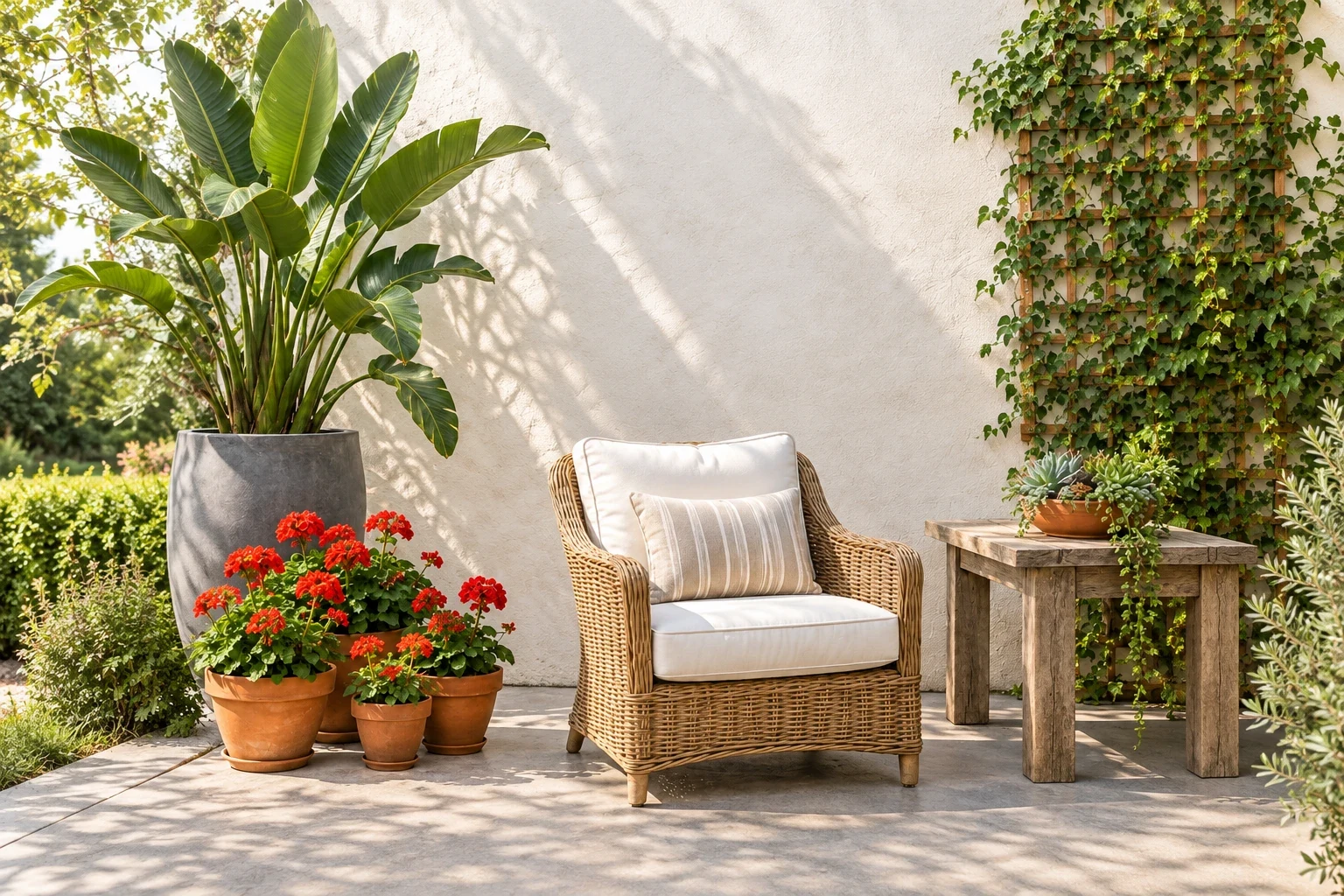
Updating a bare concrete patio costs under $150 when you stick to basic pots and garden center finds. A weekend afternoon is all it takes to arrange a few large planters and climbing vines against a stucco wall.
Add Potted Plant

Bring a large potted bird of paradise onto the patio to fill empty corners. Tall foliage draws the eye upward and breaks up the flat look of bare walls. Buy a mature plant standing at least four feet tall and set it inside a heavy slate gray urn. The dense soil and heavy base keep the plant upright during strong winds. This single addition anchors the space without requiring multiple smaller pots to manage.
Grow Climbing Ivy

Lean a wooden trellis against a stucco wall to support trailing green ivy. Vertical greenery softens hard architectural lines and adds texture to flat surfaces. Buy a simple cedar trellis for about $30 and weave the longest ivy vines through the bottom rungs. As the plant grows, it naturally clings to the wood and climbs upward. This method avoids drilling hardware directly into your exterior walls while still providing a green backdrop.
Cluster Clay Pots

Group three terracotta pots and planters of different heights to hold bright red geraniums, like the cluster in the photo. A tight grouping creates a fuller look than spreading small pots across the entire slab. Pick pots ranging from eight to fourteen inches tall and push them together in a triangle formation. The porous clay material allows excess moisture to evaporate quickly, preventing root rot in the hot sun. This arrangement creates a focal point that requires watering all at once.
Add Wicker Seating

Place a white cushioned wicker chair near your potted plants. Outdoor seating with cushions gives you a comfortable spot to sit and check on your greenery. Choose a chair made from weather-resistant resin wicker that wipes clean with a damp cloth. Make sure the seat cushion features an outdoor-grade acrylic fabric that resists fading in direct sunlight. This setup turns a basic concrete slab into a practical seating area for daily use.
Place a Wood Table

Set a rustic wooden side table next to your seating to hold a small terracotta bowl. A dedicated surface keeps delicate plant arrangements off the ground where they might get kicked. Look for a table around eighteen inches tall made from treated teak or cedar. Fill the shallow bowl with a mix of low-growing ground cover or moss. This creates a compact display area that doubles as a spot to set your morning coffee.
Hang Woven Baskets

Suspend two woven hanging baskets from a wooden porch beam to display trailing white flowers. Hanging plants utilize overhead space and keep the ground clear for foot traffic. Use sturdy metal screw hooks driven at least two inches into the solid wood beam. Line the inside of the baskets with coco coir liners to retain moisture during hot afternoons. The cascading blooms soften the roofline and add movement when the breeze blows.
Plant Red Annuals

Fill a weathered terracotta planter with bright red petunias and place it on your patio steps. Bold annuals inject immediate color into neutral stone or concrete areas. Plant the petunias about six inches apart in potting soil mixed with a slow-release fertilizer. Pinch off the faded blooms weekly to encourage the plants to produce new flowers throughout the season. Placing the pot on a step raises the flowers closer to eye level for better visibility.
Light Floor Lanterns

Position two slate gray metal lanterns next to a large potted fern. Adding light sources near your greenery highlights the foliage textures after the sun goes down. Insert six-inch white pillar candles into the lanterns and shut the glass doors to block the wind. Keep the lanterns at least ten inches away from the fern fronds to prevent heat damage. The metal frames tie into the gray tones of the patio while adding functional illumination.
Pot Hardy Succulents

Pack a shallow terracotta dish densely with green and purple succulents and cacti. These drought-tolerant varieties survive on very little water and thrive on a sunny concrete ledge. Use a cactus-specific soil mix that contains extra sand and perlite for rapid drainage. Arrange the taller purple rosettes in the center and tuck the creeping green varieties around the edges. This low-maintenance arrangement costs under $25 and requires watering only once every two weeks.
Use Concrete Planters

Line up three modern slate gray concrete planters against a white wall to hold tall ornamental grasses. The heavy geometric containers provide a structured contrast to the wild, grassy foliage. Buy planters that measure at least twenty inches wide to give the grass roots plenty of room to expand. Drill a half-inch drainage hole in the bottom of each container if they do not already have one. The tall grasses create a natural privacy screen along the boundary.
Mount Window Boxes

Attach a dark wooden window box beneath an exterior glass window to hold lush green foliage and white blooms. Window boxes connect the house architecture directly to your outdoor planting scheme. Secure the box using heavy-duty steel L-brackets screwed into the wall studs, as wet soil gets very heavy. Fill the box with a mix of trailing vines and upright white flowers for a layered effect. This setup draws the eye upward from the ground level.
Grow Lush Ferns

Hang a large Boston fern in a terracotta pot in a shaded corner against a white stucco wall. Ferns thrive in indirect light and add dense, feathery texture to empty vertical spaces. Use a heavy-duty ceiling hook and a thick macrame rope to support the weight of the clay pot. Water the fern until moisture drips from the bottom hole, keeping the soil consistently damp. The fronds cast soft, moving shadows on the wall throughout the day.
Add Soft Cushions

Top a built-in concrete bench with soft white linen cushions and a terracotta throw pillow. Adding fabric elements softens the hard edges of masonry seating and makes the patio more inviting. Buy cushions made from a thick, three-inch high-density foam wrapped in a washable linen cover. Store the cushions indoors during heavy rain to prevent mildew from forming inside the foam. The terracotta pillow ties the seating area to the clay pots scattered around the patio.
Display a Stone Urn

Display a classic slate gray stone urn filled with trailing ivy just outside an open wooden doorway. Placing a substantial planter near the entrance bridges the gap between the interior and the patio. Fill the bottom third of the urn with empty plastic bottles before adding soil to reduce the overall weight. Plant long ivy vines around the rim so they spill down the sides of the stone. This arrangement creates a classic focal point from inside the house.
Set Up a Plant Stand

Organize various small terracotta pots with green herbs and succulents on a tiered wooden plant stand. Stacking plants vertically maximizes your growing area without taking up valuable floor space on the patio. Choose a cedar or teak stand measuring about three feet wide with slatted shelves for water drainage. Place the sun-loving herbs on the top tier and position the shade-tolerant succulents on the bottom shelves. This setup keeps your small pots tidy and off the ground.
Paint a Planter Blue

Put a small green shrub in a bright blue ceramic pot on a slate gray paver. A single colorful container breaks up the earthy tones of the terracotta and concrete. Select a glazed ceramic pot that holds about two gallons of soil and has a wide base for stability. Place the pot squarely on a flat paver so it does not wobble on uneven ground. The blue glaze provides a sharp contrast against the green leaves of the shrub.
Keep this page bookmarked for your next outdoor refresh. Give the large potted plant idea a try first to anchor your patio space.
