
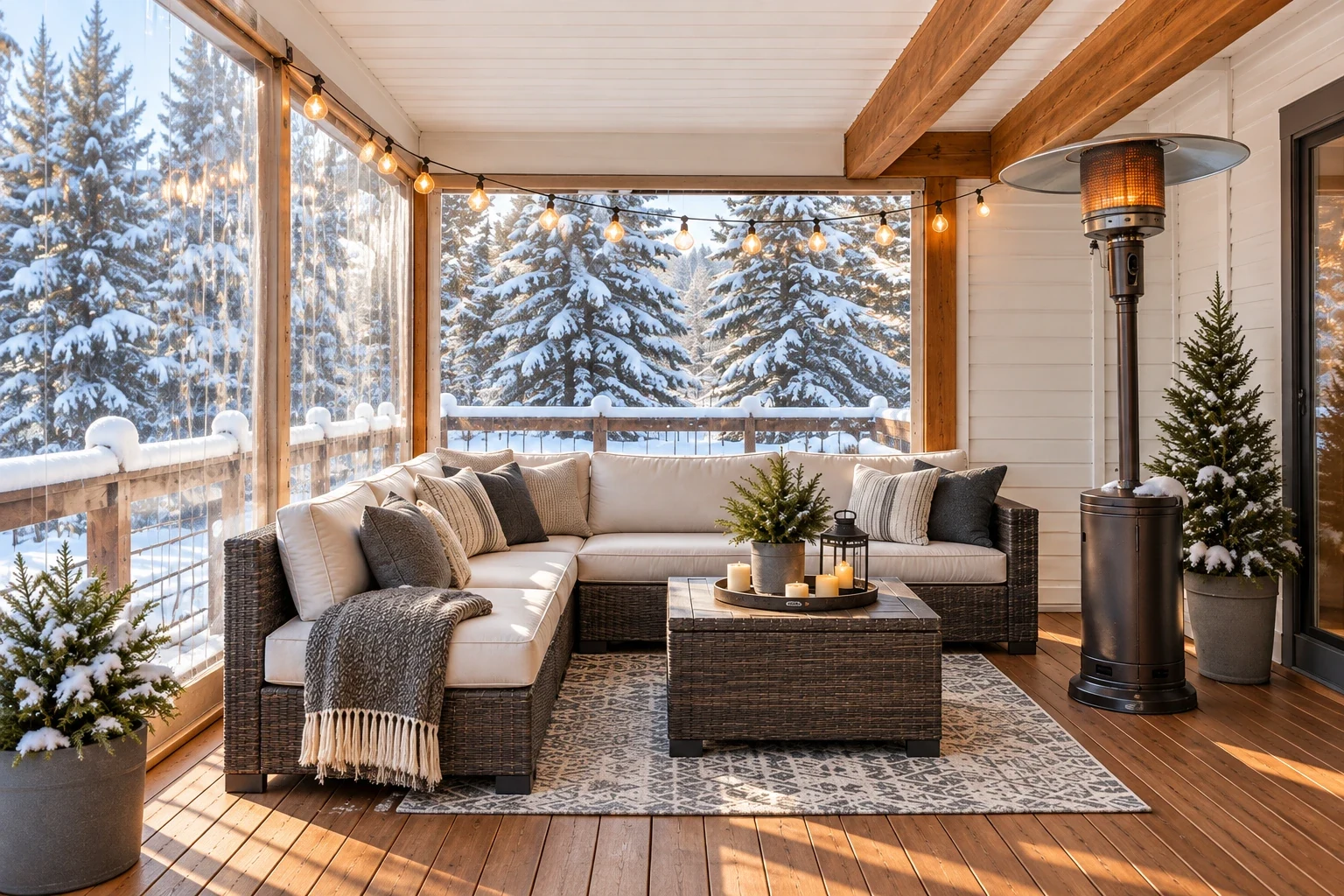
Deciding whether you want a permanent roof extension or a temporary seasonal cover dictates how you will approach your deck layout. Clear vinyl panels or polycarbonate sheets keep out freezing winds, while adding a tall heater and comfortable seating creates an inviting cold-weather setup. Planning the structural shell first makes it easy to layer in lights, drapes, and plants.
Hang Vinyl Panels

Install clear vinyl panels along the exposed sides of your outdoor space. This approach blocks freezing gusts and traps ambient heat without sacrificing the natural light or your outdoor view. You can purchase heavy-duty 20-gauge marine vinyl by the yard and attach it to your existing wooden posts. Staple the edges securely every three inches, or install grommets to hang the panels from screw hooks so you can roll them up when the weather gets warmer.
Highlight Beams

Leave your warm cedar roof beams exposed against a painted white ceiling. The contrast draws the eye upward, making the enclosed structure feel like a proper extension of your house rather than a temporary tent. Paint the ceiling boards with a flat white exterior latex paint before installing them above the rafters. The natural wood grain of the cedar will stand out against the crisp white background, adding architectural interest to the winterized space.
String Warm Lights

Suspend a string of warm white bistro lights across the width of the ceiling. Winter afternoons get dark early, and overhead lighting provides necessary illumination while setting a relaxed mood for evening use. Choose commercial-grade LED string lights with shatterproof bulbs to withstand cold temperatures. Attach small cup hooks to the cedar beams about four feet apart, weaving the cord back and forth to distribute a soft, even glow throughout the entire seating area.
Add a Tall Heater

Position a tall charcoal gray patio heater near the edge of your seating zone. Even with the wind blocked, the ambient air remains chilly, and a dedicated heat source makes the space comfortable for extended periods. A standard 48,000 BTU propane heater warms a 15-foot radius effectively. Keep the top reflector at least three feet away from the ceiling and any vinyl walls, ensuring the unit sits on a level section of the floor.
Place a Sectional

Set up a large outdoor sectional with soft white cushions and a charcoal gray frame. A substantial piece of furniture anchors the room, giving you plenty of space to stretch out or sit with family while enjoying the crisp daylight. Look for cushions covered in solution-dyed acrylic fabric, which resists moisture and mildew in enclosed, unheated spaces. Measure the deck depth to ensure you leave at least 36 inches of walking clearance around the couch.
Hang Heavy Drapes

Install outdoor drapery track hardware along the deck roof frame to create a flexible cold weather shield. Hang heavy white curtains around the outer perimeter to block biting winds and insulate your seating space during winter. Choose thermal drapes measuring 84 inches long so they touch the floor without dragging in moisture. Secure the fabric around each cedar post using sturdy rope tiebacks during bright hours to let in natural sunlight. Pull these drapes closed when evening temperatures drop below freezing to trap lingering heat inside your space.
Set Up a Bistro Table

Create a dedicated spot for morning coffee with a small charcoal metal bistro table and two matching chairs. This compact arrangement utilizes awkward corners without blocking traffic flow through the main lounging area. Select a powder-coated steel set that measures around 24 inches in diameter to keep the footprint minimal. The heavy metal construction stays put during windy days, and the dark gray finish contrasts nicely against the natural tone of the cedar floorboards.
Bring in Potted Plants

Place a large green indoor fern in a soft white ceramic pot near the edge of the enclosure. Adding living greenery brings a touch of nature inside, breaking up the expanse of wood and gray furniture. Choose a heavy ceramic planter that weighs at least 15 pounds to prevent tipping if someone bumps into it. Position the plant right next to the clear vinyl panels so it receives plenty of indirect sunlight throughout the day.
Build a Screen Wall

Construct a screened porch enclosure using a charcoal gray frame along the deck railing. A fixed screen system keeps out debris and provides a sturdy base for attaching wintertime plastic sheeting on the inside. Order custom aluminum screen frames that fit exactly between your existing vertical supports. Screw the frames directly into the wood using one-inch exterior screws, creating a permanent structural addition that transitions easily between summer bug protection and winter wind deflection.
Install Polycarbonate Sheets

Fasten rigid translucent polycarbonate sheets into your outer deck frame. This durable material completely stops freezing winds while still letting soft white sunlight filter through to warm the floorboards. Buy twin-wall polycarbonate panels that are 8 millimeters thick for optimal insulation. Cut them to size with a circular saw, then secure them to the cedar framing using specialized screws with rubber washers to prevent water from seeping into the wood during heavy winter storms.
Pitch a Clear Dome

Erect a clear bubble dome enclosure right in the center of your open deck. This freestanding option creates an instant greenhouse effect, trapping solar heat without requiring any permanent construction or permits. Purchase a pop-up PVC igloo tent that measures roughly 10 feet across. Secure the base flange to your deck boards using heavy-duty staples or sandbags, and arrange a couple of lounge chairs inside for a cozy, wind-free spot to sit and read.
Install an Outdoor Fan

Attach a matte charcoal gray outdoor ceiling fan directly to the pergola roof above your enclosed space. Running a fan on a low reverse setting pushes the rising hot air from your patio heater back down toward the seating area. Select a damp-rated fixture with a 52-inch blade span for a standard deck. Hardwire the unit to an outdoor-rated junction box, ensuring the blades clear the ceiling beams by at least ten inches.
Arrange Wicker Seating

Incorporate charcoal resin wicker seating into your winter layout. Synthetic wicker withstands temperature fluctuations better than natural rattan, and the woven texture adds visual depth to the arrangement. Buy chairs built over rust-proof aluminum frames that can handle the damp conditions of a semi-enclosed space. Top the seats with thick, soft white cushions that feature removable, machine-washable covers, making it simple to clean off any dirt or moisture tracked in from the yard.
Add Roof Skylights

Integrate large glass skylights into your solid deck roof. Overhead glazing allows bright winter daylight to flood the space, counteracting the shadows cast by the solid roof structure overhead. Hire a contractor to frame out a 24-by-48-inch opening between the existing cedar rafters. Install a fixed, double-paned skylight with low-E glass to maximize light transmission while minimizing heat loss, keeping the room brighter and warmer throughout the short days of the season.
Put up the structural barriers like vinyl panels or screens first to block the wind. Then bring in the heavy heater and arrange your furniture before adding the final decorative string lights.
