
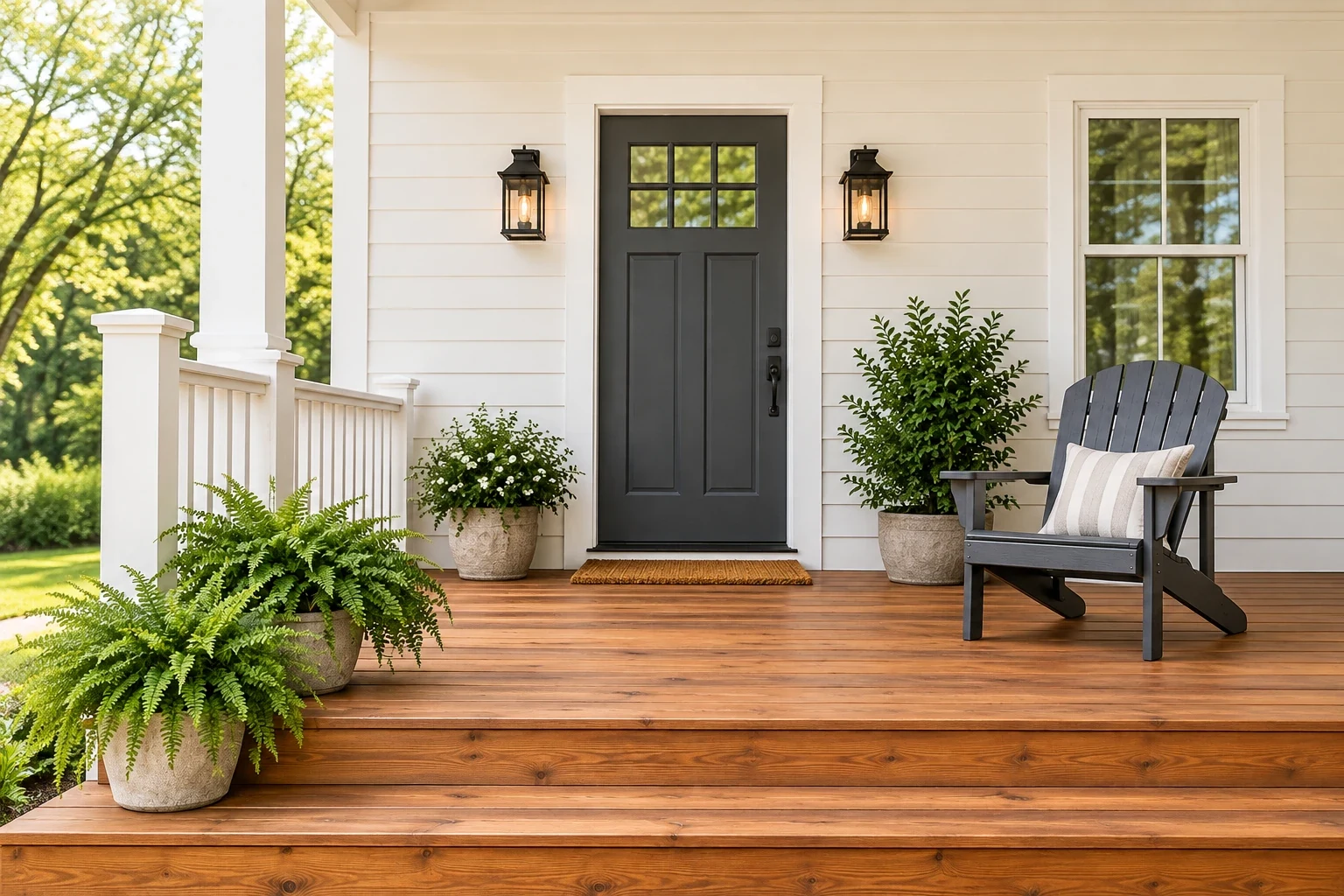
Many homeowners clutter a front deck with too many small decorative items that get lost outdoors. Instead of relying on random trinkets, anchor the deck with warm wood tones, crisp paint, and substantial outdoor seating. This approach grounds the entry and creates a clear focal point using simple structural elements.
Paint a Dark Door

Coat your entry door in a deep charcoal gray to create high contrast against the surrounding white siding. This bold choice anchors the house visually and hides daily scuffs around the handle much better than a lighter shade. Sand the surface with 120-grit paper to remove any peeling patches, then apply two smooth coats of an exterior-grade satin enamel. A quart of quality exterior paint costs around $25 and covers a standard slab door completely. Wait at least four hours between coats to ensure a durable finish that withstands harsh weather.
Add White Railings

Install soft white wooden railings along the open edges of your platform to establish clear boundaries. This defines the perimeter of the porch while tying directly into the house trim for a cohesive exterior look. Space the vertical balusters exactly four inches apart to meet standard building codes and keep small pets safe. Prime the raw wood thoroughly before brushing on a semi-gloss exterior acrylic that resists moisture and fading in direct sunlight. Use galvanized screws to secure the bottom rail securely to the deck surface to prevent future wobbling.
Place a Deck Chair

Set a charcoal gray Adirondack chair right on the planks to establish comfortable outdoor seating. The wide armrests provide a practical spot for your morning coffee mug, while the slanted back encourages actual lounging rather than just passing through. Choose a chair made from high-density polyethylene resin, which costs about $150 but withstands heavy rain without rotting. Position the seat at a slight angle facing the walkway to welcome you home. Wipe the surface down with a damp cloth once a month to keep the dark finish looking sharp.
Pot Green Ferns

Flank your stairs with lush green ferns planted in basic, unadorned containers. These low-maintenance plants thrive in the partial shade of a covered entryway and add dense natural texture against the straight lines of the architecture. Fill 12-inch wide plastic nursery pots with a moisture-retaining potting mix, leaving an inch at the top for watering. Water them twice a week during the summer to keep the fronds from turning brown.
Lay Cedar Boards

Build your flooring surface using warm cedar boards running horizontally from side to side. The natural oils in cedar resist insect damage and decay, making it a highly durable choice for exposed outdoor areas. Leave a one-eighth-inch gap between each plank during installation to allow rainwater to drain through and prevent standing puddles. Fasten the boards down with two-and-a-half-inch coated deck screws to keep the wood firmly in place as it expands. Sweep the surface weekly with a stiff broom to clear away leaves and prevent slippery moss buildup.
Build Wide Front Steps

Construct your entry stairs at least four feet wide using thick cedar planks. A broader staircase feels more generous and provides enough room for two people to pass each other comfortably. Cut the stair stringers so each step has a seven-inch rise and an eleven-inch tread, which creates a natural, comfortable stride. Anchor the bottom step onto a level concrete pad to prevent the wood from shifting into the soil over time.
Mount Wall Lanterns

Attach a matte charcoal gray metal lantern to the siding just outside the door frame. Proper lighting ensures you can find your keys safely after dark while highlighting the architectural details of the entrance. Mount the fixture so the center of the light bulb sits exactly 66 inches above the floor. Equip it with a warm 2700K LED bulb to cast a soft, welcoming glow rather than a harsh security glare.
Plant Foundation Shrubs

Dig a row of compact green shrubs along the base of the wooden skirt. This living border softens the hard transition between the lawn and the structure while hiding the dark space underneath. Space the root balls at least 30 inches apart to give the mature plants plenty of room to fill out without crowding. Spread a two-inch layer of dark mulch around the base to suppress weeds and retain soil moisture.
Build a Wood Pergola

Construct a simple cedar pergola over the platform to add overhead structure without blocking the breeze. The slatted roof breaks up direct sunlight, casting cooling shadows against the soft white siding to make the area more comfortable during hot afternoons. Use sturdy four-by-four posts for the vertical supports and secure the overhead joists with heavy galvanized steel brackets. Space the top slats exactly six inches apart to achieve the right balance of shade and open sky. Seal the wood with a clear protective coat to preserve the warm tones.
Pave a Flagstone Path

Lay a path of charcoal gray flagstones through the grass leading up to the stairs. A solid walkway keeps your shoes out of the mud and directs foot traffic naturally toward the entrance. Dig out a four-inch trench and fill it with compacted gravel before setting the stones in a layer of leveling sand. Leave two inches of space between each irregular slab so the lawn can grow back in as a soft grout.
Toss a Charcoal Cushion

Drop a charcoal gray cushion onto a built-in warm cedar bench to soften the hard seating. The dark fabric hides dirt from the wind, while the thick padding makes it comfortable enough to sit and read for an hour. Buy a cushion covered in solution-dyed acrylic fabric, which resists fading and repels water. Pair it with a folded soft white throw blanket kept just inside the door to grab on chilly mornings. Secure the cushion to the wooden slats using attached fabric ties so it stays put during strong winds.
Hang Flower Baskets

Suspend a woven basket filled with trailing green vines from the white eaves overhead. Hanging plants draw the eye upward and add a layer of organic texture without taking up any valuable floor footprint. Screw a heavy-duty metal hook directly into a solid ceiling joist to support the weight of wet soil. Lower the basket on a sturdy chain so the rim sits about seven feet off the ground for convenient watering.
Add a Gravel Border

Line the perimeter of your bottom step with smooth charcoal gray river rocks. This physical barrier prevents mud from splashing up onto the lower wood during heavy rainstorms, keeping the stairs cleaner over time. Dig a shallow trench six inches wide and line it with landscape fabric to stop weeds from pushing through. Pour the stones in until they sit flush with the surrounding grass, requiring about two bags per yard of edge.
Install Deck Post Caps

Cap off the top of your railing posts with soft white wooden covers. These small additions protect the exposed end grain of the posts from absorbing standing water, which prevents rot and extends the life of the structure. Slide a standard four-by-four cap over the post and secure it with a bead of exterior construction adhesive. Paint them with the same semi-gloss acrylic used on the railings for a unified finish.
Set Up a Porch Swing

Hang a warm cedar swing at the side of the platform using thick natural ropes. A gentle swing provides a relaxing spot to unwind at the end of the day and maximizes a narrow outdoor footprint. Drill pilot holes into the overhead support beams and twist in heavy-duty lag eye screws to anchor the ropes safely. Adjust the knots so the seat rests exactly 18 inches off the floor for the most comfortable height.
Bring in Wicker Seating

Placing a natural woven wicker chair in an empty corner introduces a different texture to the rigid wooden planks. Wicker feels light and airy, keeping a modest layout from feeling weighed down by heavy furniture. Look for a chair made from synthetic resin wicker over an aluminum frame, which costs about $200 and will never rust. Top it with a charcoal gray seat pad that ties to the backrest so it stays put in the wind.
Verify the swing clearance in all directions before purchasing any hanging furniture. You need at least three feet of empty space behind the seat to prevent it from hitting the siding.
