
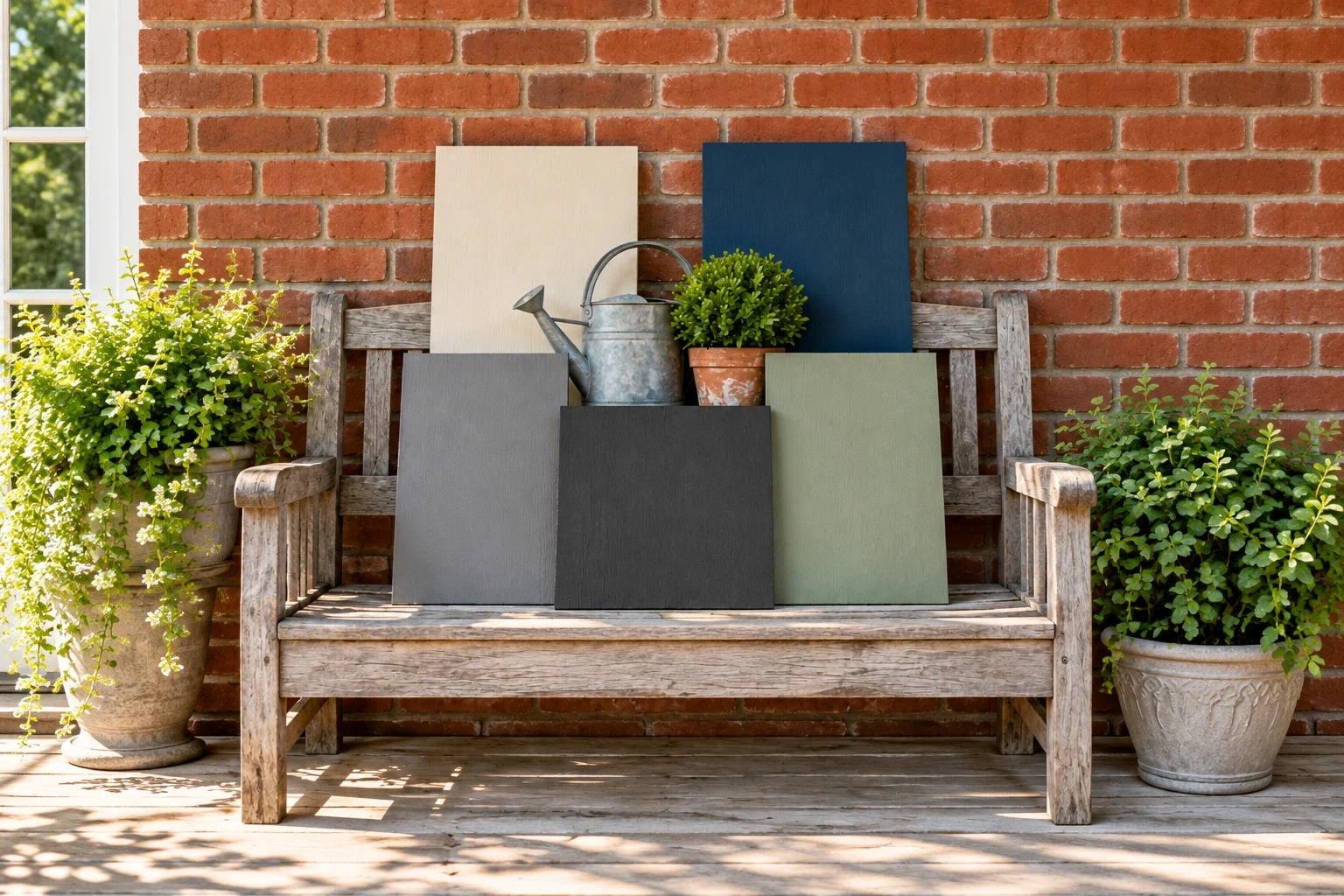
Matching your trim exactly to the mortar lines is a common trap that washes out the whole facade. Break up the heavy masonry on your front porch by treating the wood details as a separate, contrasting accent layer. A cool or dark palette gives the house structure and highlights the natural texture of the red clay blocks.
Soft Cream

Paint your window casings and fascia boards in a soft cream shade rather than a stark hospital white. This warm neutral bridges the gap between harsh outdoor lighting and the natural earthy tones of the red masonry. Start by sanding down the existing wood trim with 80-grit paper to remove flaking edges. Apply one coat of an exterior-grade bonding primer before brushing on a satin-finish acrylic latex paint. The subtle yellow undertones will soften the overall look while still providing enough contrast to make the architectural lines stand out clearly.
Midnight Navy

Coat your front door or decorative panels in a deep midnight navy blue to ground the warm tones of the facade. Dark blue absorbs bright morning daylight, preventing the entryway from looking too harsh or washed out. Buy a quart of high-build exterior enamel, which costs around $30, to ensure a durable finish against weather and daily use. Tape off the surrounding brick with heavy-duty masonry painter’s tape to keep the dark pigment from bleeding into the porous mortar. Roll the flat sections with a high-density foam roller for a smooth surface.
Slate Grey

Use slate gray on any lap siding that sits directly above or beside your masonry. The cool charcoal tones in the gray naturally tone down the intense red of the clay, balancing the overall temperature of the exterior. Measure the square footage of your siding to calculate your paint needs, assuming one gallon covers roughly 350 square feet. Wash the boards with a mild trisodium phosphate solution to remove outdoor grime before applying the color. This specific gray hides dust well, meaning you can go longer between seasonal power washing sessions.
Soft Sage

Brush a soft sage green onto your secondary doors or porch ceilings for a subtle, earthy accent. Green sits opposite red on the color wheel, so this muted shade creates a natural visual harmony without clashing. Pick a premium exterior acrylic formulated with mildewcide to protect damp, shaded porch areas. Use a two-inch angled synthetic brush to cut in around the hinges and glass panes before rolling the flat panels. The green tint mimics surrounding landscaping, blending the edges of the house directly into the front yard shrubs and trees.
Charcoal Black

Anchor the house visually by painting your metal railings, mailboxes, and house numbers a flat charcoal black. This deep shade provides a modern, crisp edge that defines the boundaries of a classic red brick exterior. Remove smaller hardware pieces and spray them with a rust-inhibiting black enamel primer on a piece of cardboard. For fixed railings, use a wire brush to scrape off loose rust and apply the black paint with a mini roller. The dark matte finish hides fingerprints and stands up well to daily wear near the main entrance.
Crisp Pure White

Frame your main entrance with crisp pure white paint to draw the eye straight to the front door. High-contrast white reflects maximum sunlight, highlighting the sharp 90-degree angles of the wooden millwork against the rough masonry. Scrape away old caulk around the door frame and run a fresh bead of paintable exterior silicone sealant to block drafts. Let the caulk cure for 24 hours before applying two coats of semi-gloss white paint. The bright border acts like a picture frame, separating the door color from the heavy texture of the surrounding red clay blocks.
Soft Mushroom Taupe

Coat exterior wooden shutters in a soft mushroom taupe paint to balance heavy red clay brick. This muted taupe tone breaks up the bright masonry around tall pane glass windows without blending into light mortar lines. Mount the shutters using black galvanized steel hardware, keeping them spaced half an inch away from the brick face to prevent moisture buildup. Apply two coats of quality exterior acrylic paint in a satin finish costing forty to sixty dollars per gallon. This neutral tone gives your facade crisp structure while resisting harsh sunlight fading.
Deep Forest Green

Update the main entryway with a deep forest green door to create a classic, heritage-inspired focal point. Dark green relies on the natural complementary relationship with red, offering a traditional contrast that feels grounded and permanent. Remove the door from its hinges and lay it flat on sawhorses to prevent drips while the enamel dries. Swap out standard hardware for a polished brass handle set, which typically costs around $150, to complete the timeless look. The rich green tone hides scuff marks from shoes and bags near the threshold.
Dusty Blue Grey

Painting the roof eaves and fascia boards a dusty blue gray draws the eye upward and lightens the roofline. The subtle blue notes reflect the open sky, which helps a heavy, solid brick structure feel a bit less imposing. Rent a sturdy extension ladder and attach a paint pail hook to keep your hands free while working at height. Apply a thick coat of exterior latex using a wide four-inch brush to cover the long wooden boards quickly. This muted tone bridges the gap between the red walls and standard asphalt shingles.
Dark Espresso Brown

Finish your large wooden garage doors in a dark espresso brown to mimic the look of natural stained timber. This deep brown connects with the darker spots found in traditional fired clay bricks, tying the whole property together. Wash the door panels thoroughly and mask off the surrounding trim before using an airless paint sprayer for an even coat. Hold the sprayer tip about 12 inches from the surface and move in long, overlapping horizontal sweeps. The dark paint anchors the heavy wooden structure firmly against the slate gray paved driveway.
Muted Olive Green

Designate secondary entrances by coating a side yard door in a muted olive green. This subdued color gives service doors a distinct identity while keeping them secondary to the main front entrance. Install a small galvanized light fixture just above the frame to illuminate the threshold for safe nighttime access. Prime any bare wood spots with a high-adhesion primer before brushing on the olive topcoat to ensure it withstands heavy daily traffic. The yellow undertones in the olive blend nicely with the warm red masonry and nearby garden foliage.
Pale Greige Siding

Covering the upper wooden siding in a pale greige unifies the top half of the house with a brick red lower wall section. This mix of gray and beige acts as a neutral buffer that brightens the shaded areas under the porch roof. Check the horizontal seam where the wood meets the masonry and install a metal Z-flashing strip to direct rainwater away from the joint. Roll the greige paint onto the siding using a thick three-quarter-inch nap roller to push the pigment into the rough wood grain. The light tone keeps the covered porch feeling airy.
Focus your budget on premium, weather-resistant exterior paints for the main doors and wood siding. Handle the smaller trim pieces and window casings yourself to trim labor expenses.
