
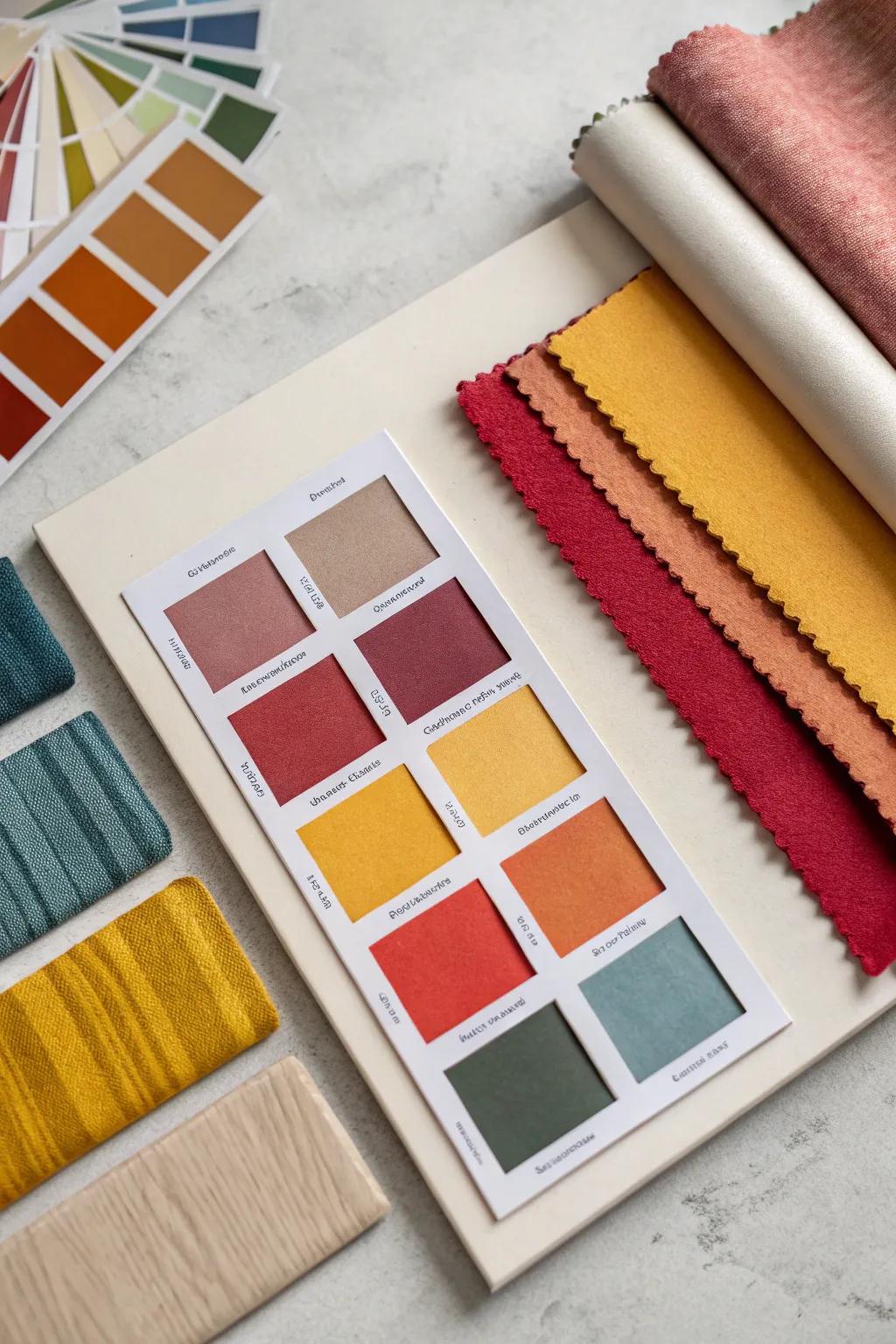
Creating a mood board is like painting a canvas of your dreams for your home. It’s a fun and creative way to channel your inner designer and bring your vision to life.
1. Start with a Color Story

One of my favorite ways to begin a mood board is by deciding on a color palette. Choose a few colors that speak to you and set the tone for your project. Personally, I find that starting with colors helps guide the rest of the board.
2. Incorporate Texture Samples

Textures add depth and interest to any space, so be sure to include them in your mood board. Layer textures like linen, velvet, and wood to see how they interact. I often include small fabric swatches for a tactile experience. Explore more mood board ideas to further refine your design concept.
3. Use Inspirational Photography

Incorporate images that evoke the mood you’re aiming for in your space. This could be a serene landscape or a bustling cityscape. I often lean towards images that bring a sense of calm and warmth. You can explore more inspiring mood board ideas to help refine your vision.
4. Add a Touch of Nature

Bringing in elements from nature can soften and balance your design. Consider adding dried flowers, small branches, or even a succulent leaf. You can also explore these creative indoor plant pot ideas to display your greenery in style. In my own home, a touch of nature always brings a refreshing vibe.
5. Experiment with Typography

Typography can express your style and add flair to your mood board. Try out different fonts and sizes for any text elements. I enjoy mixing bold scripts with classic serifs for contrast. You can find more inspiration in our guide to mood board ideas.
6. Include Personal Touches

Add items that are uniquely you, like a favorite quote or a cherished photo. These elements can make the board feel more personal and meaningful. I always include something that resonates with my own life and experiences. Check out these creative inspo board ideas to find more ways to customize your space.
7. Explore Different Patterns

Patterns can energize your mood board and reflect your personal style. Mix and match geometric, floral, or abstract patterns. I personally love combining bold and subtle patterns for a dynamic look. You can also explore creative mix and match sheets ideas to bring these patterns into your bedroom decor.
8. Use a Grid Layout

For a more structured approach, arrange your items in a neat grid. This can help your ideas flow more cohesively. I often use this method when I want to keep things organized and clear.
9. Mix Old and New

Blend vintage finds with contemporary pieces to create a unique vibe. This juxtaposition can add character and depth to your design. In my space, I adore mixing heirloom pieces with modern decor. Explore these vintage mantel decor ideas to find the perfect balance for your home.
10. Add Artistic Elements

Incorporate artwork or sketches to add a creative flair. These elements can express your artistic side and inspire new ideas. I often include small art prints or sketches to spark creativity, and you can explore these art desk setup ideas to find the perfect arrangement for your space.
11. Create a Storyboard

Think of your mood board as telling a story. Arrange your elements to take the viewer on a journey. This method helps me ensure that all parts of my design are connected and purposeful. You can apply this same narrative approach when you create a DIY funeral picture board to honor a loved one.
12. Incorporate Metallic Accents

Add a touch of metallic elements for a bit of glamour. Gold, silver, or copper can elevate your board and add a bit of sparkle. I love a hint of metallic to catch the light and add sophistication. These tones work beautifully across many Christmas tree color schemes.
13. Use Fabric and Textile Samples

Incorporate fabric swatches to visualize how different textiles will work together. This can help you choose upholstery or curtains. I often use this technique to see how various textiles interplay in a space. You can organize these materials effectively by setting up one of these creative macrame workstations.
14. Highlight Architectural Elements

Include images of interesting architectural features for inspiration. This can range from arches and columns to modern lines. Architecture often inspires my compositions and gives structure to my designs.
15. Play with Light and Shadow

Experiment with images that capture light and shadow to add drama to your board. Lighting can transform the mood of a room, and it’s fun to play with these elements. I often explore how natural light interacts with different textures. You can also check out these bright garage lighting ideas to see how illumination changes a space.
16. Include Inspirational Quotes

Add a favorite quote that resonates with your design vision. This can serve as a motivational anchor for your project. I love having a quote that reflects the overall theme or mood I want to create.
17. Integrate Personal Memories

Incorporate photos or elements that hold personal memories. This can make your board more meaningful and tailored to you. I often use personal mementos to ensure my designs feel intimate and cozy. Check out these creative memories board ideas to find inspiration for your own display.
18. Utilize Black and White Photography

Black and white images can add a timeless and classic feel to your board. They help focus on shape and form without the distraction of color. I often use black and white photography to create a sophisticated backdrop. You can explore more stylish black and white art ideas to enhance your collection.
19. Feature Texture-Heavy Elements

Textures like brick, stone, or woven materials can add a tactile dimension. These elements make the board feel more alive and inviting. I love using texture to bring a third dimension to my design concepts.
20. Incorporate Vintage Elements

Vintage pieces can add warmth and nostalgia to your mood board. Look for elements like old postcards, vintage fabrics, or retro designs. I enjoy the charm and history that vintage items bring to my boards. You can explore these charming vintage diary ideas to find more inspiration for your collection.
21. Include Geometric Shapes

Incorporate geometric shapes to add structure and modernity to your board. These shapes can guide the eye and create balance. I often use them to introduce a contemporary edge to my designs.
22. Use Minimalist Design

Sometimes less is more. Create a minimalist mood board with a focus on simplicity and clean lines. This approach helps me focus on the essentials without unnecessary distractions. You can explore these aesthetic bullet journal ideas for more inspiration.
23. Include Travel Inspirations

Draw inspiration from places you’ve visited or dream of visiting. Use images and elements that evoke the feeling of those destinations. Travel always fuels my creativity and broadens my perspective. You can find more creative vision board ideas to help organize these travel goals.
24. Create a Focal Point

Designate a central element as the focal point of your board. This could be a bold color, a striking image, or a unique object. A focal point can anchor your design and draw attention to the key theme.