
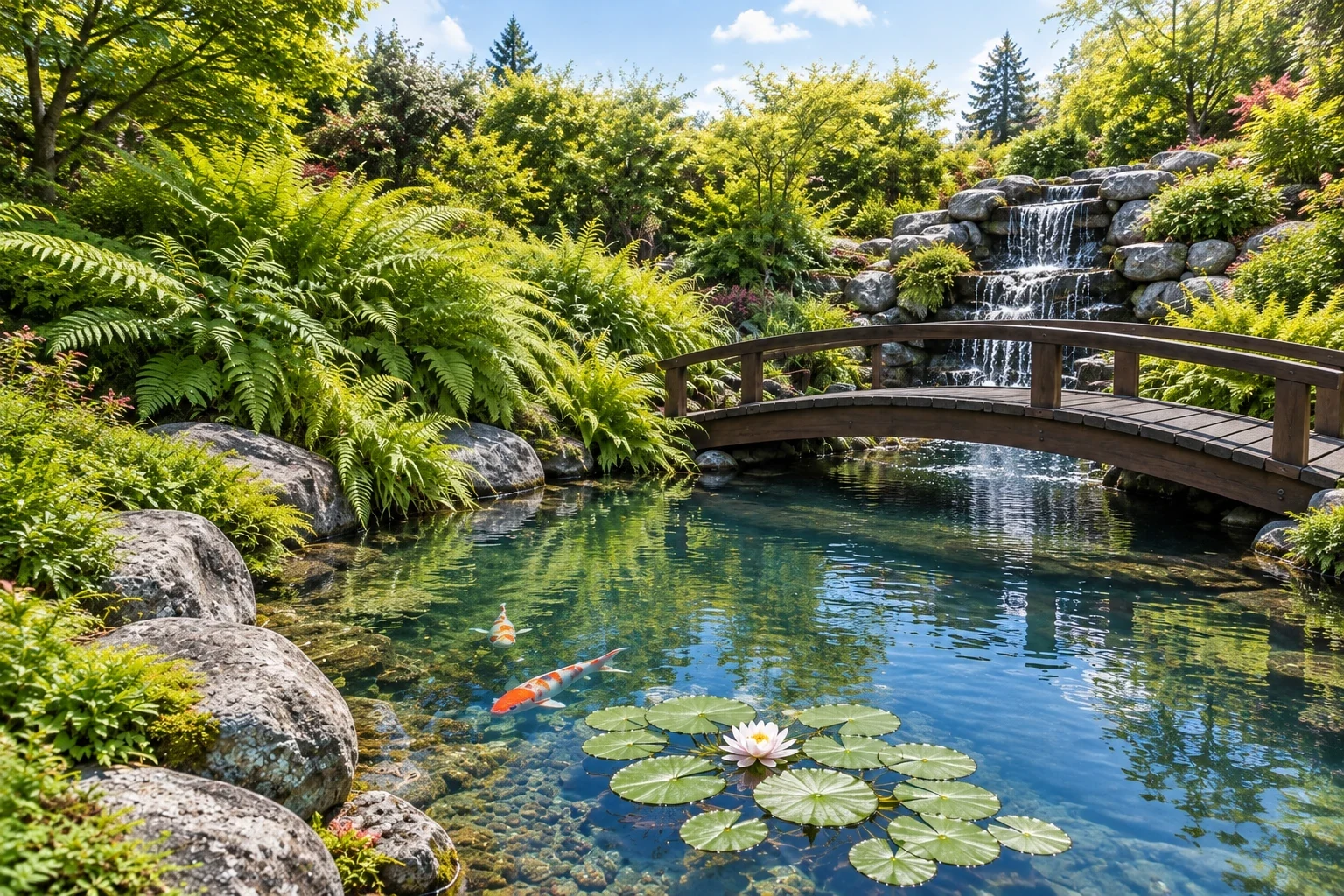
Digging a small backyard water feature is a realistic weekend project that costs around $300 for a basic liner and pump. You can frame the water with natural stones, wooden accents, and hardy plants to soften the edges. This setup establishes a calm focal point in an unused corner of the yard.
Plant Lush Ferns

Tuck dense ferns directly into the soil along the water’s edge to soften the transition between the yard and the water. These plants thrive in the damp, shaded microclimate near the pond, keeping the border looking full year-round. Space the root balls about 18 inches apart so the fronds have room to spread without crowding each other. Use native varieties like lady ferns, which cost around $15 each at local nurseries. They require very little maintenance once established in moist ground.
Build a Waterfall

Stack flat slate stones at one end of the water feature to create a small, low-drop cascade. Moving water prevents stagnation and adds a steady, low volume sound to mask neighborhood noise. Position a submersible pump in the deepest part of the basin, running a flexible PVC hose up to the top stone. Overlap the rocks by at least two inches so the water flows over the front edges rather than leaking out the back.
Edge with Boulders

Line the perimeter with heavy slate boulders to anchor the pond into the surrounding landscape. The varied heights of the stones hide the black plastic liner and prevent soil from washing into the water during heavy rain. Dig a shallow trench around the rim, burying the bottom third of each rock so they look natural rather than just placed on the grass. You can buy these large rocks in bulk from a stone yard for roughly $150 per ton.
Add a Wood Bridge

Span a narrow section of the water with a dark brown wooden footbridge. This gives you a clear path across the yard and provides an overhead vantage point to watch the fish below. Build the frame using pressure-treated 2×6 lumber, securing thick decking boards across the top with exterior wood screws. Leave a quarter-inch gap between each board to allow rainwater to drain through quickly. Coat the wood with a dark weather-resistant stain to protect it from moisture.
Float Water Lilies

Place potted water lilies directly into the basin to provide natural shade for the water below. The broad green pads block sunlight, which keeps the water temperature stable and limits algae growth during hot summer months. Sink the plastic pots into the water so the top of the container sits about 12 to 18 inches below the surface. Aquatic plants like these pull excess nutrients from the water, acting as a natural filtration system for a clear pond.
Install Underwater Lights

Drop a low-voltage brass light fixture near the edge to illuminate the stones and water after dark. Lighting the pond from below highlights the movement of the water and extends the hours you can use your yard. Wedge the weighted base of the light between two rocks about six inches deep, angling the beam toward a waterfall or a specific boulder. Connect the waterproof cable to a 12-volt landscape transformer mounted on a nearby post or wall.
Grow Tall Ornamental Grasses

Planting ornamental grasses along the pond adds height and motion to the flat landscape. The long, narrow blades sway in the wind and provide a textured backdrop that contrasts with the heavy slate stones. Dig holes slightly wider than the nursery pots, setting the grasses about three feet back from the water so their roots do not rot in the mud. Choose clumping varieties that grow four to five feet tall to establish a soft, natural privacy screen.
Set a Wooden Bench

Set a dark brown wooden bench on a hard surface facing the water to create a dedicated resting spot. Outdoor seating beside the pond gives you a comfortable place to sit and feed the fish or read a book. Leave at least three feet of clearance between the front legs of the bench and the water’s edge so people can walk past safely. Treat the wood with a clear sealant every spring to stop the joints from loosening.
Place a Heron Statue

Anchor a tall bronze heron statue in the shallow end of the water feature to add vertical interest. A metal sculpture brings a classic garden element to the space and can deter real birds from fishing in your pond. Drive a two-foot rebar stake into the ground through the bottom of the basin, sliding the hollow legs of the statue over the metal to keep it upright. The bronze finish will develop a natural patina over time.
Lay a Flagstone Patio

Paving a seating area with irregular slate flagstones creates a durable surface that matches the pond boulders. The flat stones give you a stable base for heavy furniture while blending into the natural garden aesthetic. Excavate four inches of dirt, pack down a layer of crushed gravel, and lay the flagstones out like a puzzle. Sweep coarse sand or plant low-growing moss in the two-inch joints between the stones to lock them firmly in place.
Build a Wood Arbor

Build a dark brown wooden arbor at the entrance of the pond area to frame the view. An overhead structure defines the transition from the main lawn into the water garden, creating a distinct destination in the yard. Sink four 4×4 pressure-treated posts two feet into the ground with fast-setting concrete to support the top beams. Plant climbing vines at the base of the posts, tying the new shoots to the wood with soft garden twine.
Grow Purple Irises

Arrange a row of tall purple irises along a low retaining wall near the water to introduce bright color. These moisture-loving flowers bloom in late spring and feature sword-like leaves that look structured even after the petals drop. Plant the rhizomes just below the soil surface in a spot that gets at least six hours of direct sun daily. Space them 12 inches apart to ensure good air circulation and prevent fungal diseases during humid weather.
These natural landscaping ideas suit homeowners who want a quiet backyard space. Combining the heavy slate boulders with the tall ornamental grasses creates a textured, low-maintenance border around the water.
