
Piles of sneakers and boots quickly block the walkway in any busy entrance or laundry room mudroom. Sorting them out means finding storage that fits the narrow floor space while keeping daily pairs within quick reach. These thirteen layouts cover everything from wall-mounted metal hooks to spinning wooden carousels that tuck into tight corners.
Hang Black Hooks

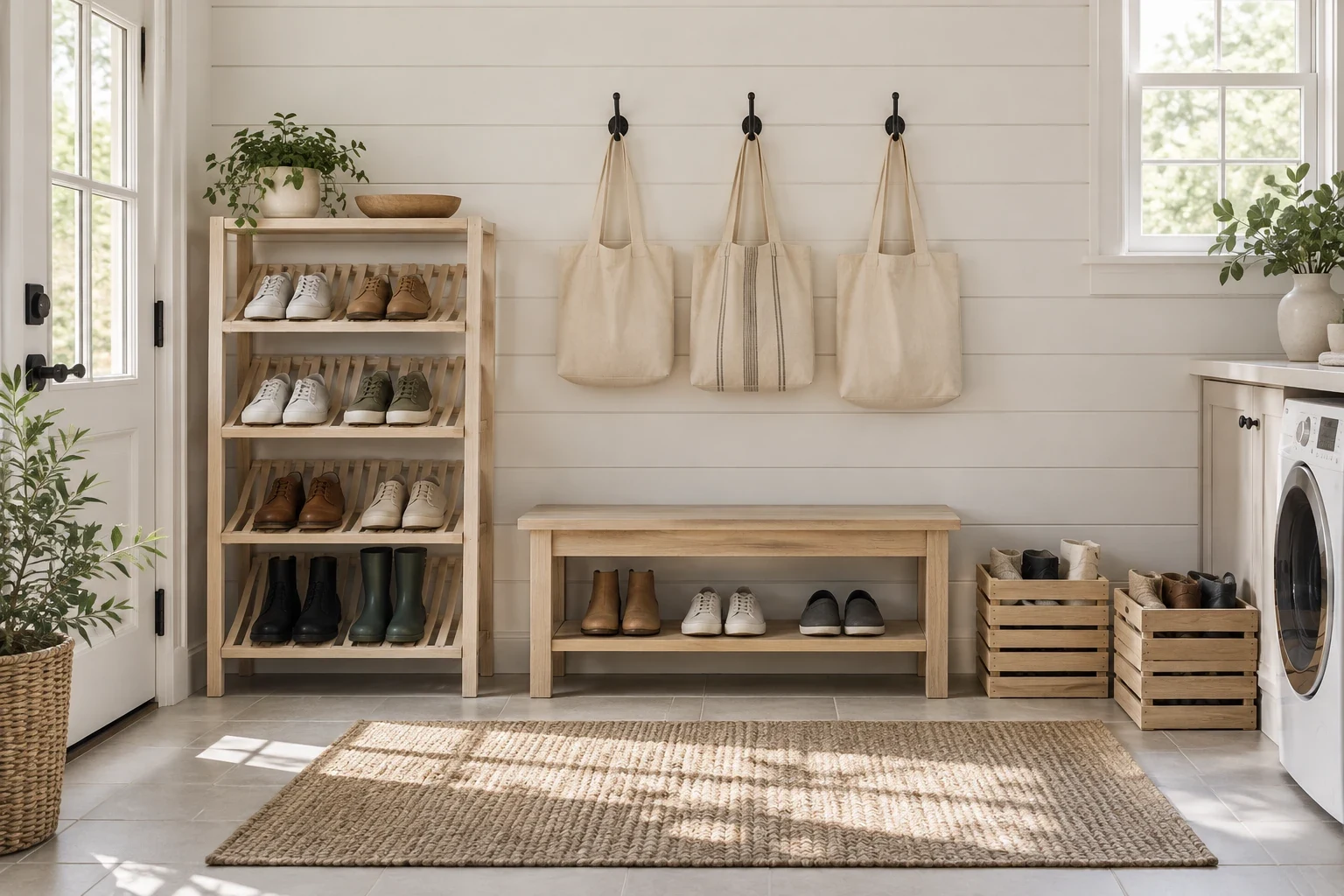
Mount sturdy metal hardware directly to your white shiplap wall to catch bags and jackets above your daily footwear. Adding wall coat hooks alongside shoe storage clears the floor completely and leaves thirty-six inches of vertical clearance to line up tall winter boots underneath. Space three matte black hooks exactly eight inches apart on the solid wood backing to prevent bulky coats from overlapping. Drill pilot holes first and drive two-inch wood screws through the base plates to ensure they hold heavy canvas totes without pulling loose over time.
Add a Tiered Rack

Place a freestanding wooden tiered rack against a blank wall to organize daily footwear by category. Tiered open shelving keeps wet or muddy shoes exposed to air, helping them dry faster than closed cabinets while keeping pairs visible for quick mornings. Look for a unit made of light ash wood measuring roughly thirty inches wide and three feet tall. Assemble the frame using the provided hex bolts, leaving at least ten inches of clearance between the bottom shelf and the floor for taller boots.
Slant the Shelves

Angle the wooden boards on the lower sections of your storage unit to display footwear heels-up. This tilted position stops long shoes from hanging over the front edge, which saves valuable walkway space in narrow mudrooms. Cut one-by-two inch light ash slats to length and secure them to the side frame at a thirty-degree pitch. Leave a half-inch gap between each slat to allow dirt and dried mud to fall straight through to the floor for easy sweeping later.
Add a Shoe Bench

Position a low seating area near your main entrance to give family members a dedicated spot for tying laces. A solid wooden bench provides a sturdy perch while doubling as a roof for the pairs tucked underneath, hiding visual clutter from eye level. Build or buy a light ash unit measuring eighteen inches high and forty inches long. Slide two pairs of adult sneakers directly onto the floor beneath the seat, keeping the walkway clear without requiring extra hardware.
Slide Wood Crates

Drop a few slatted containers onto the floor to catch seasonal or oversized footwear that refuses to fit on standard shelves. These standalone bins corral loose items quickly, preventing a messy pile from spreading across your clean laundry room tiles. Pick up standard eighteen-inch pine crates from a craft store and sand down any rough edges with medium-grit paper. Slide them side by side under a bench or table, tossing heavy winter boots or thick sandals right into the open tops.
Mount a Wall Rack

Fasten a slim metal organizer directly to the drywall to lift your sneakers entirely off the ground. Floating the storage above the baseboard makes mopping the floor much faster and prevents dust bunnies from gathering around the heels. Locate the wooden studs using a magnetic finder and secure a matte black wire rack with heavy-duty anchors. Set the lowest rung about six inches above the floor trim, giving you plenty of clearance to run a vacuum underneath without bumping the metal.
Build Custom Cubbies

Construct a grid of square compartments inside a narrow utility closet alcove to separate every pair. Giving each set of shoes its own dedicated box prevents scuffs on leather and stops dirt from transferring between overlapping soles. Measure your alcove width and build a light ash wood frame using three-quarter-inch plywood boards. Space the horizontal dividers exactly eight inches apart, creating uniform squares that hold standard walking shoes perfectly while maximizing the vertical real estate of a tight closet.
Stack Pipe Cubes

Stacking cylindrical tubes in a pyramid shape against a blank wall creates an unexpected geometric display for flexible footwear. This modular approach costs less than twenty dollars and fits awkwardly shaped corners by the dryer where standard rectangular furniture fails. Purchase a six-inch diameter matte black PVC pipe from a hardware store and cut it into twelve-inch lengths using a hacksaw. Glue the sides of the cylinders together with heavy-duty construction adhesive, sliding rolled canvas shoes into the round openings.
Install Pull-Out Drawers

Fit sliding tracks under a laundry folding counter to hide your collection completely out of sight. Pull-out drawers for shoes protect expensive materials from direct sunlight fading while maintaining a minimalist, clutter-free look in the room. Install twenty-two-inch full-extension metal glides on the sides of a custom light ash wooden box. Arrange your flat sandals and low-top sneakers in neat rows inside, ensuring the drawer face sits flush with the cabinet frame when pushed closed.
Spin a Lazy Susan

Tuck a rotating circular carousel into a walk-in pantry corner to maximize storage in a dead space. A spinning tower lets you browse dozens of options without digging through dark bins, bringing the exact pair you need right to the front. Buy or build a light ash wood cylinder with a twenty-four-inch diameter base mounted on heavy-duty steel ball bearings. Space the circular shelves ten inches apart, arranging beige and white shoes around the perimeter so they face outward.
Set Up an X-Frame

Unfold a portable wooden rack near a side door entrance for temporary storage during busy rainy seasons. A collapsible frame sets up in seconds and folds flat to slide under a bed when you no longer need the extra capacity. Choose a light ash X-frame model that locks into place with metal hinges. Stand it next to a beige canvas laundry hamper, placing up to six pairs of lightweight indoor slippers on the fabric or wooden tension tiers.
Upcycle Wood Pallets

Upcycling reclaimed shipping materials into a rustic storage unit saves money and adds raw texture to a utility sink area. The gaps between the rough boards naturally catch the heels of your shoes, holding them securely at an angle without complex carpentry. Source a clean, heat-treated light ash pallet and cut it in half vertically with a circular saw. Lean the section slightly against a soft white shiplap wall, wedging the toes of your sneakers into the horizontal slats.
Lay a Boot Tray

Rest a shallow waterproof mat on the floor right by the door to catch dripping rain and snow. A dedicated basin stops muddy runoff from ruining your warm beige tile floors and keeps the mess contained to one washable zone. Pick up a twenty-four by thirty-six inch matte black rubber tray with a raised one-inch lip. Set it down flat next to a woven rug, dropping heavy wet boots directly onto the textured surface to drain naturally overnight.
These setups suit busy families needing durable, everyday organization. Hanging black hooks pairs perfectly with adding a shoe bench to keep both coats and footwear tidy.
