
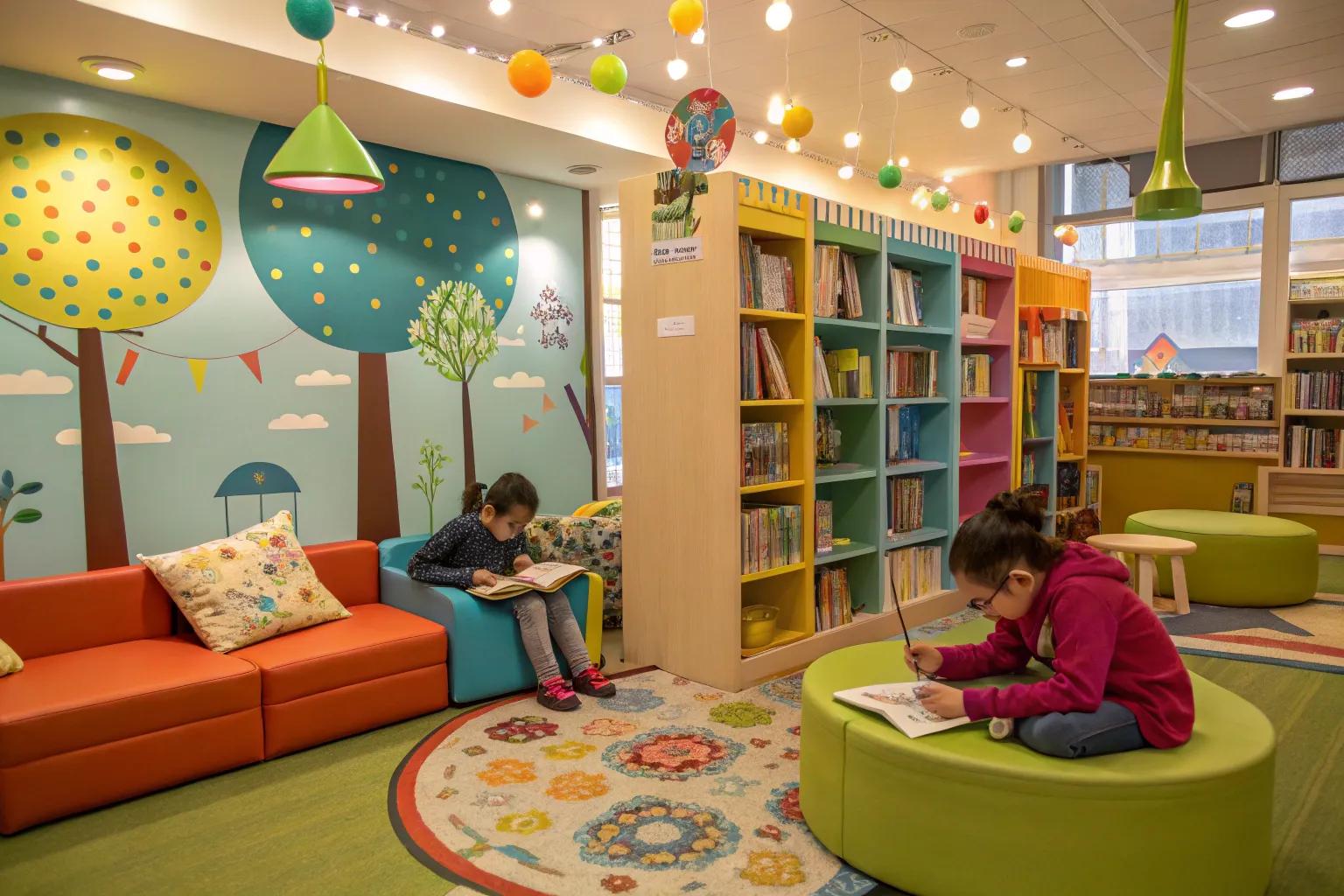
Designing a children’s library is a wonderful opportunity to blend creativity with functionality, sparking joy and imagination. Let’s dive into some delightful ideas that can transform any space into a captivating haven for young readers.
1. Eco-Friendly Design Choices

Incorporate eco-friendly design choices by using sustainable materials and natural lighting. This not only benefits the environment but also creates a healthy and inspiring setting for children.
2. Bright and Inviting Colors

Use bright and inviting colors to stimulate curiosity and excitement. In my experience, a vibrant palette can make the space feel lively and inviting, encouraging kids to explore and enjoy their surroundings. You can find more inspiration in our charming little library design ideas.
3. Nature-Inspired Themes

Bring the outdoors in with a nature-inspired theme featuring tree motifs and forest colors. I’ve found this creates a serene and magical atmosphere that kids absolutely love, transporting them to a world of wonder. You can find more inspiration for your project in these creative Little Free Library painting ideas.
4. Dynamic Learning Walls

Install dynamic learning walls with interactive features like maps or science experiments. These walls turn into educational tools, making learning a hands-on experience. You can also incorporate preschool science table ideas to further encourage discovery.
5. Seasonal Decor Changes

Keep the library fresh with seasonal decor changes that reflect the time of year. This keeps the environment dynamic and engaging, inviting children to return and see what’s new. You can also refresh your space by exploring these inspiring bookshelves ideas to create a cozy reading nook.
6. Playful Furniture

Incorporate playful furniture that’s both functional and fun, like mushroom tables or animal-shaped chairs. These elements add whimsy and make the library experience engaging and memorable for kids. You can find more inspiration in our creative closet library ideas.
7. Artistic Book Displays

Use artistic book displays to highlight collections and draw interest. These eye-catching arrangements can turn book browsing into an artistic discovery process.
8. Personalized Spaces for Imagination

Offer personalized spaces where kids can express their creativity, like art corners or writing stations. This fosters a sense of individuality and encourages a love for self-expression. You can even incorporate creative ceramic tile art projects to add a unique touch to their dedicated area.
9. Use of Mirrors to Expand Space

Utilize mirrors strategically to make the space feel larger and more open. This simple trick can dramatically alter perceptions of space, making the library feel expansive and inviting. You can also incorporate these spring library display ideas to further brighten the room.
10. Versatile Spaces for Events

Design versatile spaces that can be easily adapted for events or workshops. This flexibility ensures the library remains a dynamic venue for community engagement. You can even incorporate charming carpet ideas to create comfortable zones for children’s activities.
11. Whimsical Decor Elements

Add whimsical decor elements like fairy lights or custom tile art to spark imagination. These touches can make the library feel like a storybook setting, enchanting and inspiring for all ages.
12. Cozy Reading Nooks

Create cozy reading nooks with soft cushions and snug corners where children can lose themselves in a book. These intimate spaces are perfect for dreamers and thinkers, offering a comforting retreat.
13. Open Seating Arrangements

Opt for open seating arrangements to allow flexibility in how kids gather and interact. Whether for group reading or solo adventures, these spaces adapt to different activities effortlessly.
14. Cultural and Heritage Corners

Include cultural and heritage corners to celebrate diversity and encourage global awareness. These areas can introduce children to different cultures and stories from around the world. You can enhance these displays with our around the world crafts ideas.
15. Acoustic Enhancements

Invest in acoustic enhancements to maintain a peaceful and focused environment. Soundproofing materials can significantly enhance the library experience by minimizing noise distractions.
16. Child-Sized Furnishings

Ensure the library is equipped with child-sized furnishings for comfort and accessibility. I’ve noticed these setups empower kids, giving them a sense of ownership and independence in the space.
17. Incorporating Technology

Integrate technology with interactive screens or digital reading devices. This modern touch can enhance the reading experience and keep the library relevant in a digital age. You can also pair these digital tools with creative library bookmarks to bridge the gap between physical and virtual collections.