
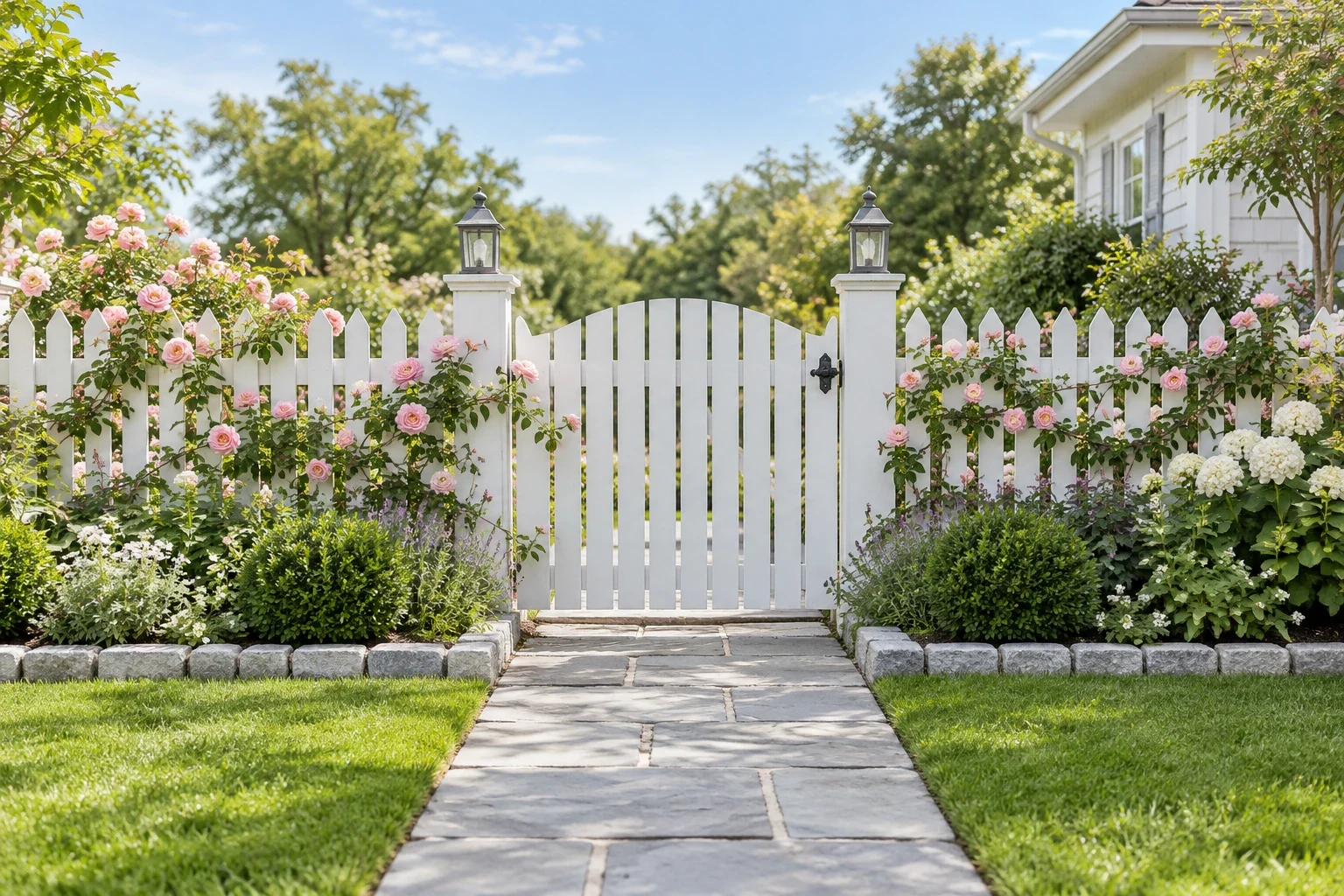
Morning routines often start right at the property line, checking the mail or walking the dog in the early daylight. A sturdy front boundary handles this daily activity while keeping pets and kids away from the street. Building a clear edge with solid materials gives the whole yard structure before you even step onto the grass.
Grow Pink Roses

Plant climbing roses along your property line to soften the hard edges of the wood. The soft pink blooms break up the solid white barrier, adding a layer of natural color that catches the morning light. Dig a hole about 18 inches deep next to the base of your panel, mixing in a few scoops of compost before setting the root ball. Tie the new canes to the vertical pickets with soft garden twine every 12 inches to guide their growth upward.
Build a White Gate

Install a wooden gate with a curved top to mark the main entry point to your home. A dedicated pedestrian entrance controls foot traffic and keeps the daily coming and going organized in one spot. Buy a pre-assembled gate measuring 36 inches wide, which leaves plenty of room for carrying groceries or pushing a stroller. Mount it using heavy-duty stainless steel hinges to prevent sagging over time, leaving a half-inch gap at the bottom so it swings clear of the ground.
Add Grey Lanterns

Cap your main posts with metal lanterns to light up the walkway during early winter evenings. These fixtures provide steady illumination right where you need it, making it safer to navigate the entry path after dark. Look for weather-resistant aluminum units that fit standard four-by-four inch wooden posts. You can choose hardwired models that require an electrician or opt for solar-powered versions that screw directly into the wood in under ten minutes.
Edge with Stones

Line the base of your boundary with a row of cobblestones to separate the planting bed from the lawn. This hard barrier stops grass from creeping into your flower beds and prevents the lawnmower from nicking the painted wood. Dig a narrow trench four inches deep along the perimeter, filling the bottom with a layer of leveling sand. Set each stone firmly into the sand with a rubber mallet, keeping the tops flush with the surrounding soil level.
Walk on Flagstone

Lay a flagstone path leading straight to the main entrance for a durable surface that withstands daily use. Solid stone handles heavy rain without turning to mud, keeping your shoes clean as you head out for the day. Order flat pieces that are at least two inches thick so they will not crack under pressure. Space the stones about three inches apart, filling the gaps with polymeric sand that hardens to lock everything in place.
Plant a Shrub Border

Set a tight row of boxwood shrubs right along the base of your side yard panels. Whether you have traditional pickets or a horizontal slat privacy fence, the dense green foliage hides the bare soil and grounds the structure. Space small starter plants exactly 18 inches apart to ensure they eventually grow together into a solid hedge. Water them deeply at the base twice a week during their first year to establish strong root systems.
Add Grey Iron Hardware

Upgrade your entry with heavy iron hinges and a matching thumb latch. Solid metal hardware stands up to the constant opening and closing of daily routines while adding a subtle industrial touch to the traditional wood. Drill pilot holes before driving the two-inch lag screws to prevent the timber from splitting. Position the latch exactly 36 inches from the ground, which is the standard height for comfortable operation by most adults.
Spread Dark Wood Mulch

Cover the bare dirt under your boundary line with a thick layer of dark brown mulch. This organic cover retains moisture during hot afternoons and creates a high-contrast backdrop that makes green hostas pop. Buy bags of shredded hardwood from the garden center, expecting to spend around four dollars per bag. Spread the material evenly to a depth of three inches, keeping it pulled a few inches away from the wood posts to prevent rot.
Mount a Metal Mailbox

Attach a metal mailbox directly to a sturdy post near your driveway entrance. Keeping the mail collection point integrated into the boundary saves space and gives the letter carrier easy access from the road. Secure a wooden mounting bracket to the side of the post using three-inch exterior wood screws. Fasten the box to the bracket, ensuring the bottom sits precisely 41 to 45 inches above the street surface to meet postal regulations.
Set Up a Wooden Bench

Placing a weathered wooden bench just inside the yard creates a casual spot to sit while keeping an eye on the street. It offers a convenient place to drop heavy bags or tie your shoes before heading out the gate. Look for a seat made from rot-resistant cedar or teak that spans about four feet wide. Position it flat on the grass, at least two feet back from the swinging radius of the door.
Group Potted Hydrangeas

Position heavy stone planters filled with large hydrangeas at the corners of your property line. Container gardening lets you introduce massive blooms without digging up the established lawn, and you can move them if they need more shade. Fill 24-inch wide pots with a mix of potting soil and perlite for proper drainage. Water the containers every morning, as the soil above ground dries out much faster than the garden beds.
Frame the Yard View

Leaving the main entry open during the day invites neighbors in and reveals the colorful garden beyond the barrier. This simple habit makes a tall privacy-height fence feel much less imposing to passersby. Prop the door back using a heavy cast iron doorstop or install a simple hook-and-eye latch on the interior side. Just be sure to close and lock it before the sun goes down to maintain your nighttime security.
String Warm Lanterns

Hang a line of small glowing bulbs along the top rail to extend your outdoor hours into the twilight. The ambient light creates a welcoming mood for evening arrivals without the harsh glare of a floodlight. Buy a 25-foot strand of outdoor-rated commercial string lights with shatterproof bulbs. Fasten the wire to the back of the top rail using insulated cable staples every two feet, keeping the cord tight and out of sight.
Plant a Lawn Border

Maintaining a sharp edge where the grass meets the stone path keeps the whole boundary looking intentionally groomed. A clean line prevents the turf from spilling over the walkway and obscuring the base of the wood. Use a half-moon edger tool to slice straight down into the turf, removing a two-inch wedge of soil. Incorporating ornamental grasses in the planting nearby can soften this strict geometry while keeping the pathway completely clear.
Scrub your painted wood once a year with a stiff bristle brush and soapy water. Removing dirt and mildew promptly extends the life of the finish.
