
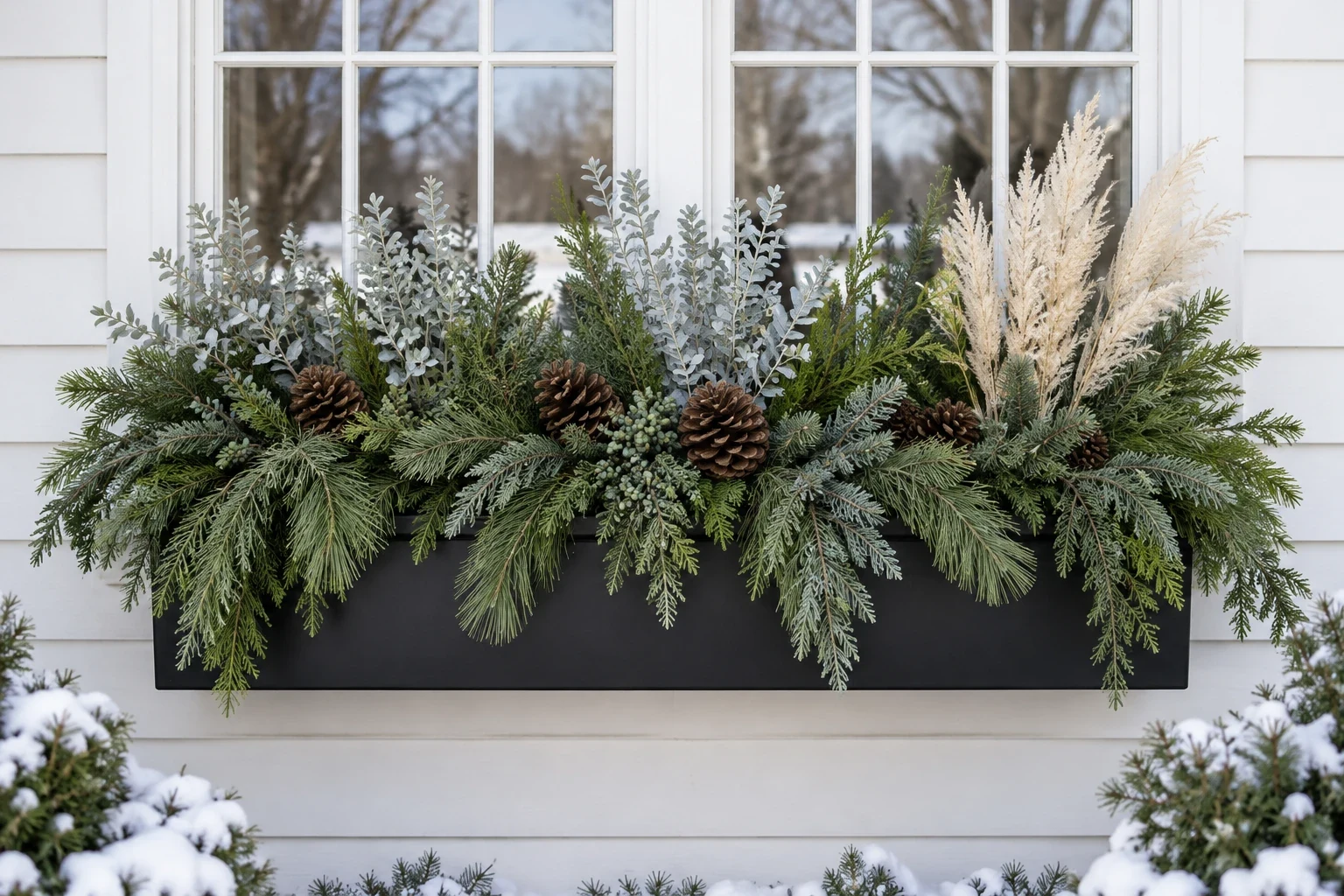
For about $40 and a single Saturday afternoon, you can build thick arrangements outside your front windows that last until spring. A well-packed box against soft white clapboard siding bridges the gap between the glass and the cold yard. These setups rely on hardy branches and dried textures that hold their shape in freezing weather.
Add Frosted Leaves

Place frosted silver-green foliage at the back of your planter so it stands upright against the window glass. This lighter tone breaks up the heavy dark greens and prevents the display from looking like a black hole from the street. Buy three to five faux stems, which cost around $5 each, and push them about four inches deep into the soil. Space them evenly along the back row to create a solid, icy backdrop that catches the weak winter sunlight.
Stand Dried Plumes

Position tall dried cream plumes on one side of the arrangement to build asymmetrical height. Dried grasses add a feathery texture that shifts and moves when the winter wind blows, making the static evergreens feel more alive. Gather a bundle of five plumes and sink their stems at least six inches into the packed dirt on the right side. Tie the lower stems together with a thin piece of garden wire to keep them from snapping in heavy gusts.
Tuck in Pinecones

Wedge large dark brown pinecones securely into the center of the arrangement. Having pinecones tucked among the greenery provides a solid, chunky focal point that grounds the finer needles and leaves. Look for cones that are at least five inches long, which you can often forage for free or buy in bags for $10. Wrap a piece of floral wire around the bottom scales of each cone and twist the other end around a sturdy branch to anchor them.
Mix Pine and Fir

Combine different species of evergreens to create a thick base that covers the bare soil completely. Using trailing greenery spilling over the box edge hides the rim and softens the hard lines of the container. Cut branches of long-needle pine and short-needle fir to about twelve inches long. Shove the cut ends into the dirt at a forty-five-degree angle pointing outward, overlapping them until no gaps remain between the stems.
Use a Black Box

Select a matte black window box to hold your winter arrangement. A dark, solid container provides a stark contrast against light siding and makes the green and brown textures pop. You can find basic metal or heavy-duty plastic troughs in this finish for under $30 at most hardware stores. Make sure the box has drainage holes at the bottom, and fill the lower two inches with gravel before adding potting soil to prevent ice buildup around the roots.
Plant Trailing Ivy

Let dark green trailing ivy cascade down the front of the planter. Ivy survives cold temperatures well and breaks up the flat vertical surface of the matte black container. Plant three small ivy plugs, which run about $4 each, along the front edge of a thirty-inch box. Angle the roots slightly backward and drape the vines over the lip, trimming any pieces that grow past the bottom edge to maintain a neat appearance.
Tuck in Snowberries

Insert soft white snowberry branches into a dense bed of evergreen boughs. The stark white berries stand out sharply against the dark greens and browns, offering a lighter alternative to using red berries as an accent. Buy bare branches from a florist or clip them from a yard shrub, cutting them to eight-inch lengths. Push the stems straight down into the soil in clusters of three to mimic how they grow naturally in the wild.
Stand Cone Topiaries

Space three small conical evergreen topiaries evenly inside a trough planter. This formal shape gives the arrangement a structured, architectural look that stays tidy all season long without any pruning. Purchase dwarf Alberta spruces in one-gallon nursery pots, which usually cost around $15 each. Dig three holes in the soil, place the root balls directly into the planter, and pack extra dirt tightly around the bases so they remain straight during strong winds.
Layer Dark Foliage

Pair deep plum heuchera leaves with soft white dusty miller across your planter. This rich foliage combination provides striking visual depth that standard evergreen boughs cannot match during colder months. Purchase two heuchera plants and two dusty millers at a local nursery for roughly $25. Set each root ball four inches apart in damp potting soil, alternating between dark ruffled leaves and pale fuzzy stems. Position the dusty miller slightly in front so its pale fronds stand out against the shadowy background, ensuring your display remains vibrant until spring.
Hang a Grapevine Wreath

Suspend a simple dark brown grapevine wreath on the window pane directly above your evergreen sprigs. This connects the planter to the upper half of the window, making the entire exterior feel decorated. Buy a bare twelve-inch grapevine ring for $5 at a craft store. Attach it to the glass using a clear outdoor suction cup hook, positioning it centered above the box so it hovers just inches above the tallest branches.
Add Metal Stars

Nestle two small matte black metal stars among the thick pine branches and dark pinecones. Metal objects introduce an industrial texture that contrasts sharply with the soft, organic plant material. Look for flat, five-inch cast iron or painted tin stars, which cost around $8 a pair. Attach a wooden skewer to the back of each star with hot glue, then stick the skewers into the dirt so the stars sit flush with the top layer of needles.
Dust with Faux Snow

Spray your evergreen branches and dark brown pinecones lightly with soft white faux snow. This flocking technique brightens the dark greens and gives the arrangement a permanent wintry feel, even on days when the weather is clear. Buy a can of spray snow for about $6 and apply it outdoors before putting the branches in the box. Hold the can twelve inches away and spray only the top edges of the needles to mimic a natural, light snowfall.
Mix in White Pansies

Plant soft white winter pansies directly into the soil among the dark green fir branches. Pansies are incredibly cold-tolerant and provide fresh, delicate blooms when most other plants lie dormant. Buy a six-pack of winter-hardy pansies for $4 and tuck them into small pockets between the heavy branches. Water the roots lightly once a week on days when the temperature rises above freezing to keep the flowers crisp and upright.
Plant Ornamental Cabbage

Center soft white and green ornamental cabbage heads in your planter surrounded by dark evergreens. The large, rosette-shaped leaves offer a bold, structural element that survives frost and freezing temperatures easily. Purchase two large cabbage plants for roughly $12 and dig them into the middle of the box. Pack the dirt firmly around the stems, then layer your cut pine and fir branches around the outer edges to frame the pale green leaves.
Nestle Lotus Pods

Weave dark brown dried lotus pods through the evergreen boughs and soft white berries. The unique circular shape and holes of the pods draw the eye and add an unexpected sculptural detail to a standard winter box. Order a bundle of dried pods on wire stems for around $15 online. Push the wires deep into the soil at varying heights, clustering three pods near one end of the box to create a distinct focal area.
Pack your soil and heavy evergreen branches into the container first to establish a solid base. Save the fragile dried accents and small metal pieces for the final layer to prevent breaking them.
