
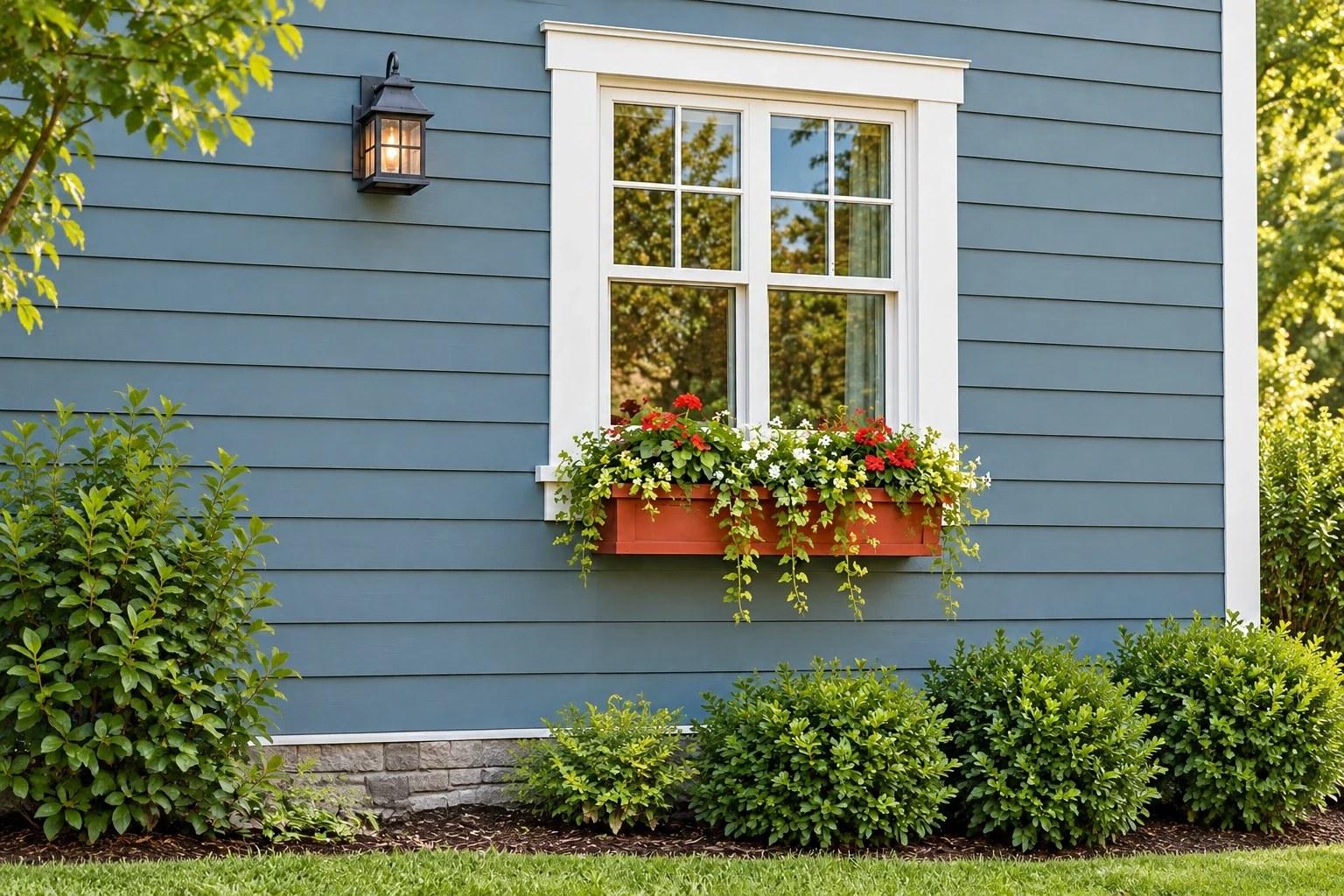
Many people paint their window frames the exact same shade as the house exterior wall, which makes the facade fall flat. Instead, choose a contrasting trim color against siding to define the architectural lines of your home. Adding distinct frames and thick moldings draws the eye directly to the glass.
Mount a Lantern

Install a dark gray metal wall lantern on the siding right next to your window frame. This extra light source makes the exterior feel welcoming at night while breaking up a large expanse of empty siding. Position the lantern so the center of the bulb sits about 66 inches above the ground for optimal reach. You can wire a hardwired fixture directly into the house electrical box, or opt for a solar-powered version that requires zero wiring.
Add Window Grids

Snap crisp white multi-pane grids directly over your bare window glass. These thin dividers give plain windows a traditional, custom look without the expense of replacing the entire sash. Measure the interior height and width of your visible glass before ordering a vinyl grid kit online for around forty dollars. Cut the long vertical and horizontal strips to size with heavy shears, then press the adhesive backing firmly against the clean glass. Press along the entire length of each strip for thirty seconds to ensure a tight bond against the pane.
Add Thick Casings

Install thick crisp white window casings around the glass to frame a bold outline inside the room. Wide moldings hide uneven drywall cutouts while establishing a sharp color break that pulls focus straight to the view. Buy five inch wide white MDF boards at a home center for twenty dollars per length. Cut the board ends at forty five degree angles to fit the corners of the window frame. Secure the trim into wall studs using finishing nails and fill all seams with white caulk.
Hang a Window Box

Secure a brick red window box just below your sill to hold trailing green foliage. The planter adds immediate depth to the facade and breaks up the rigid straight lines of the trim. Use heavy-duty steel L-brackets spaced every 16 inches into the wall studs to support the weight of wet soil. Fill the box with a lightweight potting mix rather than heavy garden dirt, leaving two inches at the top so water does not spill over.
Plant Base Shrubs

Dig a planting bed along the wall base to hold lush green foundation shrubs. Greenery grounds the house visually, softening the sharp transition between the vertical exterior siding and the flat ground. Space your root balls at least three feet away from the foundation to allow for future growth and prevent moisture buildup against the house. Lay a two-inch layer of natural cedar mulch over the bare soil to keep weeds down and retain water during dry weeks.
Paint Sashes Dark Grey

Brush a dark gray exterior paint onto your window sashes while leaving the outer casing crisp white against your slate blue siding. The dark inner frame blends directly into the shadows of the glass, creating a sharp contrast against the thick white molding. Sand the existing sash lightly with 120-grit paper to remove any peeling paint before applying a bonding primer. Use a small angled brush to cut in carefully along the glass, keeping a damp rag nearby to wipe away stray marks before they dry.
Build a Craftsman Pediment

Top your window frame with a thick craftsman pediment header to cap off the design. A wider, overhanging top piece directs rainwater away from the glass and adds traditional architectural character to a flat wall. Construct the pediment using a 1×6 flat board topped with a protruding 1×2 cap piece, securing them together with exterior wood glue. Prime all the cut edges thoroughly before nailing the assembled header directly above the side casings.
Contrast Trim Against Siding

Paint your window trim crisp white to pop brightly against dark charcoal gray wood lap siding. This high-contrast modern exterior aesthetic draws immediate attention to the windows, making them the focal point of the garage wall. Select an exterior acrylic latex paint in a semi-gloss finish, which resists dirt and wipes clean with a garden hose. Apply two even coats with a mini foam roller to achieve a smooth, brush-free surface that lasts through harsh weather.
Add a Projecting Cornice

Attach a projecting white wood cornice directly above your first-floor window frame. The extended lip casts a sharp shadow over the glass, which helps block harsh midday sun and cools the interior room. Cut a solid piece of treated pine to extend two inches past your side casings on both the left and right. Fasten the cornice into the wall framing using three-inch exterior deck screws, then caulk the top seam with a waterproof silicone sealant.
Accent with Purple Flowers

Accent with purple flowers by tucking petunias into a brick red planter near your crisp white window sill. The bright blooms provide a temporary pop of seasonal color that breaks up the rigid geometry of the deck window. Purchase three small starter plants from a local nursery for under fifteen dollars. Pinch off the faded blooms every few days to encourage new growth, and water the soil deeply whenever the top inch feels dry to the touch.
Feature Double-Hung Sashes

Highlight traditional double-hung windows by painting their moving sashes a crisp white to match the thick outer frame. These classic overlapping panes allow you to open either the upper or lower sash independently, improving air circulation on a covered porch. Check the track channels for built-up dirt and scrub them out with an old toothbrush and warm soapy water. Spray a dry silicone lubricant along the vertical vinyl tracks so the sashes slide up and down without sticking. Wipe away excess liquid with a paper towel.
Highlight Dormer Edges

Outline a small roof dormer window with crisp white trim to set it apart from dark gray shingles. Outlining the dormer edges defines the shape of the roofline and prevents the small glass pane from getting lost in the dark roofing material. Measure the angled cuts carefully with a sliding T-bevel before cutting your PVC trim boards. Apply a thick bead of exterior roofing sealant where the bottom trim meets the shingles to stop water from seeping underneath.
Paint Trim Crisp White

Coat the large exterior casings framing your backyard window in a bright, crisp white. The bright border acts like a picture frame for a large glass pane, reflecting sunlight and making the slate blue wall look even richer. Scrape away any loose flakes with a metal putty knife and sand the edges smooth. Brush on a high-adhesion exterior primer first, letting it dry for a full four hours before brushing on the final white topcoat.
Lay a Brick Red Sill

Apply a brick red paint over your basement window sill while leaving the side casings crisp white. This unexpected horizontal stripe of color draws attention to the lower edge and hides the dirt that inevitably splashes up from the ground. Tape off the white side trim with blue painter’s tape to ensure a sharp, straight line. Use a durable exterior porch and floor enamel for the sill, as it resists scuffs and standing water better than standard wall paint.
Extend Apron Trim Below Sill

Mount a wide molded white wood apron extending vertically beneath a thick exterior window sill. This tailored architectural detail anchors the window on a warm cedar shingle patio wall, adding four inches of solid white trim beneath the glass. Cut a piece of flat trim board slightly narrower than the sill width above it. Nail the apron directly through the shingles into the wall studs, sinking the nail heads slightly and filling the holes with exterior wood putty. Sand the dried putty smooth before painting it white.
Mount Decorative Trim Brackets

Place carved white wooden decorative brackets under a wide extended header trim above a tall vertical window frame. These small architectural supports add immediate character to a flat green stucco bay window wall, imitating classic historic millwork. Buy two matching polyurethane brackets for about twenty dollars each, as they resist rot and insect damage completely. Secure them to the stucco using masonry anchors and a heavy-duty construction adhesive rated for outdoor use.
The simplest update is snapping window grids directly onto your bare glass. It costs very little and changes the entire character of your facade without any power tools.
