
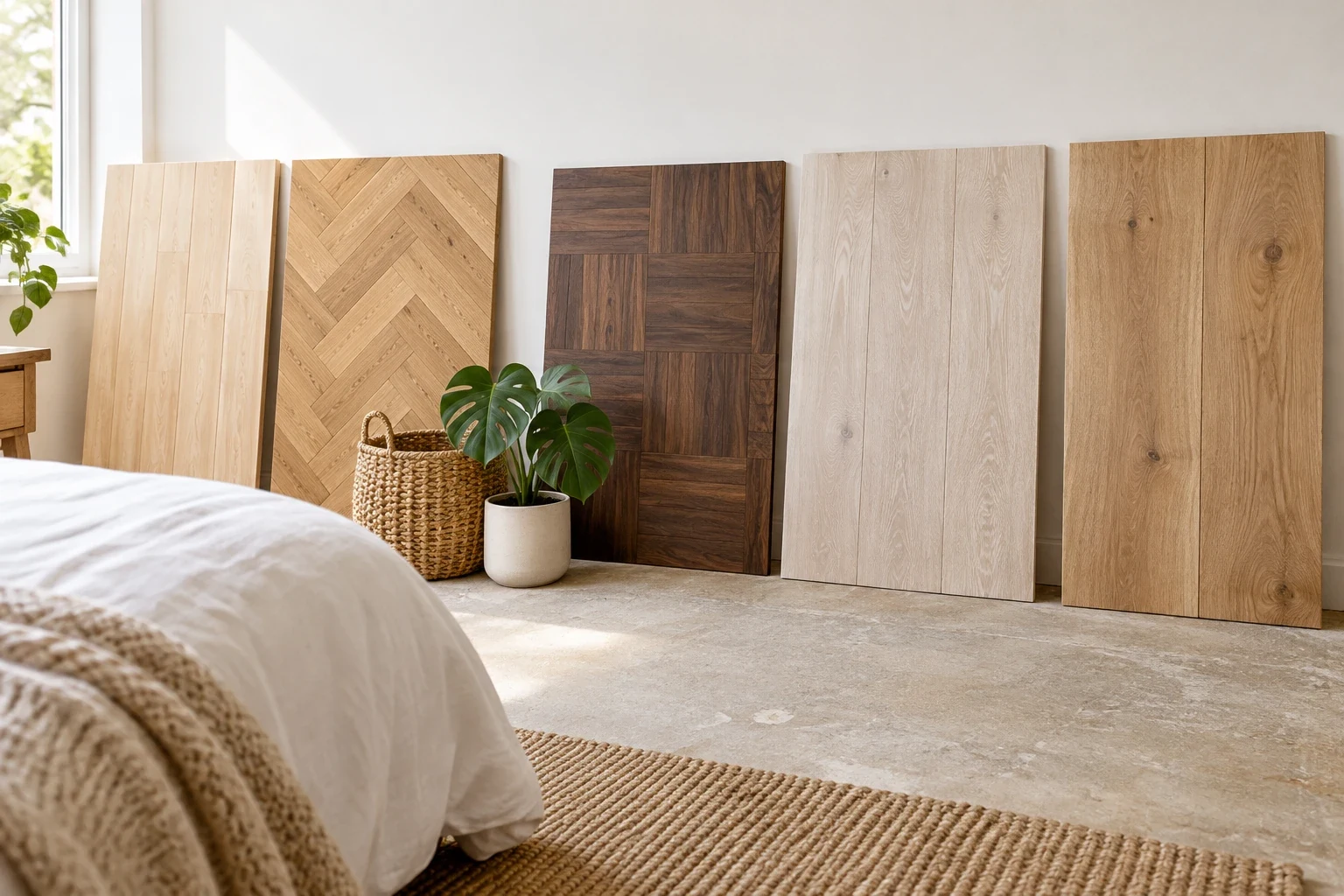
Swap out an old bedroom floor over a single weekend using click-lock laminate planks for under $400. You can lay these floating materials directly over a flat subfloor without messy glue or heavy machinery. This quick upgrade sets a fresh foundation before you bring in new rugs or heavy furniture.
Light Maple Planks

Pick light maple for a clean, understated base in a north-facing bedroom. The pale tone bounces natural daylight around the room, making a tight space feel less cramped than dark wood would. Install prefinished maple planks measuring four inches wide to keep the scale balanced under your furniture. Sweep the smooth surface weekly with a microfiber dust mop to prevent fine grit from dulling the finish, and layer a thick wool rug under the bed to soften the footprint.
Oak Herringbone

Lay down oak in a herringbone pattern flooring arrangement to add structural interest to a plain room. The zigzag geometry guides the eye outward, drawing attention toward your baseboards and windows. Buy individual oak pieces cut to three inches by fifteen inches to create the classic interlocking layout. You need a completely level subfloor before applying the wood adhesive, as the tight geometric joints will gap if the surface dips. This warm oak layout stands strong on its own, so you can skip large area rugs and leave the pattern exposed.
Walnut Parquet

Install walnut parquet squares to anchor a large room with deep, rich color. The dark wood absorbs harsh morning glare while the repeating geometric blocks ground floating furniture arrangements. Order pre-assembled twelve-inch parquet tiles rather than loose pieces to speed up the weekend installation process. Leave a half-inch expansion gap around the perimeter of the room so the solid wood can swell during humid summer months without buckling. Finish the dark floor with a matte polyurethane coat to hide footprints and dust between weekly vacuuming sessions.
Whitewashed Oak

Select whitewashed oak to mask daily dust and pet hair in a busy household. The pale, muted finish reduces the contrast of light-colored debris, meaning you can skip sweeping every single day. Look for engineered oak planks with a two-millimeter wear layer and a wire-brushed texture that hides minor surface scratches. Run the planks parallel to the longest wall in your bedroom to stretch the visual footprint of the floor. This ashy tone pairs well with crisp white linens and neutral painted trim.
Wide Plank Oak

Use wide plank oak to minimize visible seams across your bedroom floor. Fewer joint lines create a calm, continuous surface that feels less busy underfoot. Shop for engineered boards measuring at least seven inches across, which cost around eight dollars per square foot. Acclimate the wood in the bedroom for three days before nailing it down to prevent the wide boards from shrinking later. The warm oak color hides dirt well and provides a classic backdrop for both modern metal beds and traditional wooden nightstands.
Roll Out Wool Carpet

Put down soft white wool wall-to-wall carpet to insulate a cold bedroom over an unheated garage. The dense natural fibers trap room heat and muffle heavy footsteps, creating a quiet environment for sleep. Specify a low-pile loop texture and an eight-pound density carpet pad to ensure the surface feels firm rather than spongy. Hire a local installer to stretch the carpet tight against the white baseboards so it will not ripple over time. You can rest a woven floor pouf directly on the carpet for a casual seating spot.
Lay Reddish Cherry Wood

Choose solid cherry wood to introduce a rich reddish-brown hue that deepens as it ages. The natural photosensitivity of cherry means the planks will darken into a warmer tone after a few months of sunlight exposure. Buy three-inch wide solid planks and nail them directly to a plywood subfloor for a permanent fixture. Place rugs layered over the floor carefully during the first year, moving them occasionally so the wood oxidizes at an even rate. This reddish base contrasts sharply with cool-toned accents like a navy blue throw.
Fit Grey-Toned Laminate

Snap together pale gray-brown laminate planks for a durable wood-look flooring solution on a tight budget. The hard melamine wear layer resists scratches from heavy furniture and pet claws better than natural hardwood. Buy click-lock planks that include a pre-attached foam underlayment to save time and reduce hollow sounds when walking. Run the pieces lengthwise down a narrow space to visually push the far wall away. This cool gray tone balances out heavy, dark walnut dressers resting directly on the floor.
Set Stone-Look Porcelain

Position large matte beige stone-look porcelain tiles if you live in a hot climate and want a cool surface. The dense porcelain retains nighttime temperatures, keeping the bedroom floor refreshing under bare feet during summer afternoons. Purchase oversized twenty-four-inch square tiles and set them with a narrow one-eighth-inch grout line to limit the amount of visible grid. Apply a penetrating sealer to the grout lines once they cure to block moisture and dirt. The textured matte finish prevents slipping when stepping out of bed.
Snap together the gray-toned laminate planks this weekend because they require no special tools or messy glue. This floating floor system covers old subfloors fast and handles daily wear with ease.
