
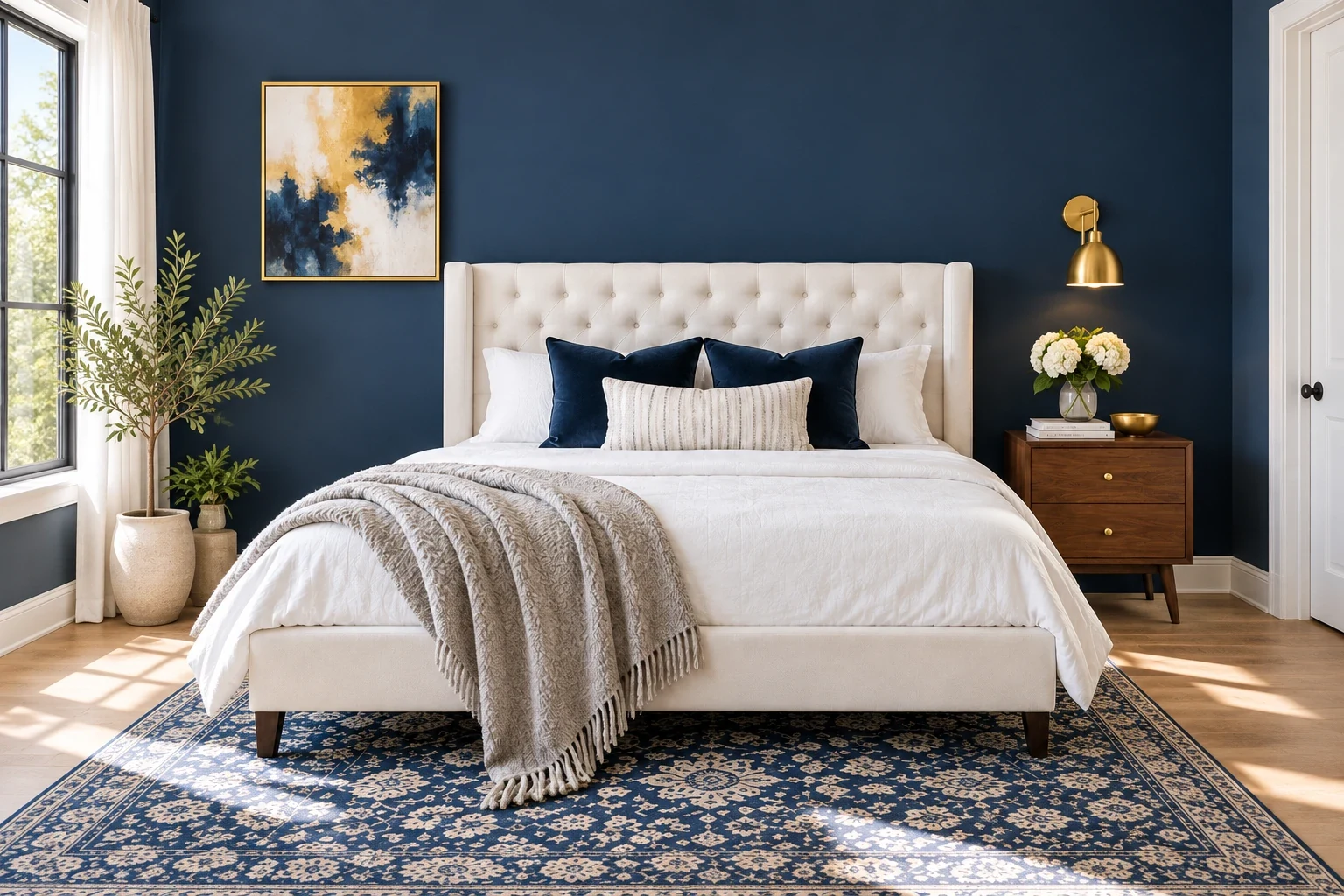
Deep navy walls absorb natural light, so they need highly reflective materials nearby to keep the bedroom from feeling like a cave. Balancing that dark backdrop with crisp white fabrics and warm brass hardware creates a sharp, tailored contrast. Layering textured fabrics alongside warm wood and brass accents builds comfort without losing the moody depth.
Hang Abstract Art

Anchor the dark wall with a large piece of framed wall art to break up the heavy color block. A canvas with warm gold and mustard tones contrasts sharply against the cool navy, pulling the eye upward. Hang the frame so the center sits about 57 inches from the floor, which matches the standard gallery height. You can find decent oversized abstract prints for around $50 to $100 online, and swapping them into a basic brass or wood frame adds a custom finish.
Pick a Tufted Bed

Break up a solid painted backdrop by placing a crisp white tufted headboard right against it. The deep button tufting creates shadows and texture, which prevents the flat wall color from dominating the room. Look for a headboard that stands at least 48 inches tall to ensure the white fabric remains visible once you stack your pillows. A linen or cotton-blend upholstery works well because it resists pilling and wipes clean with a damp cloth if dust settles into the folds.
Mount a Sconce

Free up surface space on your nightstand by installing a warm gold brass wall sconce. The metallic finish reflects ambient light, adding a necessary warm glow right where the dark paint absorbs the most brightness. Position the fixture about 30 inches above the mattress top so the bulb shines down on your reading material without glaring into your eyes. If you want to skip hardwiring, look for plug-in sconces with inline switches that cost around $40 and mount with just two standard drywall anchors.
Layer a Blanket

Soften the high contrast between the navy walls and the white bed by draping a light gray linen blanket over the foot of the mattress. This mid-tone layer bridges the gap between dark and light, making the color transition less abrupt. Fold a 50-by-60-inch throw horizontally and lay it across the bottom third of the bed for a casual, lived-in texture. Linen breathes well during warmer months and adds a relaxed wrinkle that balances the formal tufting of the headboard.
Lay a Navy Rug

Lay a patterned navy and white area rug over hardwood to tie the room together. Pulling the dark blue shade down onto the floor anchors the space, while the white pattern prevents the lower half of the room from feeling heavy. Position an 8 by 10 foot synthetic rug under a queen bed so the lower two thirds rest directly on top. Leave at least 18 inches of soft fiber exposed on both sides of the mattress. A durable flat weave material costs around $150 and vacuums clean without catching the edges.
Install a Brass Chandelier

Swap out a basic flush mount for a warm gold brass spoke chandelier to bounce light off a crisp white ceiling. The exposed metal arms distribute illumination evenly across the upper half of the room, counteracting the shadows cast by dark walls. Measure your ceiling height and leave at least 7 feet of clearance from the floor to the bottom of the fixture. Using frosted LED bulbs in the sockets provides a soft, diffused glow that prevents harsh glare when you look up from the bed.
Mix Navy Bedding

Fold crisp white sheets back over a rich navy blue duvet cover to tie the bed directly to the accent wall. This inverted color scheme puts the dark tone in the middle of the room, anchoring the mattress. Buy a duvet cover made from long-staple cotton, which usually costs between $80 and $120, because it holds dark dye better than cheaper blends and resists fading in the wash. Pull the white top sheet down about 12 inches over the duvet to show off the clean contrast.
Pull Up an End Ottoman

Place a light gray upholstered ottoman with warm wood legs at the end of the bed to provide a practical spot for putting on shoes. Introducing wood furniture into a heavily painted space brings in an organic texture that warms up the cool blue tones. Look for a bench that is roughly 18 inches deep and at least a foot narrower than the width of your mattress. This leaves enough room to walk around the corners without bumping your shins in the dark.
Hang Navy Window Panels

Frame a bright window with thick navy blue linen panels to carry the dark color to another wall. Matching the curtains to the paint creates an unbroken visual line, making the bedroom feel wider. Mount a brass curtain rod about four to six inches above the window frame to draw the eye up. Buy panels that are 84 or 96 inches long so they just kiss the floor, and use ring clips for about $15 a pack to make sliding the heavy fabric open much smoother.
Bring in a Wood Chest

Warm up the opposite side of the room by setting up a walnut chest of drawers. The rich, earthy grain of the wood provides a necessary break from the solid blue and white surfaces, adding a natural element. Top the dresser with a small gold mirror and a white ceramic vase to repeat the room’s core accent colors. You can hunt for a solid vintage dresser at local estate sales for under $200, which offers better construction than most modern flat-pack alternatives.
Tuck in a Potted Ficus

Brighten an empty, dark corner by placing a vibrant green potted ficus tree against the navy wall. The organic shape of the leaves softens the rigid lines of the bed frame, while the bright green pops intensely against the deep blue background. Set a 10-inch plastic nursery pot inside a slightly larger white ceramic planter to catch excess water. If your room lacks bright indirect sunlight, a high-quality artificial ficus costs around $60 and requires zero maintenance beyond a quick dusting every few weeks.
Focus your spending on a sturdy tufted bed frame and high-quality cotton sheets. Save cash by picking up vintage dressers and using plug-in wall sconces instead of hardwired fixtures.
