
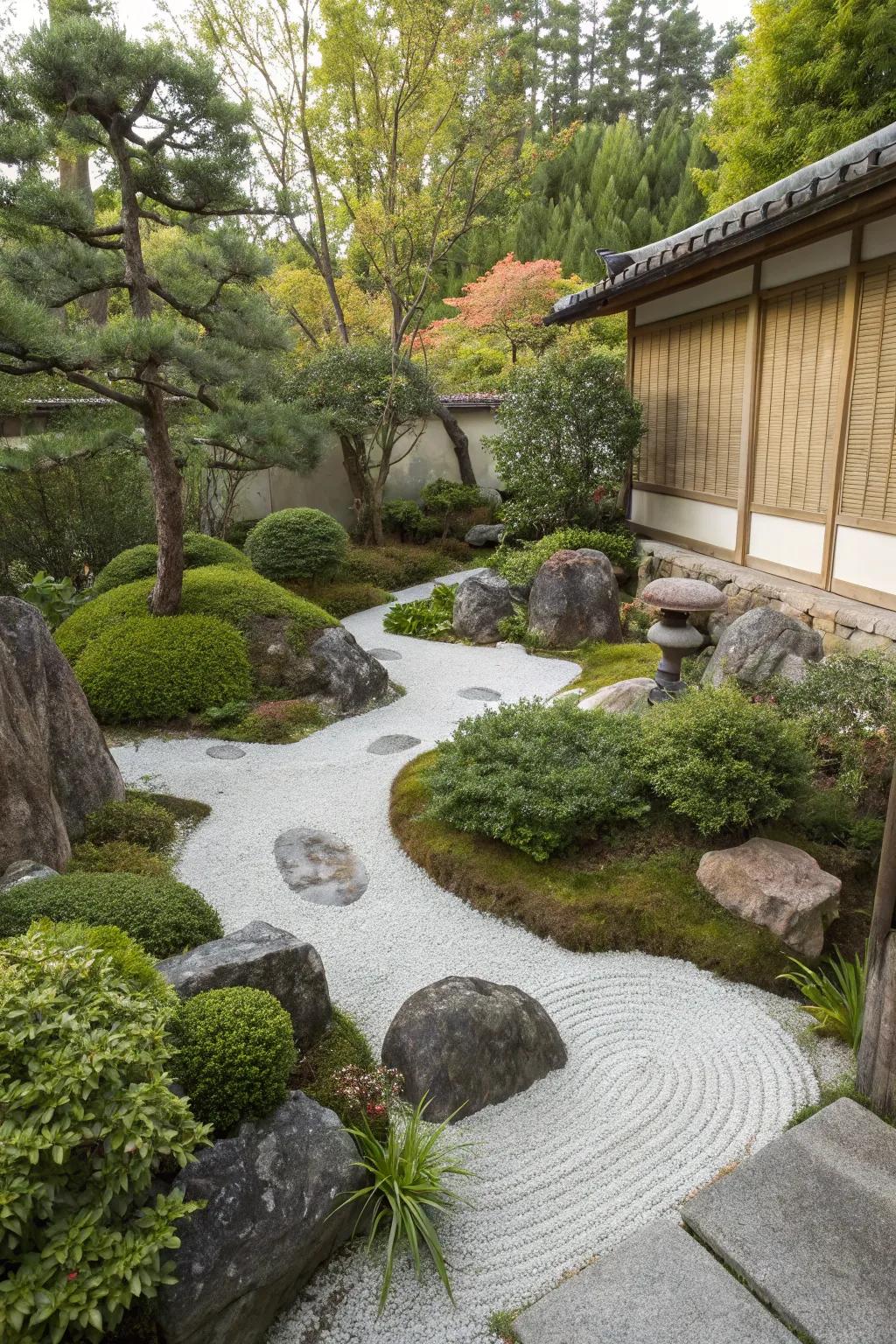
Creating a small Japanese garden is like crafting a tiny slice of paradise right at home. These gardens bring harmony and tranquility, even in the smallest of spaces, allowing you to enjoy a peaceful retreat whenever you need it.
1. Embrace the Zen with a Sand and Stone Garden

A sand and stone garden, or karesansui, is a cornerstone of many Japanese Zen garden ideas and is perfect for small spaces and requires minimal upkeep. Use raked sand to represent water, and strategically place rocks to symbolize islands. I found that this approach creates a tranquil space for reflection, especially when viewed from a cozy window seat.
2. Incorporate a Miniature Water Feature

Even a small water feature can make a big impact in a Japanese garden. It’s an effective approach for tight spaces, similar to other small area landscaping ideas. Consider a simple bamboo fountain that adds the soothing sound of water. In my experience, such a feature not only elevates the garden’s ambiance but also attracts birds, enhancing the garden’s life.
3. Create a Moss Carpet

Moss can turn your space into a lush, green carpet that’s both beautiful and low-maintenance. Because it thrives in shady spots, it’s a perfect fit for many corner garden design ideas. I’ve used moss in several gardens and love how it creates a serene and timeless look.
4. Introduce Bamboo Fencing

Using Japanese decor like bamboo fencing is a fantastic way to create a sense of enclosure and privacy. It also adds a vertical element without taking up much space. I’ve found that bamboo not only defines the garden’s boundary but also complements the natural elements beautifully.
5. Utilize Evergreen Plants

Evergreen plants provide year-round greenery and structure to your garden. Consider using varieties like dwarf conifers or Japanese holly, which are also excellent choices for front yard container gardens. In my gardens, evergreens have always been reliable staples, offering consistency and texture throughout the seasons.
6. Incorporate a Zen Pathway

A simple stone or gravel pathway can guide visitors through your garden, creating a sense of journey. Use stepping stones to add rhythm and intrigue; for a more artistic approach, you can find inspiration in these mosaic garden ideas. I’ve noticed that pathways not only lead the eye but also invite exploration of even the smallest spaces.
7. Add Artistic Garden Sculptures

Integrate small sculptures or other Japanese crafts to reflect your personal style while maintaining harmony with the natural elements. Choose items that blend with the garden’s aesthetics, like smooth stones or abstract shapes. Personally, I’ve seen how a well-placed sculpture can add depth and interest to the garden.
8. Add a Tea House or Pavilion

A small tea house or pavilion can serve as a focal point and a quiet space for contemplation. This is one of many cool garden ideas that can create an intimate atmosphere, especially when constructed from wood or bamboo. I’ve found that these structures offer a perfect spot for enjoying the garden while sipping tea.
9. Incorporate Symbolic Elements

Include elements like a small bridge or tsukubai to symbolize transition and purification. These features, which you can find in many DIY Zen garden plans, add cultural depth and narrative to the garden. Personally, I love how they create a sense of journey and reflection.
10. Design with Asymmetry

Embrace asymmetry to create balance and intrigue in your garden layout. This design principle is key to many no-plant garden concepts as it encourages diversity and natural flow. I’ve often found that asymmetrical designs feel more organic and less constrained.